NEW JOURNAL NOTES ON SPACE, OBJECTS, AND EVERYDAY ATMOSPHERE
Visit Shop
Back to All Articles

Above the Clouds: How the Potala Palace Transmits Tibet’s Soul to the World

In this article
The Architecture of Communication: A Visual Language The Living Archives: Tangible and Intangible Heritage The Pilgrim and the Tourist: A Shared Humanity More Than Stone and Mortar

There are places that simply exist, and then there are places that speak.

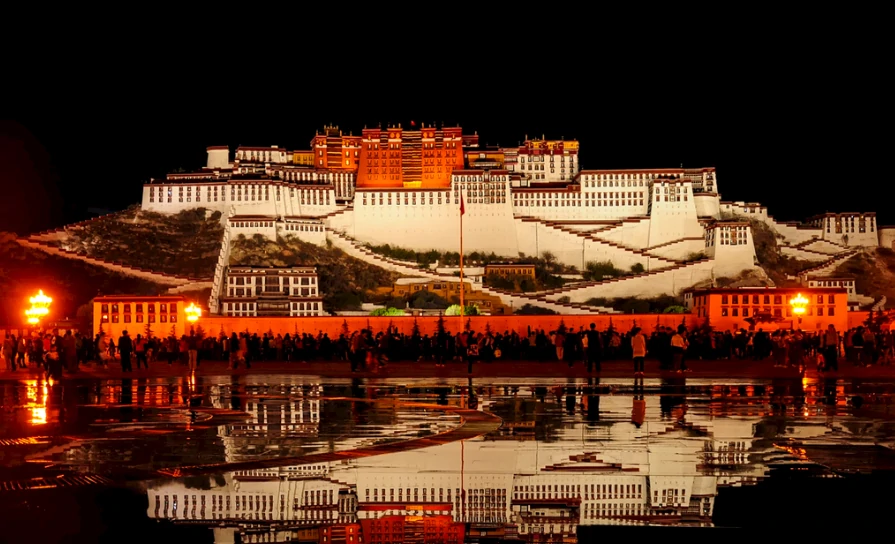
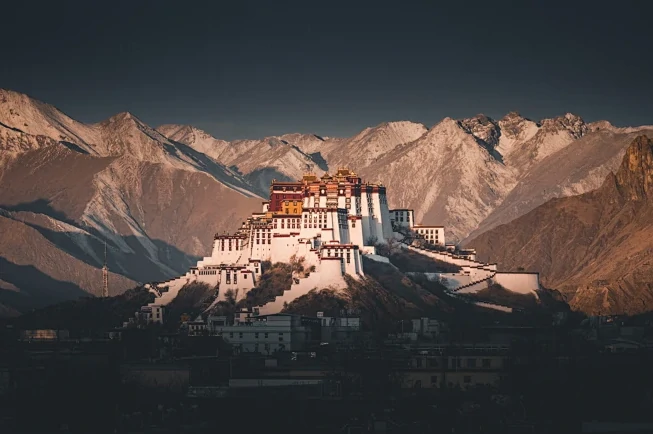
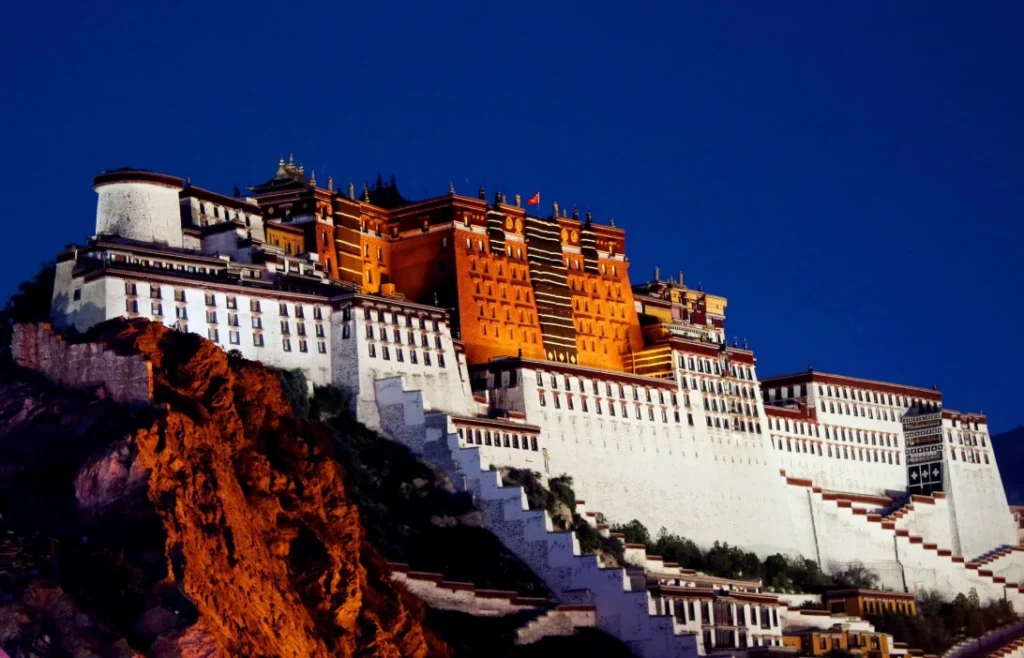
If you ever find yourself in the heart of Lhasa, gasping slightly at the 3,650-meter altitude, the first thing that will steal your breath isn’t the thin air—it’s the sight of the Potala Palace. Rising majestically from the Red Hill, its red and white walls piercing the impossibly blue Tibetan sky, it is a monument that defies both gravity and time.

But as a traveler and a lover of cultural narratives, I’ve come to realize that the Potala Palace is much more than an architectural marvel or a bucket-list photo op. It is one of the world’s most powerful conduits for cultural transmission. It doesn’t just house history; it actively broadcasts the soul of Tibetan culture to the rest of the world.

Here is how this ancient fortress continues to bridge the gap between the “Roof of the World” and the global community.

The Architecture of Communication: A Visual Language

Long before the internet, long before books were printed in the West, architecture was the primary medium of mass communication. The Potala Palace is a masterclass in this.

Every design choice is a sentence in a visual language. The sprawling White Palace (representing secular administration and daily life) and the towering Red Palace (representing spiritual devotion and religious sanctuary) communicate the core duality of traditional Tibetan society: the harmonious interdependence of religion and state.

When foreign eyes look upon its golden roofs glittering in the sun, or the stark contrast of its walls against the Himalayan backdrop, they are immediately introduced to a culture that reveres nature, spirituality, and resilience. The palace doesn’t just sit on the mountain; it grows out of it, telling the world that Tibetan culture is intrinsically linked to the earth it stands on.

The Living Archives: Tangible and Intangible Heritage

Step inside, and the transmission becomes deeply intimate. The Potala Palace is often called a “museum,” but that word feels too static. It is a living archive.

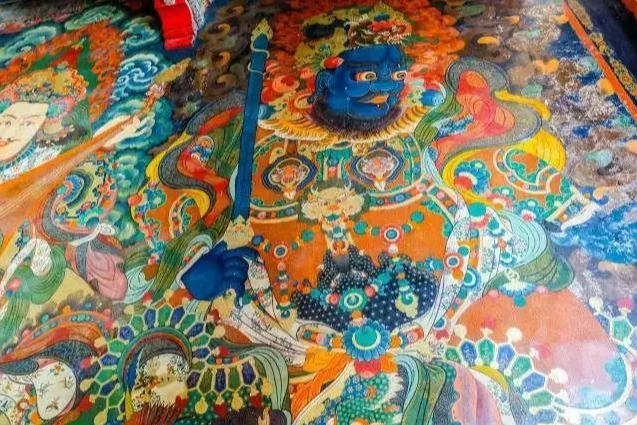
Within its 1,000-plus rooms, the culture speaks through Thangkas (intricate Buddhist scroll paintings), ancient murals, and scriptures written in liquid gold. But these aren’t just artifacts behind glass; they are active participants in cultural exchange. When a visitor from Europe or the Americas watches a monk carefully restore a 400-year-old mural using traditional mineral pigments, the knowledge of Tibetan craftsmanship is instantly transmitted across cultural boundaries.

Furthermore, the palace is a vessel for intangible cultural heritage. The echoing chants, the scent of burning juniper and yak butter lamps, and the devotion of the pilgrims who traverse its countless steps—all of these sensory experiences transmit the spirit of Tibetan Buddhism in a way no textbook ever could.

The Pilgrim and the Tourist: A Shared Humanity

Perhaps the most beautiful aspect of the Potala Palace’s role in cultural transmission is the human element. Every day, the stone paths leading up to the palace are walked by two distinct groups: Tibetan pilgrims performing their devotions, and international tourists seeking wonder.

They walk the same path, albeit for different reasons. In this shared space, cultural barriers dissolve. A tourist might not understand the exact meaning of the mantras being murmured, but they understand the profound sincerity of the pilgrim’s devotion. Empathy bridges the gap. The tourist leaves with more than just photos; they leave with a visceral understanding of a culture that prioritizes inner peace and spiritual dedication.

More Than Stone and Mortar

The Potala Palace stands as a testament to the fact that culture cannot be contained. Like the wind sweeping across the Tibetan plateau, the stories, art, and philosophies housed within those red and white walls have traveled across oceans and continents.

In an era where the world can sometimes feel fragmented, places like the Potala Palace remind us of our shared humanity. It teaches us that whether we are praying, creating art, or simply seeking to understand our world, we are all part of a vast, interconnected tapestry of human experience.

Have you ever visited a place that deeply changed how you understood a different culture?

Same category navigation

More to read next

From reading to action

Keep thoughtful guides close as you shape a calmer home.

Save ideas for later, explore room-based guidance, or share what you would like us to write about next.

Explore Room Guides Use room-based guides when you want a calmer way to choose placement, materials, and daily-use pieces.
Share A Future Topic Tell us what spaces, objects, or topics you'd like us to explore next. We’re always open to new ideas and inspiration.
Journal Dispatch

A quiet letter for spatial living.

Receive calm notes on placement, materials, and living with more spatial clarity.