NEW JOURNAL NOTES ON SPACE, OBJECTS, AND EVERYDAY ATMOSPHERE
Visit Shop
Back to All Articles

 How to Use Mirrors to Create a Harmonious Space

In this article
Why Are Mirrors So Important in Feng Shui? The Art of Mirrors in Feng Shui The Golden Rules of Mirror Placement Using Mirrors Room by Room Common Mirror Mistakes to Avoid Choosing the Right Feng Shui Mirror Integrating Mirrors Mindfully Mirrors & Feng Shui: A Tool for Well-Being

In the quiet ballet of daily life, every element in our environment plays a role. Among them, mirrors hold a unique position. They stand silently, reflecting our lives — but their influence goes far beyond appearance.

In the ancient art of Feng Shui, mirrors are considered powerful tools. They can guide, redirect, amplify, and balance energy within a space.

In this article, we’ll explore the deeper relationship between mirrors and Feng Shui — and how a few simple, thoughtful rules can transform your home. Think of each mirror as a doorway to greater balance and calm.

Why Are Mirrors So Important in Feng Shui?

Feng Shui is often described as a subtle dance with energy. Mirrors are key participants in that dance because of their ability to influence the flow of Qi — life force energy.

But mirror placement is never random.

Using mirrors in Feng Shui is an art. When placed correctly, they can turn a home into a peaceful, supportive sanctuary. When placed carelessly, they can create energetic imbalance.

The Art of Mirrors in Feng Shui

Most of us think of mirrors simply as reflective surfaces. In Feng Shui, however, they are much more:

  • Energy amplifiers
  • Channels for good fortune
  • Tools to redirect unwanted energy
  • Space expanders
  • Symbolic correctors of imbalance

Mirrors are sometimes called “energy aspirin” in Feng Shui philosophy because they can symbolically correct disruptions in the flow of Qi.

They reflect and double whatever they face — which is why intention and placement matter so much.

The Golden Rules of Mirror Placement

1. Reflect Something Beautiful

A Feng Shui mirror should always reflect something pleasant and uplifting.

Avoid placing mirrors where they reflect:

  • Trash bins
  • Bathrooms or toilets
  • Clutter
  • Sharp or chaotic spaces

Instead, let mirrors reflect:

  • Green plants
  • Artwork
  • Natural light
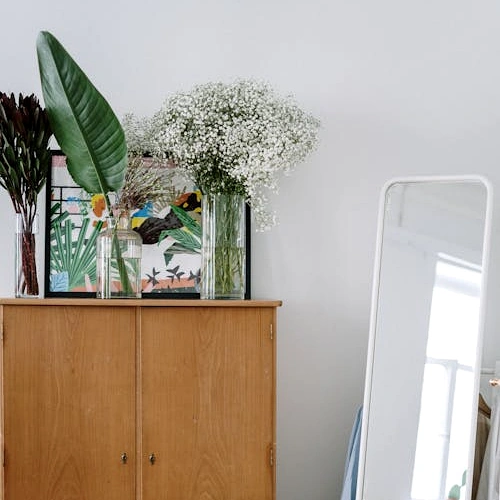
  • Flowers
  • A clean, harmonious room

Whatever the mirror reflects, it symbolically multiplies. If it reflects clutter, it amplifies cluttered energy.

Before permanently installing a mirror, tidy the space in front of it.

2. Avoid Directly Facing the Front Door

One of the most well-known Feng Shui rules is this:

Do not place a mirror directly facing the main entrance.

The front door is where Qi enters the home. A mirror facing the door can symbolically push energy back out instead of allowing it to circulate freely.

Similarly, avoid placing a mirror directly facing the bedroom door. This can create mental restlessness and disturb sleep.

If you must place a mirror in such a position, consider covering it at night.

3. Choose Harmonious Shapes & Sizes

Shape Matters
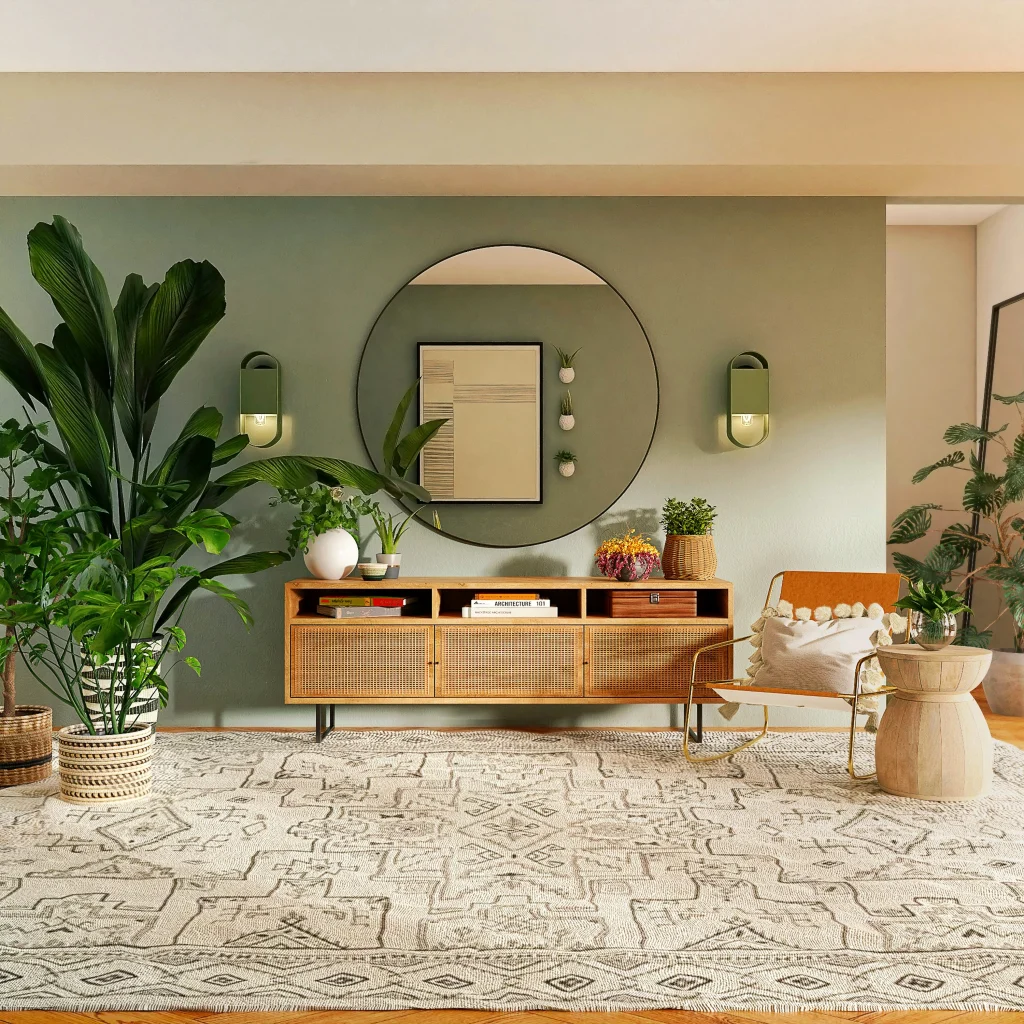
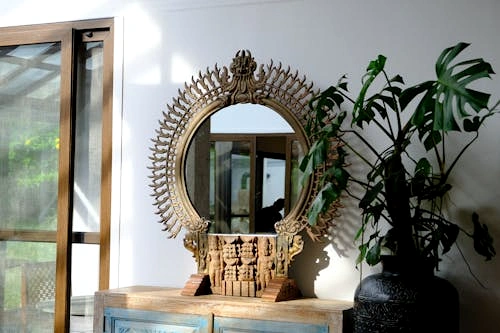
  • Round or oval mirrors are highly favored in Feng Shui. They represent the Metal element and encourage clarity, softness, and smooth energy flow.
  • Rectangular or square mirrors bring stability and grounding, symbolizing the Earth element.
  • Octagonal mirrors (Bagua mirrors)are traditionally used for protection.

Rounded shapes soften harsh angles and encourage harmonious energy circulation.

Size Matters Too

Very small mirrors can fragment energy. Ideally, choose a mirror large enough to reflect your entire body — symbolizing completeness and self-awareness.

4. Prioritize Quality

The quality of the mirror is just as important as its placement.

Avoid mirrors that are:

  • Cracked
  • Warped
  • Cloudy
  • Distorted
  • Worn or damaged

A mirror should reflect clearly and truthfully. Poor-quality mirrors can symbolically distort the energy of a space.

Invest in a well-made mirror with a solid frame — preferably natural materials like wood or quality metal.

Using Mirrors Room by Room

Each room has its own energetic needs.

In the Living Room

The living room is the social heart of the home.

A well-placed mirror can:

  • Visually expand the space
  • Increase natural light
  • Create a sense of openness

Position mirrors to reflect something beautiful — a floral arrangement, artwork, or a cozy seating area.

Avoid placing mirrors directly reflecting seated guests, as this can create subtle discomfort.

In the Dining Room

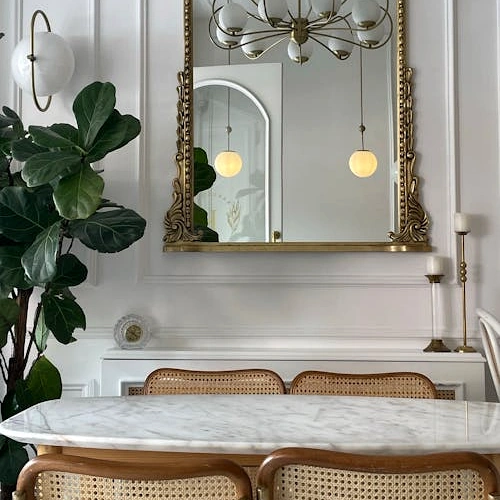
Placing a mirror to reflect the dining table is considered highly auspicious in Feng Shui.

Symbolically, it “doubles” the abundance of food — enhancing prosperity and gratitude.

Just ensure the dining area is tidy and welcoming.

In the Bedroom

Bedrooms require calm, restful energy.

Ideally, avoid mirrors reflecting the bed. According to Feng Shui, mirrors can activate too much energy in a room meant for rest.

If a mirror is necessary:

  • Place it inside a closet
  • Use mirrored wardrobe doors that can close
  • Cover the mirror at night

Sleep should feel grounded and undisturbed.

In the Hallway

Hallways guide energy through the home.

A mirror placed on a side wall (not facing the front door) can help energy circulate smoothly and make narrow corridors feel more spacious.

Let it reflect plants, artwork, or welcoming decor.

Common Mirror Mistakes to Avoid

Mirrors Facing Windows

Placing a mirror directly opposite a window can symbolically push positive energy back outside rather than drawing it inward.

Natural light should be invited in — not reflected away.

Mirrors Facing Each Other

Two mirrors facing each other create an infinite reflection effect. While visually interesting, Feng Shui considers this energetically destabilizing.

It can create scattered, restless energy.

Ceiling Mirrors

Mirrors on ceilings — especially in bedrooms — are generally discouraged. They can create a feeling of instability and disrupt restful energy.

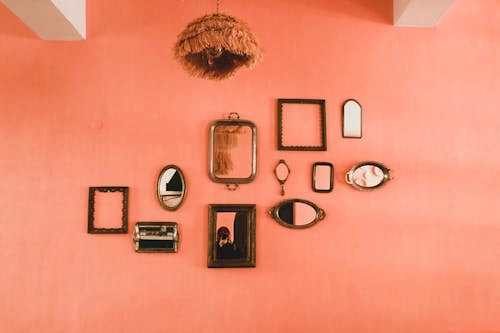
Too Many Mirrors

Moderation is key.

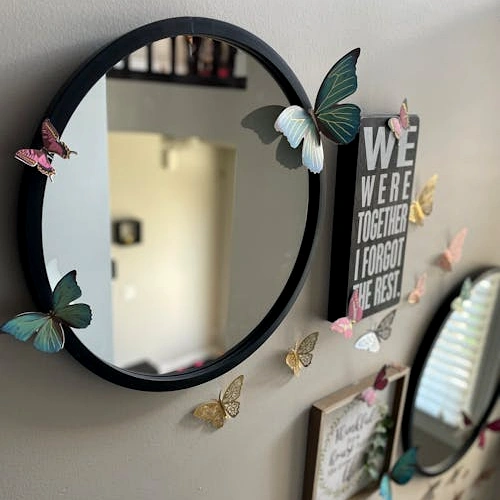
Too many mirrors can overstimulate a space, leading to restlessness. A few thoughtfully placed mirrors are far more powerful than many scattered ones.

Choosing the Right Feng Shui Mirror

When selecting a mirror, consider:

  • Clear reflection
  • Solid craftsmanship
  • Harmonious frame material

Balanced proportions

Frame materials like wood promote grounding energy, while metal frames enhance clarity and precision.

Choose colors that support the room’s intended element.

Integrating Mirrors Mindfully

Incorporating mirrors into your home can be a gradual and rewarding process.

Stat small. Add one or two mirrors and observe how the space feels.

Over time, adjust placement as needed. Feng Shui is not rigid — it evolves with your home and your life.

Pay attention to subtle changes:

  • Does the room feel brighter?
  • More open?
  • Calmer?

Energy shifts are often gentle but noticeable.

Mirrors & Feng Shui: A Tool for Well-Being

Mirrors are far more than decorative objects.

In Feng Shui philosophy, they are instruments for shaping energy. They can attract, redirect, amplify, and balance the atmosphere of your home.

Used wisely, mirrors enhance beauty, expand light, and cultivate a sense of abundance.

Ultimately, Feng Shui is not about strict rules — it’s about creating a space that supports your well-being.

Your home should feel aligned with your personal style and bring you calm and joy.

Mirrors, when placed with intention, can help transform your living space into a true sanctuary.

Same category navigation

More to read next

From reading to action

Keep thoughtful guides close as you shape a calmer home.

Save ideas for later, explore room-based guidance, or share what you would like us to write about next.

Explore Room Guides Use room-based guides when you want a calmer way to choose placement, materials, and daily-use pieces.
Share A Future Topic Tell us what spaces, objects, or topics you'd like us to explore next. We’re always open to new ideas and inspiration.
Journal Dispatch

A quiet letter for spatial living.

Receive calm notes on placement, materials, and living with more spatial clarity.