Living Room Energy Guide: Five Details That Make Your Space Feel Truly Alive
In this article
Introduction: The Living Room Is the Heart of the Home — But Is Yours Beating Right?
The living room is often called the heart of the home. It’s where we welcome friends, spend time with family, and unwind at the end of the day. But interestingly, many people put a lot of thought into choosing the sofa, coffee table, and TV — while overlooking the relationship between them.
In Eastern traditions, the layout of a living room is closely tied to the flow of qi — how energy enters, settles, and supports the people living there. In modern environmental psychology, this is often discussed as spatial behavior — how physical layout shapes our mood, interactions, and overall sense of well-being.
What’s interesting is that these two perspectives are often talking about the same thing.
So today, let’s leave mysticism aside and focus on what you can actually feel every day: comfort, ease, flow, and calm. Let’s start with five of the most common living room issues and look at them with fresh eyes.
1. Is It Enough for the Sofa to Be Against the Wall? Not Quite — Pay Attention to This Invisible Line
A common misconception
“Sofa against the wall means support.” That’s the one rule many people remember. So the sofa gets pushed tightly against the wall and never moves again. But is that really the most comfortable setup?
The invisible “energy line”
In spatial design, there’s actually an invisible line between the sofa and the wall. It’s not just about distance — it’s about breathing room.
Imagine this: when the sofa is pressed fully against the wall, how does the person sitting deepest in the seat feel? Their back is against a cold surface, their side vision feels blocked, and there’s a slight sense of being boxed in. More importantly, energy — or simply light, air, sound, and visual flow — has no room to move behind the sofa.
A more modern approach
- Leave 2–4 inches (5–10 cm): even if you’re not thinking about “energy,” this small gap allows curtains to fall naturally and gives air a little room to circulate.
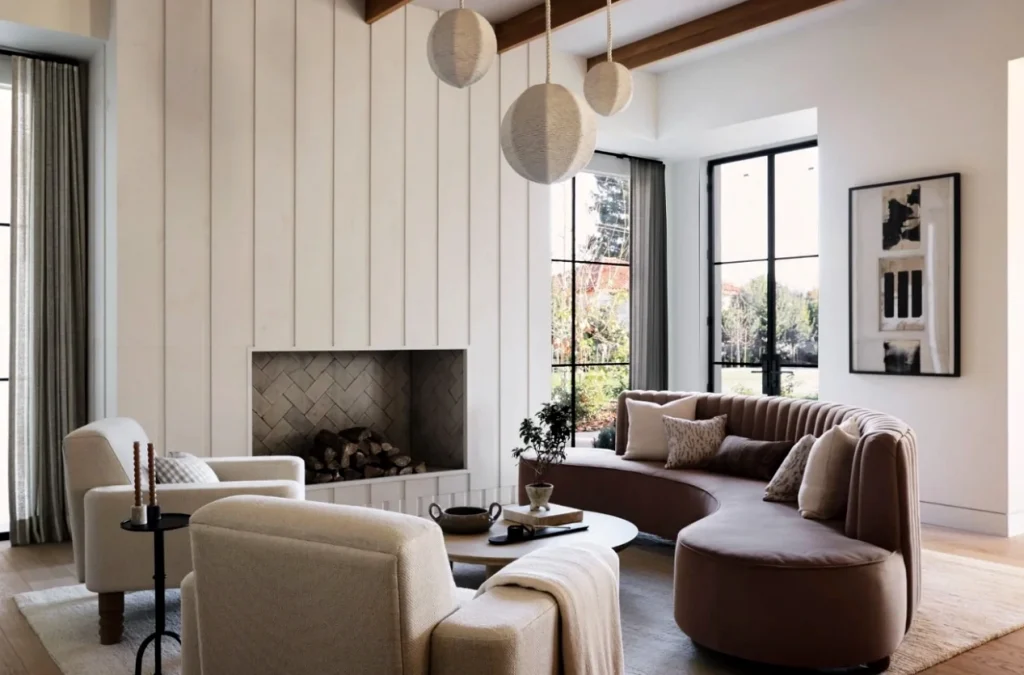
- If space allows, leave 16–24 inches (40–60 cm): this opens the possibility of placing a narrow console table behind the sofa, styled with a lamp, books, or a plant. Instead of a cold flat wall, you create depth behind you.
- A more advanced option: if your living room is spacious enough, try floating the sofa away from the wall entirely. This creates a walkway behind it. In modern interiors, this is often called a circular flow, and it can instantly make the room feel twice as open.
Core idea
A sofa does need “support,” but that support doesn’t have to be a wall. It could be a low cabinet, a screen, or even a tall plant. The real goal is this: when you sit down, you should feel held — not trapped. Secure, not compressed.
2. How Much Space Should There Be Between the Sofa and the Coffee Table?
An extremely common issue
If the coffee table is too close, you have to squeeze around it every time you stand up. If it’s too far away, you can barely reach your cup or the remote. So what’s the ideal distance?
Start with the body
This is one of those design questions your body can answer surprisingly well:
- 18 inches (45 cm): the minimum. When seated, your knees have about a fist’s worth of space from the table. It works, but standing up takes some care.
- 20–24 inches (50–60 cm): the sweet spot. Your legs can relax naturally, you can easily reach the table, and getting up feels effortless. It also allows one person to pass through sideways comfortably.
- 28 inches (70 cm) or more: if space allows, this gives the coffee table more presence as a central element rather than just an accessory to the sofa. It also makes movement around the room much easier and leaves room for a rug to help layer the space.
A simple test
Sit on the sofa with your feet resting naturally on the floor. If you can comfortably reach the middle of the coffee table without straining, and your knees don’t hit the edge, the distance is probably right.
Small-space solution
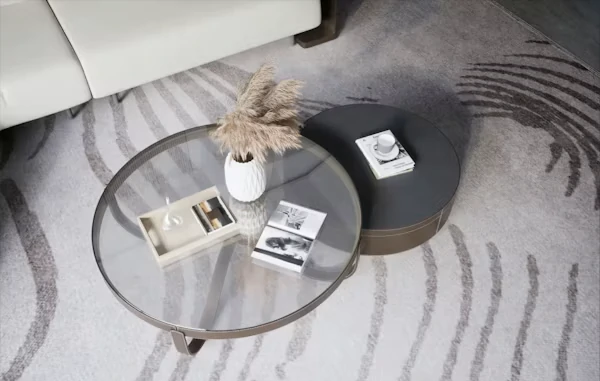
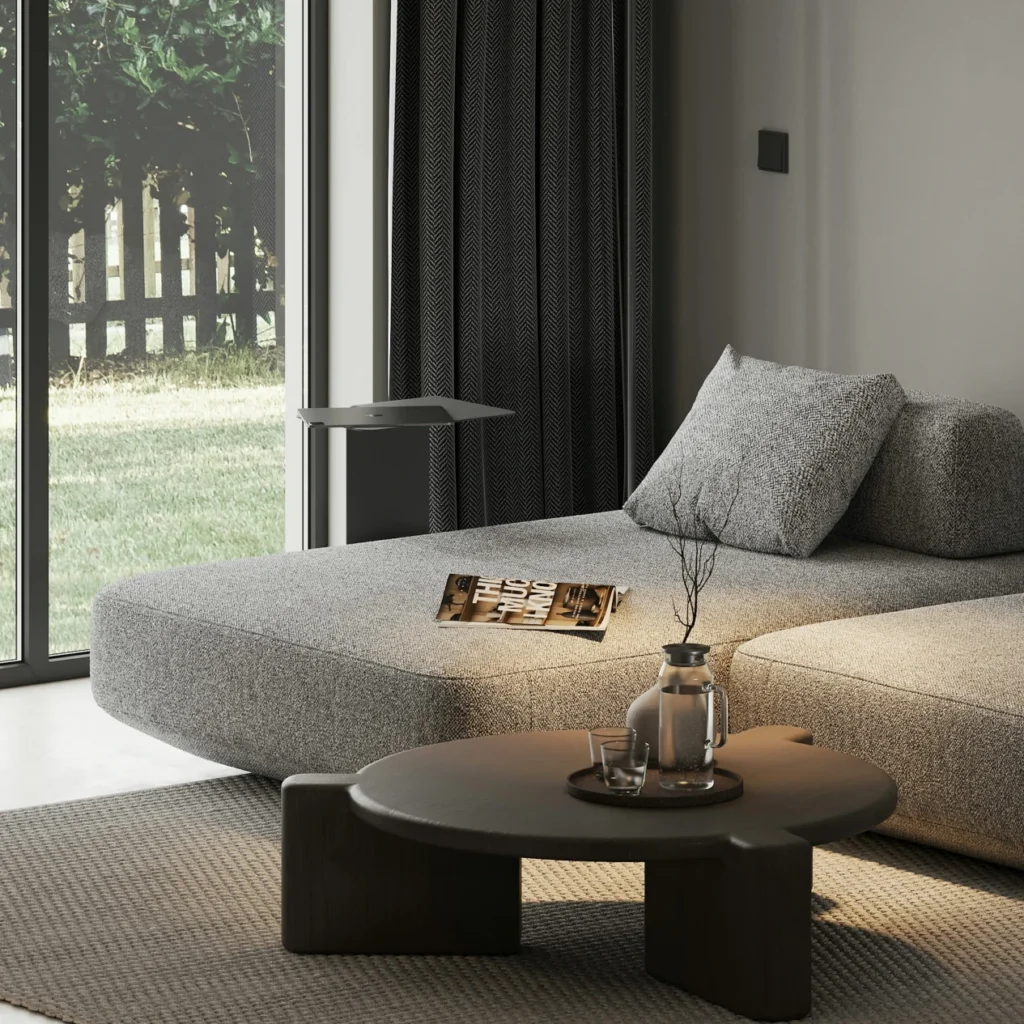
If your living room is compact, consider a round or oval coffee table. Without sharp corners, it feels visually lighter and works better in tighter layouts. Or use movable side tables that can be pulled in only when needed.
3. Which Matters More — The TV Wall or the Sofa Wall?
What’s really behind this question
During renovations, many people pour all their attention and budget into the TV wall — stone, wood slats, LED lighting, dramatic finishes. Meanwhile, the wall behind the sofa is left completely blank. But is that really the best choice?
Rethinking the visual center
In a living room, the most important thing is not what you look at, but how you feel while looking.
The TV wall is functional — it holds the screen, sound system, and equipment. But the sofa wall is experiential — it shapes how it feels to sit in the room.
Picture these two scenes:
- Scene A:a dramatic TV wall, but nothing behind the sofa except a plain white wall. Sitting there, the front feels visually heavy, while the back feels empty. You may not notice it consciously, but the space can feel oddly exposed.
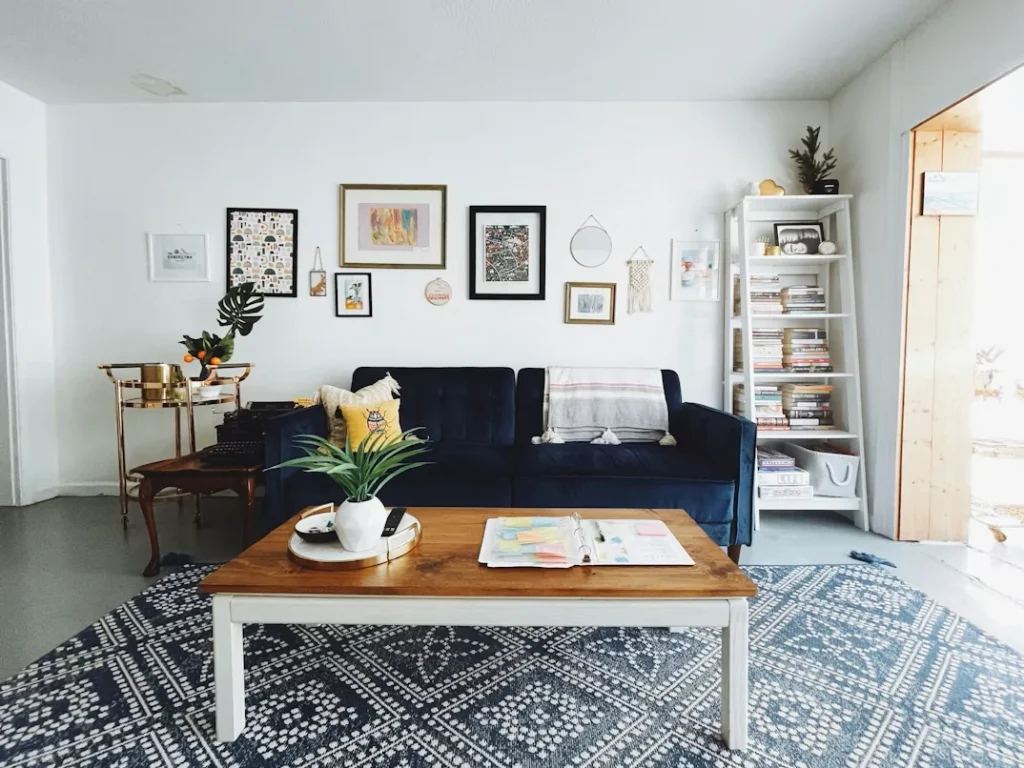
- Scene B:a simpler TV wall, but behind the sofa there’s artwork, a photo arrangement, textured wallpaper, or subtle wall lighting. The front stays calm and uncluttered, while the back adds depth and character. The result feels balanced and grounded.
A better balance
- Let the TV wall step back: use restrained finishes and simple colors. The TV is already a visual focal point — it doesn’t need much competition.
- Let the sofa wall step forward: artwork, sconces, shelves, or even a deeper wall color can create depth. When you sit down, there should be some sense of visual support behind you.
- The bigger principle: your eye should be guided toward the window, toward conversation, toward people — not pulled only toward a screen. If the TV wall becomes the sole star of the room, the space may work better for passive viewing than for shared living.
A small experiment
Turn the TV off and sit on the sofa. Then slowly look around. Where does your eye naturally land? That “default focal point” is the true center of your living room.
4. Where Should That Plant in the Living Room Actually Go?
A plant is more than decoration
The right plant can make an entire room feel more alive. But where you place it determines whether it’s simply attractive — or whether it actually contributes to the flow of the space.
Three ideal placements
- In a corner, as a softener
Corners are often where energy stalls — they’re dimmer, quieter, and easier to ignore. Placing a taller plant there, such as a fiddle-leaf fig or monstera, can soften the stiffness of the corner and bring life back into that part of the room.- Effect:a forgotten corner becomes a visual anchor .
- Beside the sofa, as a companion
A medium-sized plant placed beside the sofa arm — at eye level or slightly below — works beautifully. Think snake plant or rubber tree.
- Effect:when sitting on the sofa, that bit of greenery creates a subtle feeling of company, softness, and psychological comfort. From across the room, it also helps soften the strong lines of the sofa .
- By the window, as an energy receiver
If you have good natural light, place a sun-loving plant near the window or on the sill, such as succulents or jasmine.
- Effect:the plant becomes a kind of translator between outdoor light and indoor space — receiving sunlight, releasing moisture and oxygen, and making the energy entering the room feel fresher and more alive.
The psychological side of plant choice
- Round-leaf plants(like pothos or Chinese money plant): visually softer, ideal for areas meant for relaxation .
- Vertical plants(like snake plant or cactus): help draw the eye upward and make lower ceilings feel taller .
- Trailing plants(like ivy or string of hearts): soften hard lines and work especially well on shelves or elevated spots.
5. Bonus Detail: Rug Size Determines the “Temperature” of the Room
This may not be the first thing people ask about, but it’s one of the most overlooked details in living.
A common mistake
Buying a rug that fits only under the coffee table — while the sofa legs sit completely off it. The result? The room feels visually fragmented, as if the sofa, table, and rug all belong to different stories.
A better rule
A rug should connect furniture, not simply decorate the floor.
- Minimum size:at least the front legs of the sofa should sit on the rug .
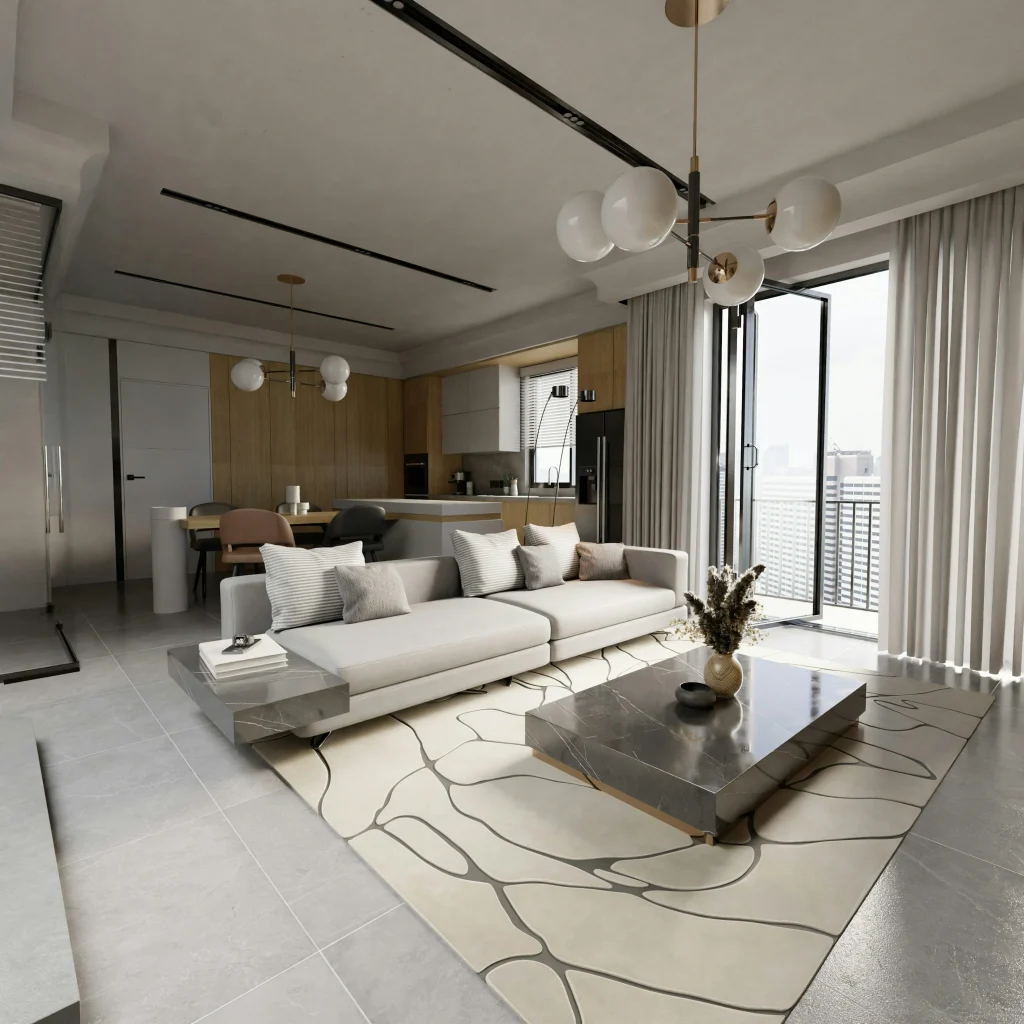
- Ideal size:the front legs of all major pieces — sofa, coffee table, and even accent chairs — should rest on it .
- Best result:the rug acts like an “energy base,” linking the furniture into one unified zone. Underfoot, it feels warm. Visually, it creates a sense of territory and belonging .
A quick way to tell
Stand at the entrance of your living room and look at the rug first. If it appears to be floating in the middle of the room rather than anchored under the seating area, it’s probably too small.
Conclusion: Let the Space Support You
There’s no single perfect way to arrange a living room. But one principle remains true: the space should serve the people living in it — not the other way around.
Ancient ideas like qi in feng shui and modern ideas from environmental psychology are both pointing to the same truth:
When you walk into a space and feel able to breathe easily, move naturally, and settle into calm — the layout is working.
So make one small adjustment. Move a plant. Pull the sofa out a little. Or simply clear the clutter from the coffee table.
You may find that one small shift is enough to change the entire feeling of the room.
Your living room deserves more room to breathe.