Kitchen Energy Guide: Four Principles for More Nourishing Cooking
Introduction: The Kitchen Is the Energy Center of the Home — What Are You Creating There?
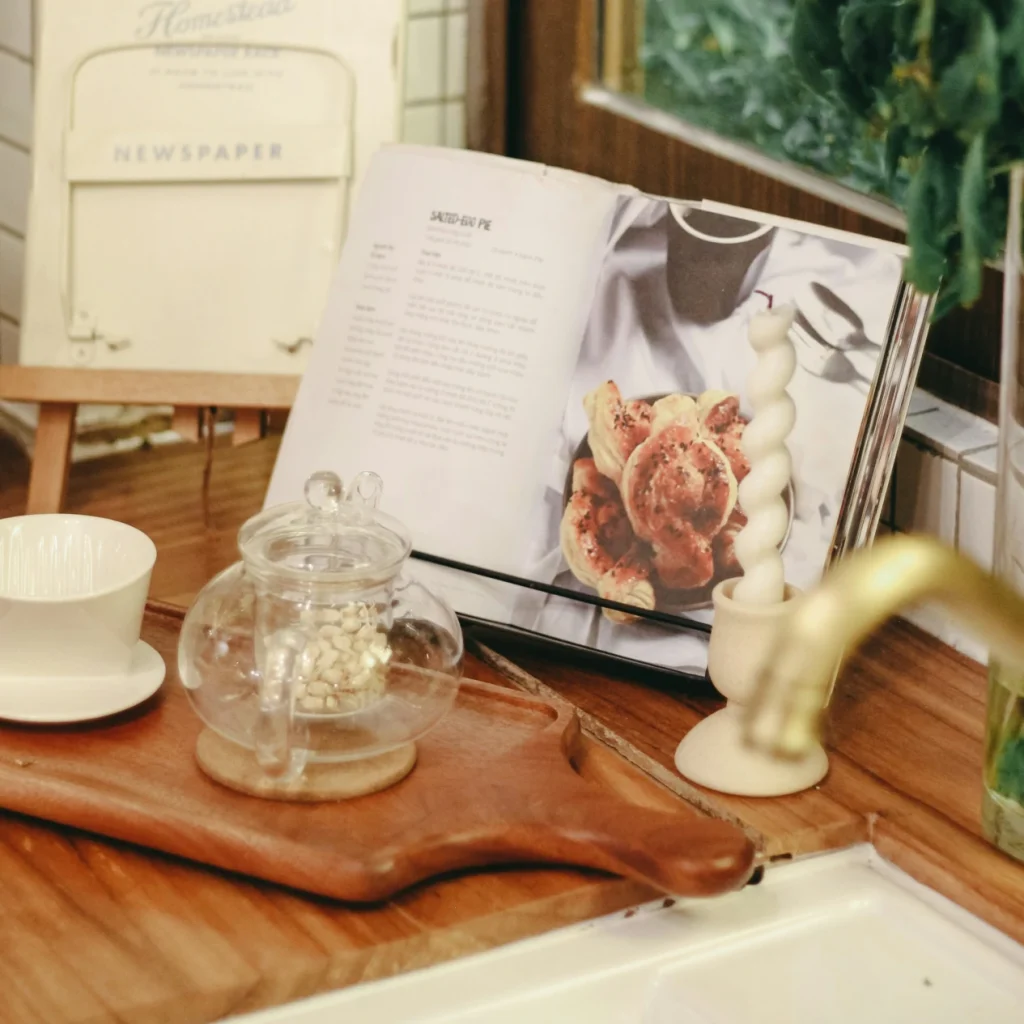
If the living room is the heart of the home, then the kitchen is its energy center. It’s where ingredients become nourishment, and where care turns into something you can actually taste.
A well-designed kitchen can make cooking feel enjoyable. A poorly arranged one can make even a simple bowl of noodles feel frustrating.
In Eastern traditions, the kitchen is often seen as a place of abundance — where food is prepared and energy is transformed. In modern environmental psychology, it’s considered one of the core functional spaces in the home, because its layout directly shapes our mood, our efficiency, and even the quality of interaction among family members.
Different traditions, same truth: the way your kitchen is arranged affects how you feel when you step into it — and that feeling often finds its way into the food you make.
So today, let’s leave mysticism aside and focus on what you can actually feel every day: ease, comfort, and atmosphere. Let’s start with four common kitchen details that can completely change the cooking experience.
1. When the Stove and Sink Work Well Together, Cooking Feels Much Easier
One of the most common kitchen issues is the distance between the stove and the sink.
Sometimes they’re too far apart, so washing, prepping, and cooking turn into constant back-and-forth movement. Other times they’re too close, and water splashes into the cooking area every time you rinse something.
In kitchen design, there’s a classic idea called the work triangle. It describes the flow between the stove, sink, and refrigerator — the three points that shape how efficiently a kitchen works.
Ideally, these three areas should feel connected but not crowded. There shouldn’t be obstacles in the way, and moving between them should feel natural and smooth, not like being forced into one long straight line.
When it comes to the relationship between the stove and sink, balance matters.
If they’re too close — usually less than about 24 inches or 60 cm apart — there’s barely enough room to prep food, and the two zones begin to interfere with each other. Water from the sink can splash into the cooking area, and using both spaces at the same time becomes awkward.
A more comfortable distance is usually somewhere between 35 and 47 inches, or 90 to 120 cm. That range supports a smooth wash-prep-cook rhythm and often gives two people enough room to use the kitchen without constantly bumping into each other.
If the sink and stove are too far apart — more than about 70 inches or 180 cm — the kitchen starts to feel less efficient. You end up walking more than necessary, which adds time and a little extra fatigue to every meal.
One detail people often overlook is that having the sink and stove directly face each other at close range usually isn’t the most comfortable setup. It’s not that this arrangement is always wrong, but when they are too close and directly opposite each other, splashes and grease can easily cross into the other zone.
A better layout is often an L-shape, or at least one where the two areas don’t face each other directly.
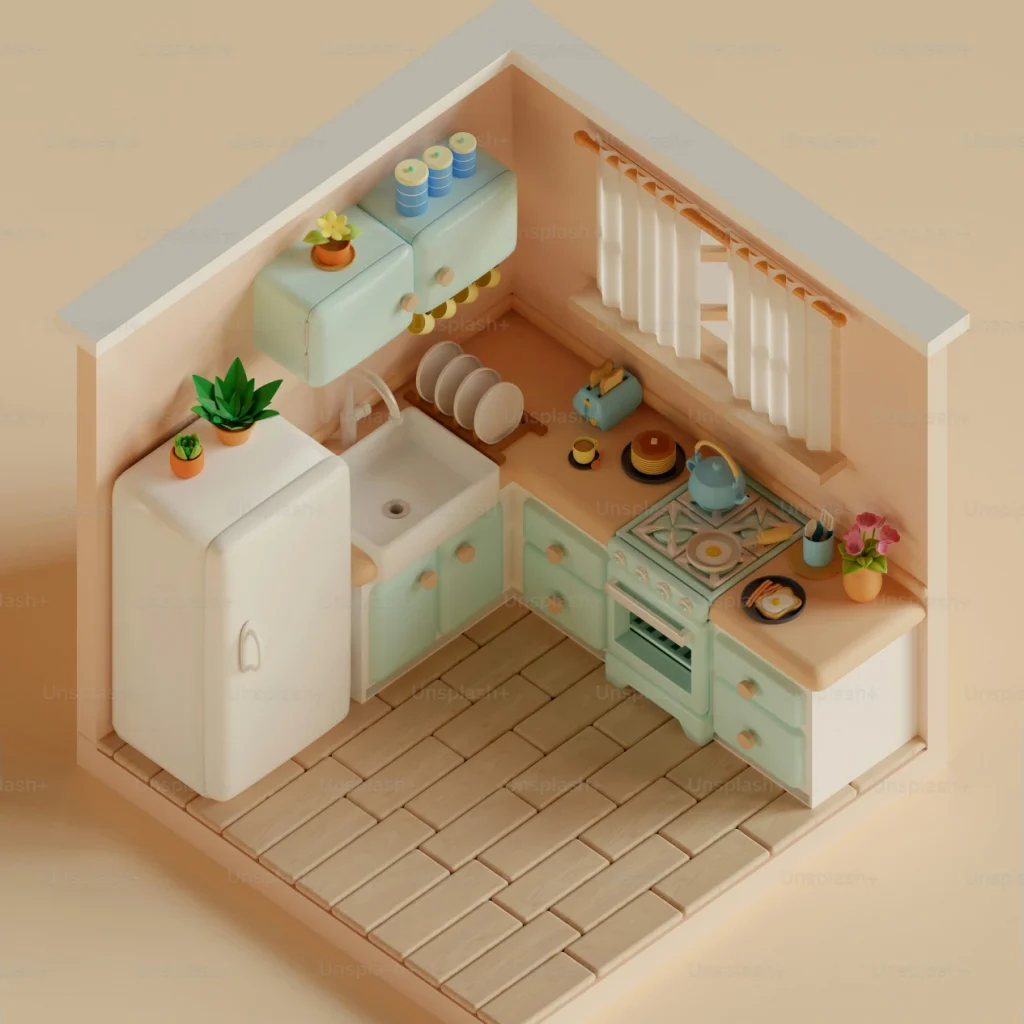
2. The Shape of the Dining Table Changes the Feel of the Meal
A lot of people think the shape of a dining table is purely about appearance. But in reality, it quietly shapes the way people interact during a meal.
A rectangular dining table tends to feel more structured. It works especially well for formal meals, larger gatherings, or situations where seating is a little more defined. It naturally creates a sense of “head” and “sides,” which can make the experience feel more ordered and a little more ceremonial.
That can be great for holiday meals, dinner parties, or homes that enjoy a stronger sense of routine and structure.
A round table creates a very different atmosphere. It usually feels more relaxed, more equal, and more conversation-friendly. No one sits at the “head” of the table, everyone can see each other more easily, and serving or sharing food often feels more natural.
That’s one reason round tables work especially well for everyday family meals or intimate gatherings with friends.
Oval tables or softened rectangular tables often sit somewhere in the middle. They keep some of the practicality of a rectangular table while reducing the harder visual edges, which can make the room feel more fluid and welcoming.
It’s interesting to notice how table shape changes conversation. At round tables, people often talk longer and more openly. At long tables, conversations are more likely to split into smaller groups. That isn’t a metaphor about “energy” — it’s simply what happens when sightlines and physical distance change.
There’s also another small detail that can make a dining area feel much better: the light above the table.
In most cases, a pendant light centered over the dining table works better than one centered in the room. When the table itself is illuminated, it creates a stronger sense of focus and intimacy. The food looks more inviting, the space feels warmer, and people naturally pay more attention to the meal and to one another.
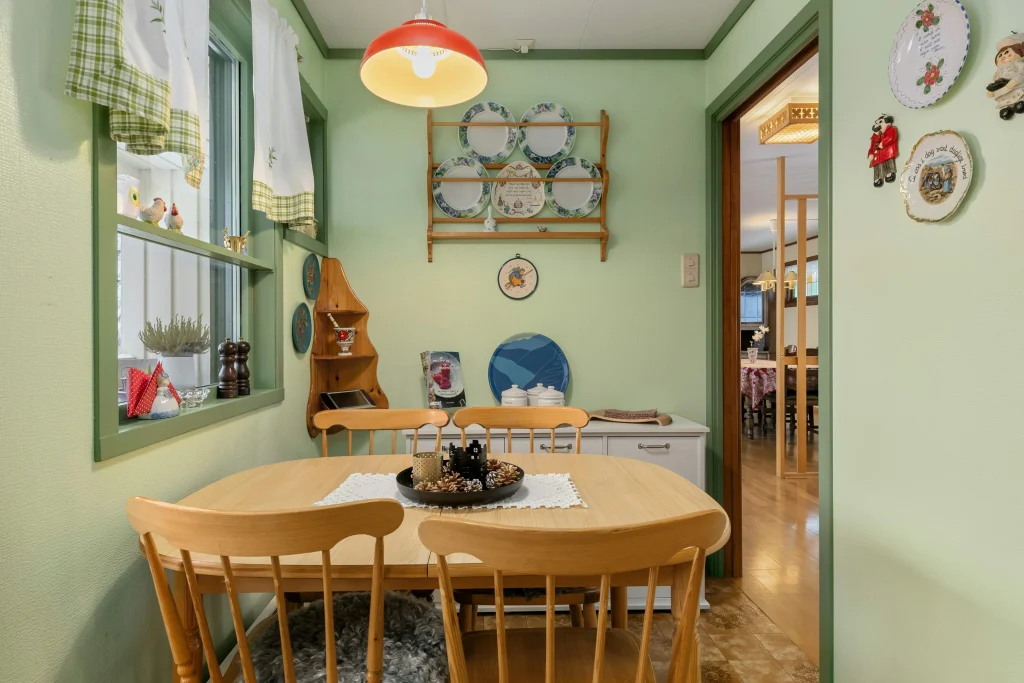
3. Where the Fridge Goes Matters More Than People Think
A lot of people treat the refrigerator as the last item to place in the kitchen — wherever it happens to fit, that’s where it goes.
But the fridge actually shapes the first step of cooking, so its position matters more than it seems.
In most kitchens, the natural cooking sequence goes something like this: you take ingredients from the fridge, bring them to the sink, move to the counter to prep, and then head to the stove to cook.
So ideally, the refrigerator should sit near the start of that flow.
If the fridge is placed right next to the stove, for example, it can interrupt that rhythm. Your movements become a little less natural, and those small inefficiencies add up over time.
In open kitchens, it often helps to place the fridge closer to the entrance rather than deep inside the cooking area. That way, when you come home with groceries, you can put food away quickly without walking through the whole kitchen first.
It also helps if the fridge door can open without blocking the main path through the space.
One arrangement that is generally less ideal is placing the fridge directly beside the stove. On a practical level, refrigerators need room to release heat, while stoves generate heat — so the two don’t naturally support each other. From a design perspective, they also represent two very different kitchen functions: storing and preserving on one side, cooking and heating on the other.
Even leaving a modest gap between them often makes the kitchen more comfortable to use.
In smaller homes, a few creative solutions can help. A built-in fridge can make the kitchen feel visually cleaner, and in some layouts, placing the fridge just outside the kitchen — for example in an adjacent dining area — can actually improve the overall flow.
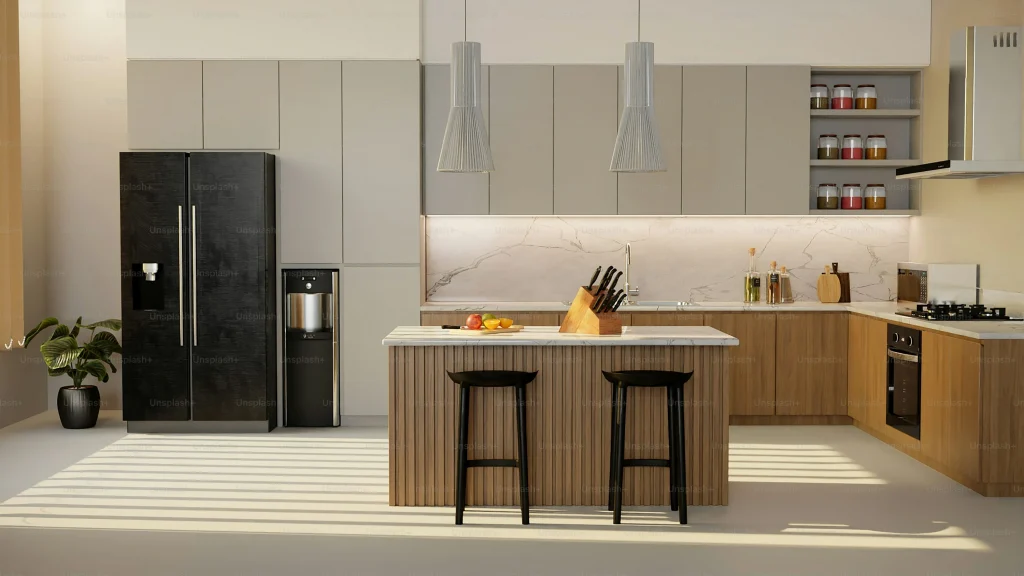
4. That Kitchen Wall Probably Doesn’t Need to Hold So Much
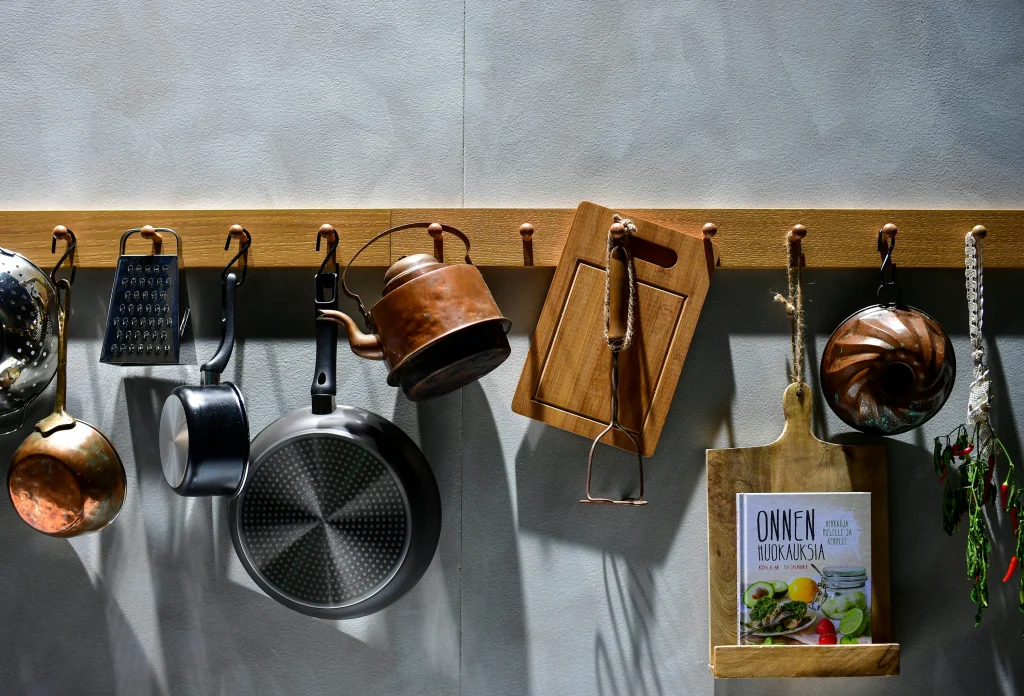
A very common kitchen habit is putting everything on the wall.
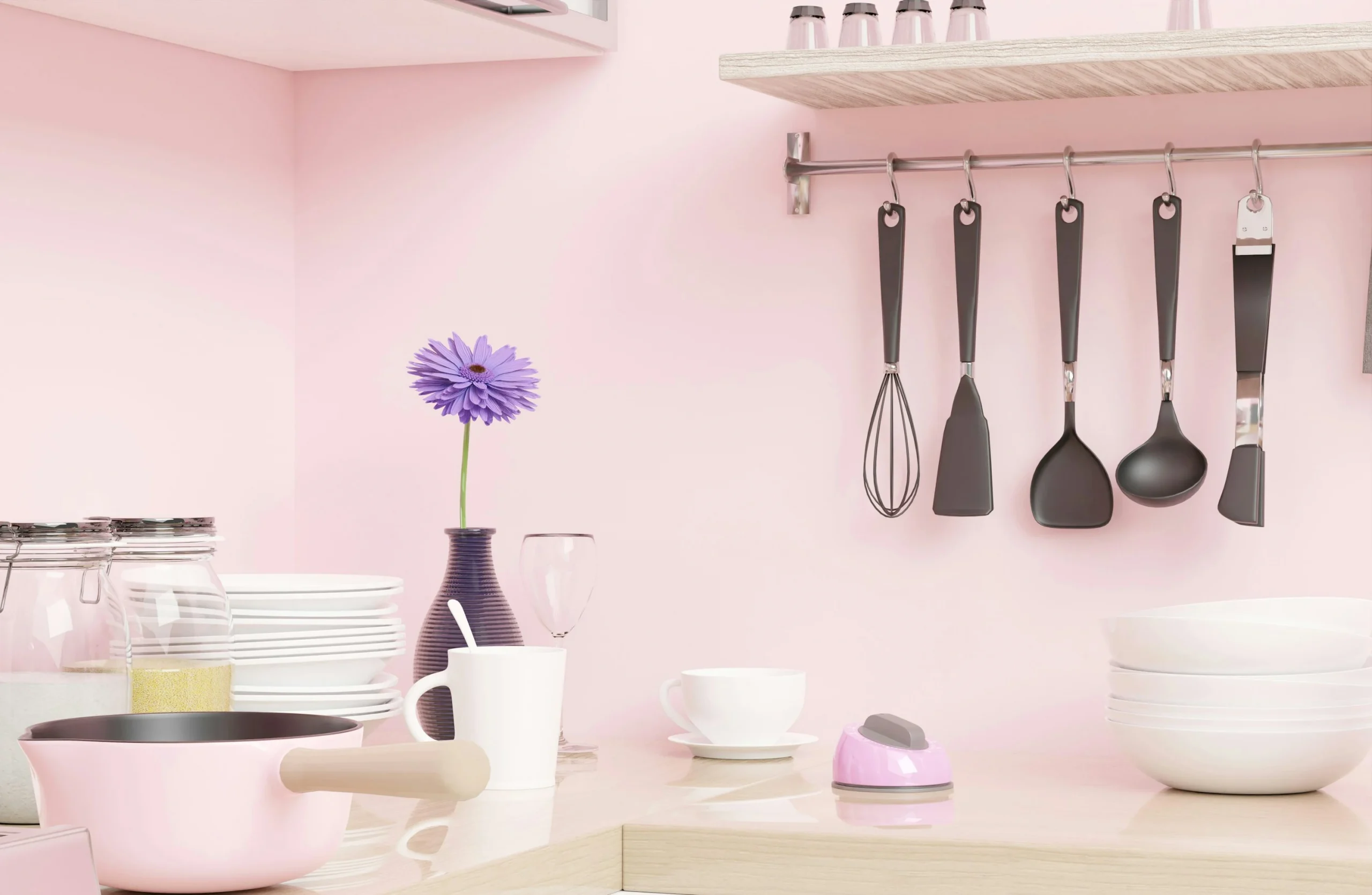
Hooks end up holding spatulas, ladles, strainers, and aprons. Racks hold spices, paper towels, and wraps. The fridge door gradually fills with notes, magnets, reminders, and shopping lists.
At first, it may feel convenient. But over time, it often starts to create visual noise.
Every item hanging on the wall asks for a little bit of attention. Even when you’re not consciously looking at it, your brain is still processing it. And because the kitchen already asks you to focus on timing, heat, texture, movement, and multiple steps at once, that extra visual input can make the space feel more tiring than it needs to be.
Cleaning also becomes more difficult. The more things you hang on the wall, the more places grease and dust have to settle. Over time, those hooks, gaps, and edges become harder to clean properly.
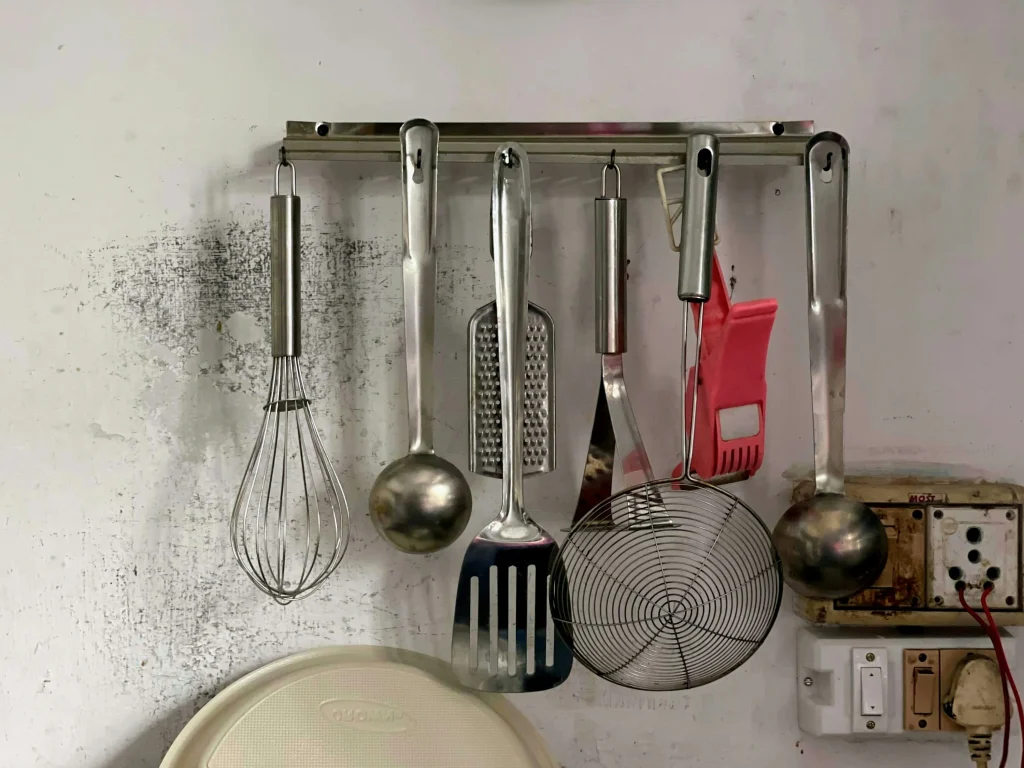
In older spatial language, cluttered walls are said to block the flow of kitchen energy. In modern terms, a visually crowded kitchen simply feels heavier and less inviting.
A more balanced approach is usually to keep most things stored away and leave only the essentials visible.
You don’t need every tool on display. Usually, a few of the most-used tools within easy reach are enough. Everything else can live in drawers, cabinets, or neatly arranged trays. Spices often look better and work better when grouped together on the counter or in a drawer rather than scattered across the wall.
A simple test is this: stand at the kitchen entrance and take one quick look at the wall. If the first thing you notice is a wall full of hanging items rather than a clean, calm surface, it may already be too crowded.
5. One More Overlooked Detail: Kitchen Color Affects Appetite More Than You Think
This may not be the first thing people think about, but color has a surprisingly strong effect on how a kitchen feels.
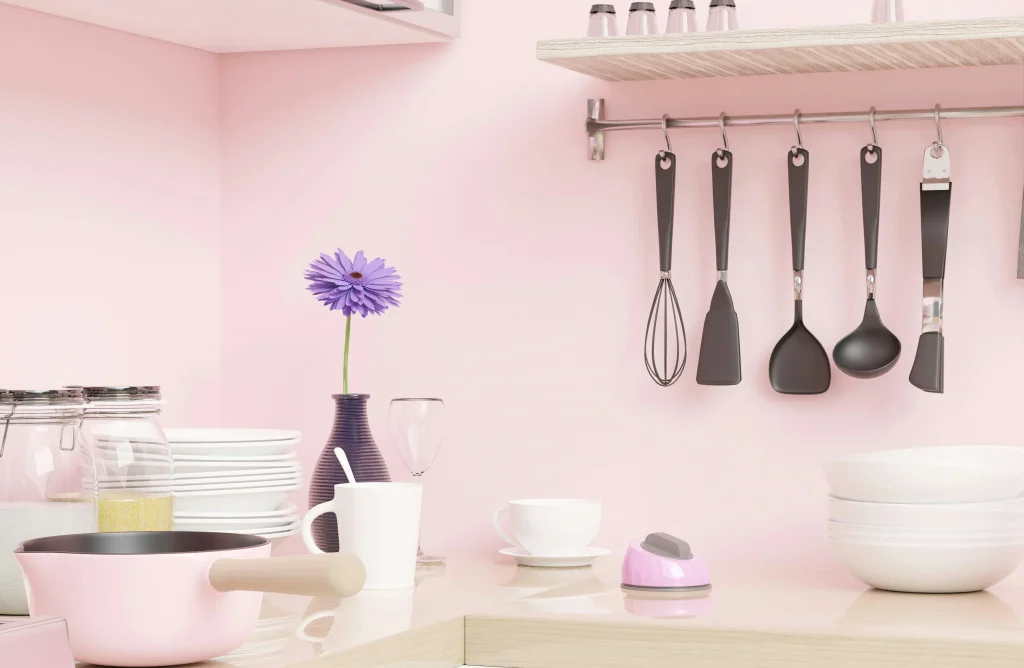
Warm tones like red, orange, and yellow tend to feel lively and appetite-friendly. They can make a kitchen feel more energetic and social. That said, very bright reds are usually best used in small amounts rather than across the whole room.
Cooler tones like blue, green, and gray tend to feel cleaner and calmer. For some people, that’s a perfect fit — especially in a minimalist kitchen. But if the space becomes too cool or stark, it can also feel a little less welcoming.
Neutral shades like white, cream, beige, and natural wood are usually the easiest to live with. They feel soft, flexible, and not overly stimulating, while allowing the food itself to become the visual focus.
Even if you don’t want to redesign the whole kitchen, small changes can still shift the mood. A warm-toned table runner, a green plant, or warm white lighting can instantly make the space feel more inviting.
Even choosing a warm white bulb — around 3000K — can make food look more delicious and the room feel softer.
Conclusion: The Kitchen Is the Temperature Gauge of the Home
In the end, kitchen design comes down to a very simple question:
How much do you actually want to spend time in this space?
Those older ideas — the distance between the stove and sink, the shape of the dining table, the placement of the fridge — all point in the same direction: when a kitchen feels intuitive, comfortable, and welcoming, you naturally want to spend more time there. You cook more easily, enjoy meals more fully, and bring more care into the rhythm of everyday life.
That isn’t superstition. It’s simply respect for the quality of daily living.
You may find that a kitchen that works more smoothly also makes you more willing to cook well — for yourself, and for the people you care about.
May your kitchen always be filled with warmth, comfort, and good food.