Does Mirror Placement Really Matter?
Why Where You Put a Mirror Can Change How a Room Feels
Have you ever had this experience?
You wake up in the middle of the night, half asleep, walk into the bathroom, and suddenly catch a shadow in the mirror. In an instant, you are fully awake.
Or maybe you are lying in bed, ready to fall asleep, but the mirror on the wardrobe keeps catching your eye. You know it is just a reflection, but somehow you cannot fully relax.
That does not mean you are overly sensitive.
It may simply mean your body is reacting to something real:
where a mirror is placed can affect how a space feels—and how you feel inside it.
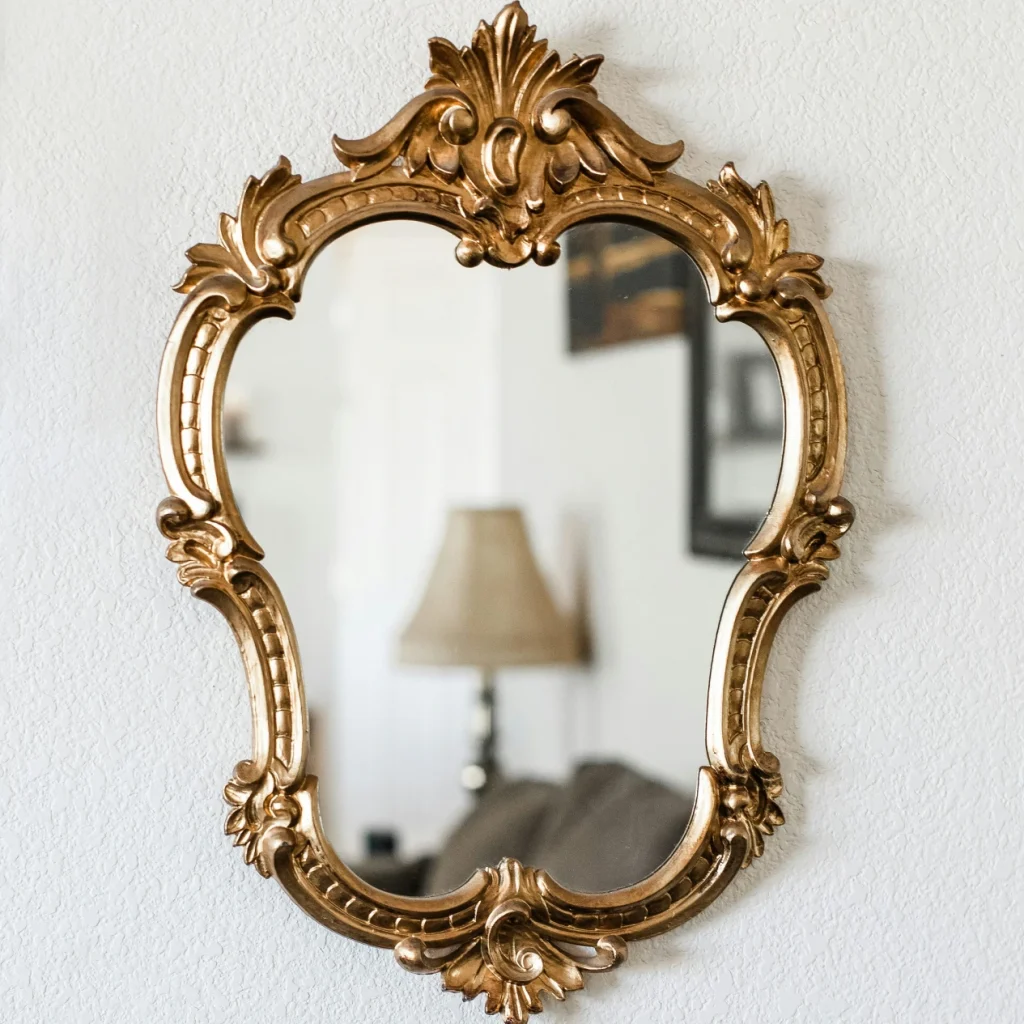
What a Mirror Really Does
From a physical point of view, a mirror is simple. It reflects light back to you. What you see is your room, your body, and the light bouncing off surfaces.
But from a human perception point of view, a mirror does something more subtle:
it creates the feeling of another space.
When you look at a mirror, you are not seeing a wall or a solid object. You are seeing an extension—an image of the room that looks real, but is not physically there.
During the day, your brain usually handles this easily. With enough light and visual clarity, it can instantly tell the difference between the real room and its reflection.
At night, however, things change. Light is lower. Edges are softer. Shadows are less defined. The brain has to work harder to interpret what it sees.
And when the brain cannot immediately confirm what something is, it becomes more alert.
This is not superstition. It is a normal response of the visual system in low-light conditions.
What feels like “something is off” may simply be your brain staying on duty when you actually want it to rest.
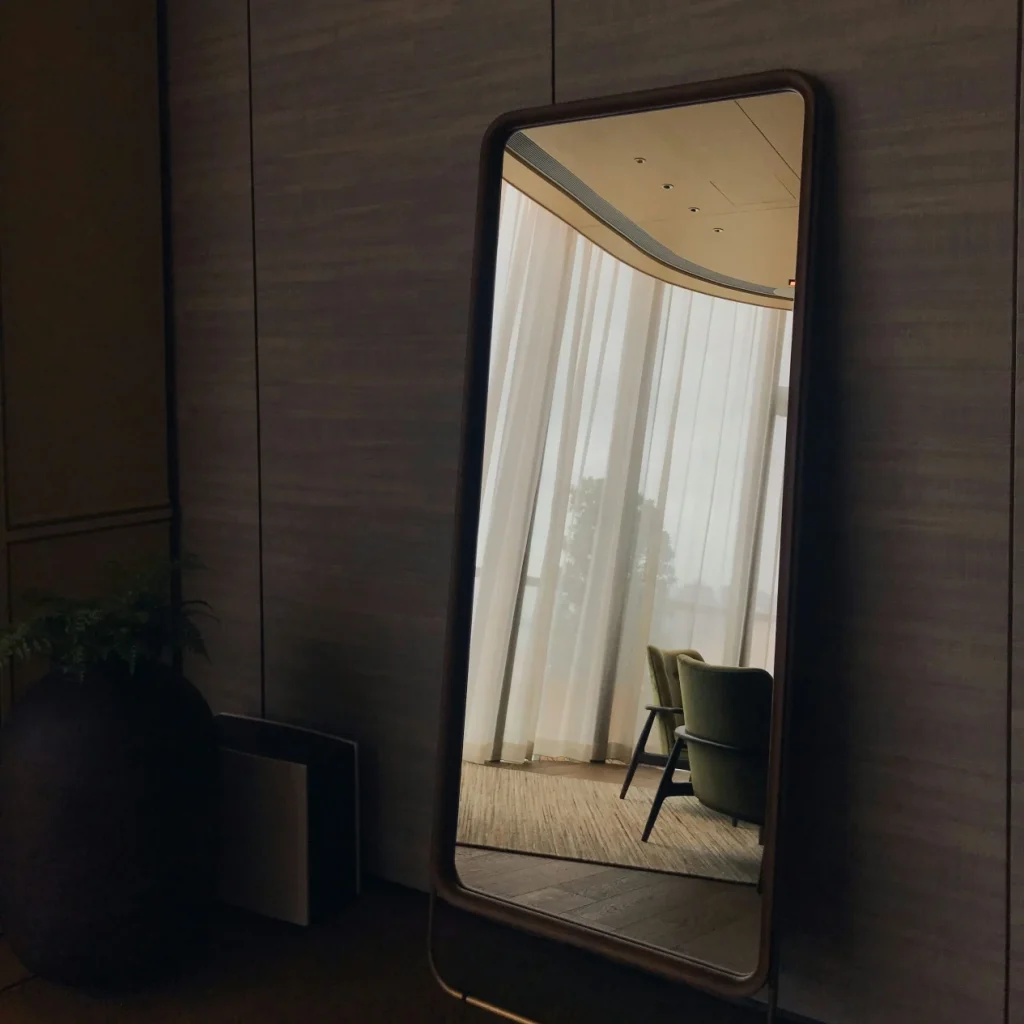
Why a Mirror Facing the Bed Can Feel Unsettling
Many people have heard this feng shui rule:
do not place a mirror directly facing the bed.
Traditional feng shui often explains this by saying that mirrors reflect energy and may disturb sleep. In more modern terms, the idea is actually quite easy to understand.
When you are lying in bed, your body is trying to shift into rest mode. But if a mirror is within your line of sight, or even your peripheral vision, your brain continues to register reflected light, movement, shadows, and spatial depth.
Even if you are not consciously paying attention to it, part of your mind may still be processing questions like:
Is something moving?
Is that light?
Is that a person?
Is that just a reflection?
This kind of low-level background processing may not wake you up completely, but it can make it harder for your nervous system to fully let go.
You may fall asleep more lightly, wake more easily, or simply feel less settled in the room.
There is nothing magical about this. It is simply that your brain cannot always treat reflected space as fully neutral—especially when you are tired, in darkness, or trying to relax.
What About a Mirror Facing the Front Door?
Another common placement is a mirror directly opposite the entrance.
In feng shui, this is often described as sending incoming energy right back out. But even without traditional language, the emotional logic makes sense.
When you open your front door, the first thing you ideally want to feel is transition:
I am home. I can exhale now.
But if the first thing you see is your own reflection, the experience changes. Instead of arriving into the space, you are suddenly confronted with yourself—your posture, your face, your tiredness, your appearance.
That small moment can shift the mind from arrival to self-checking.
And that is not always what home should do.
Home should feel like a place where you can soften, not immediately evaluate yourself.
This is why mirrors in the entryway can still be useful—but often work better when placed to the side rather than directly facing the door. A side wall, the inside of a cabinet door, or a concealed panel can offer convenience without interrupting the emotional rhythm of coming home.
Do Mirrors Really “Disturb Energy”?
In traditional texts, mirrors are sometimes said to disturb the spirit or unsettle the mind. This may sound mystical, but if we translate that into modern language, it becomes surprisingly understandable.
A mirror constantly returns attention back to you.
That is not always a problem. In many situations, it is helpful. Mirrors help with dressing, grooming, styling, and making a room feel brighter or larger.
But in moments when you are meant to be resting, slowing down, or mentally switching off, that same reflective quality can become overstimulating.
You may catch a glimpse of your tired face and start thinking about how exhausted you are.
You may notice a moving shadow in the reflection and feel a flash of alertness.
You may see visual depth where you really need stillness.
So the issue is not that mirrors have mystical power.
It is that they are extremely effective at reflecting light, image, space—and attention.
Placed well, a mirror is a tool.
Placed poorly, it can become a source of subtle disruption.
Where Should Mirrors Go?
You do not need to remove every mirror in your home.
You just need to place them with a little more intention.
In the bedroom, avoid placing a mirror directly facing the bed
If space is limited, consider placing the mirror on the inside of a wardrobe door, or using a vanity mirror that can be turned away at night.
In the entryway, avoid placing a mirror directly opposite the front door
A mirror on the side wall is usually more comfortable. It is still practical before leaving the house, but it does not interrupt the sense of arrival when you come home.
In the bathroom, avoid placing a mirror directly across from the toilet
This is less about superstition and more about comfort. Most people simply do not enjoy seeing themselves in that moment.
Avoid mirrors directly reflecting dark windows at night
During the day, mirrors near windows can help distribute light beautifully. But at night, if a mirror reflects darkness from outside, it may create a heavy or uneasy feeling in the room. Curtains can help soften this.
Choose shapes with softer edges when possible
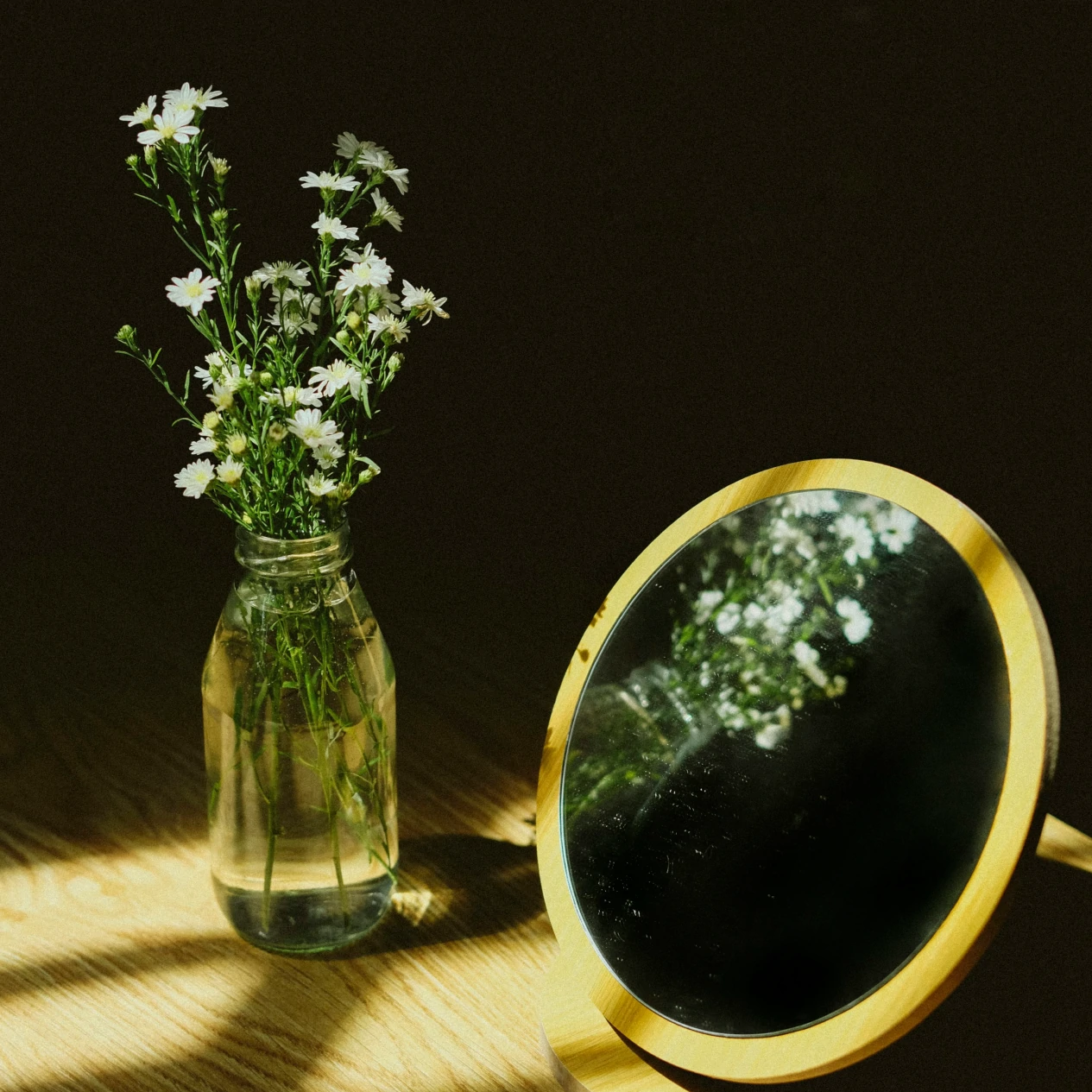
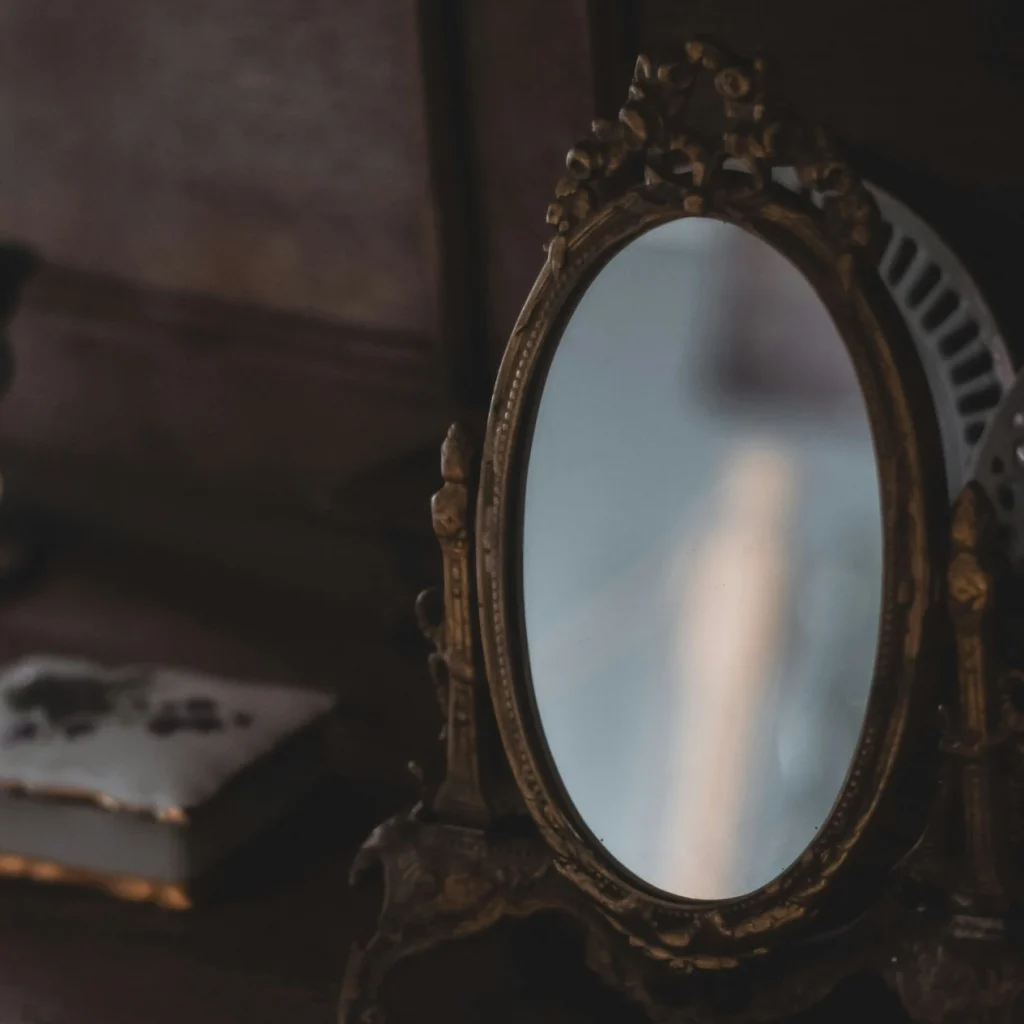
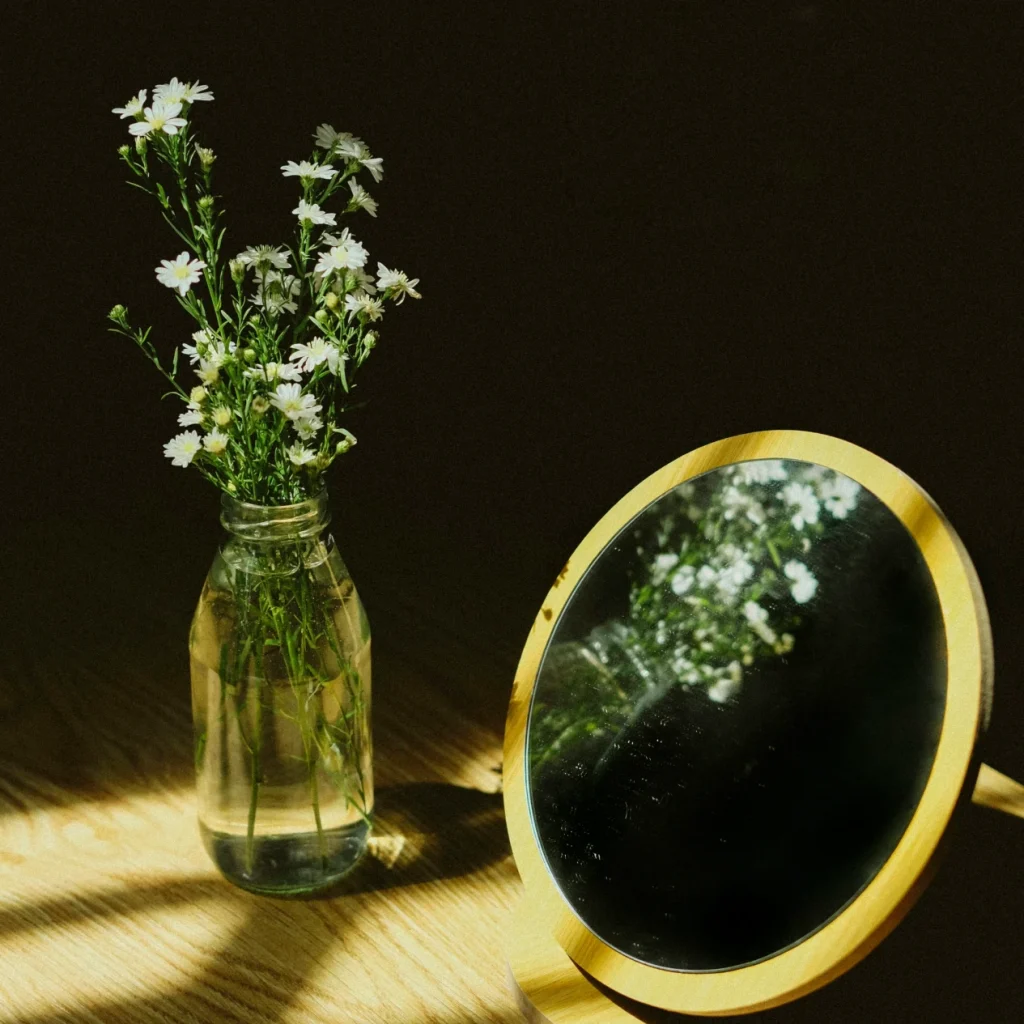
Round, oval, or gently framed mirrors often feel calmer than very sharp or aggressive forms. Softer outlines usually create a more relaxed visual effect.
A Simple Way to Think About It
A mirror is not mysterious.
It is simply a reflective surface.
But because it interacts with light, space, attention, and perception, it has more impact than people often realize.
So when deciding where to place a mirror, it may help to ask one simple question:
Do I need to see myself here?
If the answer is yes, place it there with intention.
If the answer is no, it may belong somewhere quieter.
A mirror will not harm you.
But it will faithfully reflect whatever is in front of it—including light, movement, and your attention.
And sometimes, the most supportive thing a space can do is reflect a little less.