NEW JOURNAL NOTES ON SPACE, OBJECTS, AND EVERYDAY ATMOSPHERE
Visit Shop
Back to All Articles

Inside Suzhou’s Classical Gardens: China’s 2,500-Year-Old Secret to Inner Peace

In this article
1. The Scholar’s Sanctuary: A Retreat from the World 2. The Architecture of Illusion: The Infinite in a Teacup 3. The Language of Nature: Stones, Water, and Wood 4. Poetic Resonance: Where Philosophy Meets Art 5. A Timeless Relevance: The Ultimate Digital Detox

Forget the imposing grandeur of Beijing. Travel south to the water towns of the Yangtze Delta, where ancient scholars built miniature universes to heal the soul.

When we picture ancient Chinese architecture, the symmetrical, imposing red walls of Beijing’s Forbidden City usually come to mind. But travel south to the misty water towns of the Yangtze River Delta, and a completely different architectural philosophy reveals itself—one that trades imperial power for poetic intimacy.

Welcome to the Classical Gardens of Suzhou.

Recognized as a UNESCO World Heritage site, these gardens are not merely beautiful parks. They are three-dimensional landscape paintings, physical manifestations of ancient philosophy, and the ultimate sanctuaries for the soul. Let’s step through the moon gates and decode the magic hidden within these miniature universes.

1. The Scholar’s Sanctuary: A Retreat from the World

The story of Suzhou’s gardens begins over two millennia ago. While these spaces evolved dramatically by the Song Dynasty, it was during the Ming and Qing dynasties (14th to 19th centuries) that they truly blossomed into the masterpieces we see today.

Unlike royal gardens built to showcase absolute power, Suzhou’s gardens were built by scholars, officials, and merchants. After retiring from the chaotic political arena of the imperial court, these intellectuals returned home to build a spiritual refuge.

Take the famous Humble Administrator’s Garden (Zhuozheng Yuan). Built in the 16th century by a dismissed imperial censor, its very name was a poetic declaration: a desire to step away from worldly struggles and embrace a simple, agrarian life.

At their peak, over 200 such gardens existed within Suzhou’s city walls. Today, over 50 remain beautifully preserved, offering us a window into the minds of ancient China’s literati.

2. The Architecture of Illusion: The Infinite in a Teacup

The most breathtaking magic of a Suzhou garden lies in its spatial illusion. Enclosed by high white walls within a dense city, the challenge was: How do you fit the vastness of nature into a tiny courtyard?

The answer is a design philosophy often described as “a universe in a teacup” (咫尺之内再造乾坤). Instead of rigid symmetry, Suzhou gardens embrace asymmetry and organic flow through three key techniques:

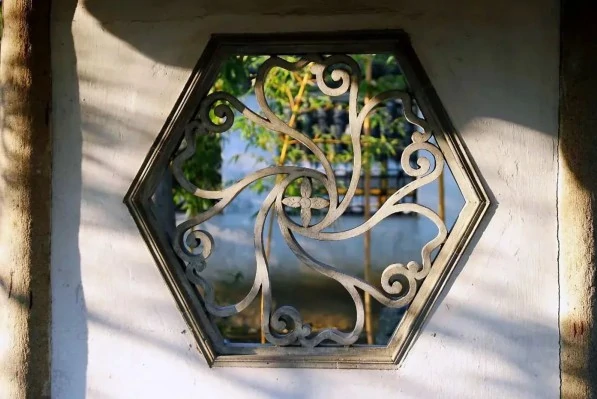
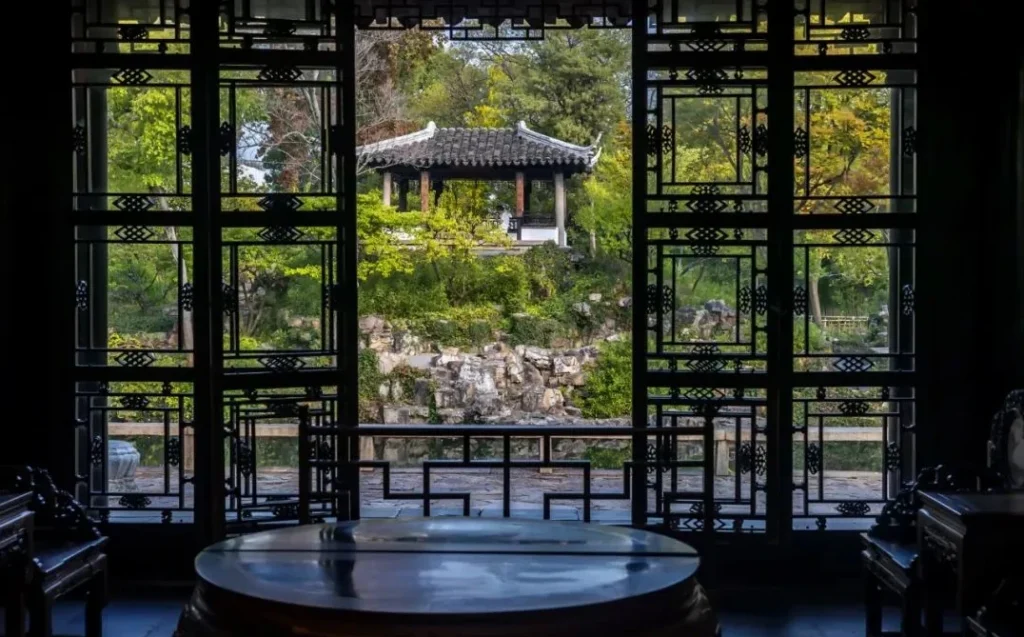
  • 🏞️ Borrowed Scenery (Jiejing):Garden masters cleverly “borrowed” elements outside the garden. A pagoda on a distant hill is framed perfectly by a pavilion’s window, making it appear as part of the garden itself.
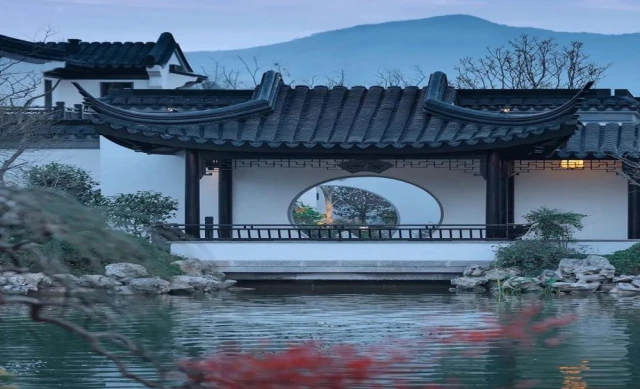
  • 🎭The Art of Covering and Revealing: You never see the entire garden at once. Winding corridors, strategically placed rocks, and bamboo screens force you to turn corners, revealing new “paintings” at every step. It creates infinite space within a limited area.
  • 🎨Monochrome Elegance: While royal gardens scream with red pillars and gold tiles, Suzhou gardens whisper in black, white, and gray. White walls act as canvases for shifting bamboo shadows, while dark clay tiles evoke the serene elegance of a traditional ink-wash painting.

3. The Language of Nature: Stones, Water, and Wood

Every element in a Suzhou garden is deeply symbolic, working together to recreate nature’s grandest landscapes in miniature.

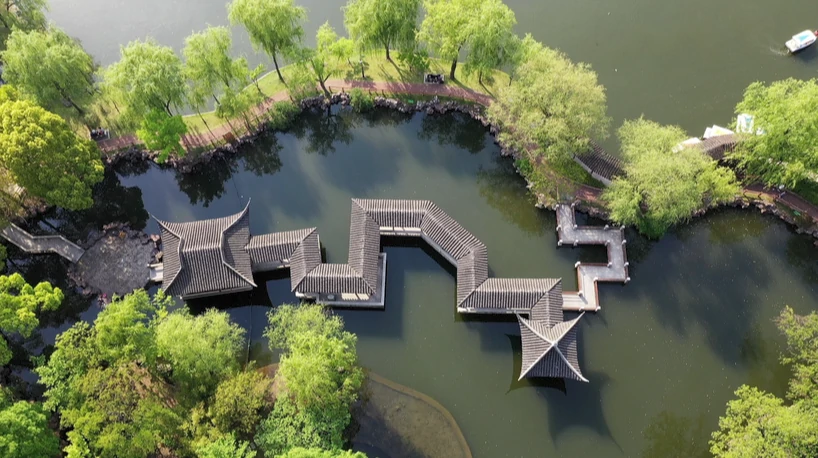
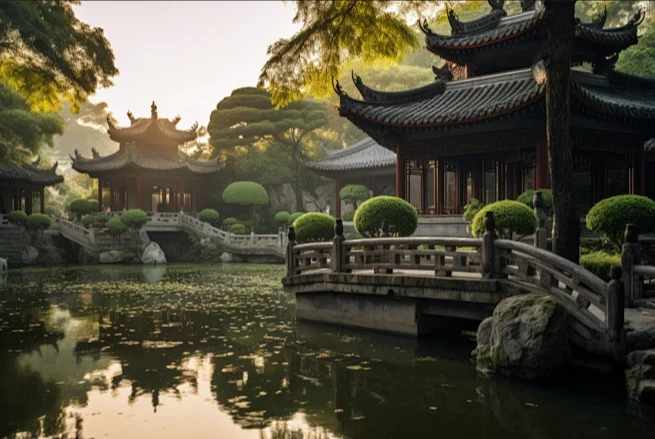
  • 💧Water (The Soul): Occupying up to a third of the space, water is the central mirror of the garden. It reflects the sky, slows the visitor’s pace, and brings profound tranquility.
  • 🪨Taihu Stones (The Skeleton): Sourced from nearby Lake Tai, these limestone rocks are the most iconic features. Eroded by water over millennia, they are prized for being “shou, zhou, lou, tou”—thin, wrinkled, pierced, and hollow. Stacked into maze-like artificial mountains, they represent the rugged peaks of remote wilderness.
  • 🌿Plants (The Emotion): Plants are chosen for their character. The pine represents resilience; the bamboo symbolizes moral integrity and flexibility; the plum blossom signifies perseverance in harsh conditions. Together, they are known as the “Three Friends of Winter.”

4. Poetic Resonance: Where Philosophy Meets Art

A Suzhou garden is incomplete without its cultural context—it is the intersection of China’s three great philosophies:

  • Daoism:The concept of Wu Wei (natural flow) is evident in winding paths that mimic natural streams rather than human logic.
  • Buddhism:The pursuit of Zen is found in quiet courtyards designed for deep meditation.
  • Confucianism:Values of order and hierarchy are subtly embedded in the layout of the main halls.

Moreover, these gardens are “poetic architecture.” Pavilions are inscribed with couplets that elevate the visual to the literary. A plaque reading “Listening to the Rain in the Lotus Pavilion” transforms a simple rainstorm over a pond into a profound aesthetic event.

5. A Timeless Relevance: The Ultimate Digital Detox

Why do Suzhou’s gardens matter today? In our hyper-connected, fast-paced modern world, the philosophy behind these gardens has never been more relevant.

They teach us the art of harmony between humanity and nature. Long before “sustainability” became a buzzword, Suzhou gardeners were designing micro-ecosystems that cooled the air in summer, captured natural light, and coexisted flawlessly with the local climate.

More importantly, they remind us of the necessity of an inner sanctuary. These spaces were designed to help people disconnect from the anxieties of public life and reconnect with the rhythms of the natural world—a need that is universally human.

Ready to walk the winding corridors and find your own reflection in the lotus ponds?

The Classical Gardens of Suzhou are more than just relics of a bygone era; they are living poetry. Whether you are an architecture enthusiast, a nature lover, or a traveler seeking a moment of profound peace, stepping into a Suzhou garden is stepping into the very heart of traditional Chinese aesthetics.


Same category navigation

More to read next

From reading to action

Keep thoughtful guides close as you shape a calmer home.

Save ideas for later, explore room-based guidance, or share what you would like us to write about next.

Explore Room Guides Use room-based guides when you want a calmer way to choose placement, materials, and daily-use pieces.
Share A Future Topic Tell us what spaces, objects, or topics you'd like us to explore next. We’re always open to new ideas and inspiration.
Journal Dispatch

A quiet letter for spatial living.

Receive calm notes on placement, materials, and living with more spatial clarity.