NEW JOURNAL NOTES ON SPACE, OBJECTS, AND EVERYDAY ATMOSPHERE
Visit Shop
Back to All Articles

Beyond the Bricks: Decoding the Great Wall — China’s Ultimate Symbol of Peace and Wisdom

In this article
📜 A Timeline in Stone and Earth: 2,000 Years of Evolution 🛡️ The Art of Defense: Mountains, Passes, and Ancient “Telegraphs” The 13 Great Passes Adapting to the Terrain The Ancient “Telegraph”: The Beacon System 🕊️ The Paradox of the Wall: A Monument to Peace 🌄 Experiencing the Wall Today

When you think of China, what is the first image that comes to mind? For millennia, the answer has been the Great Wall.

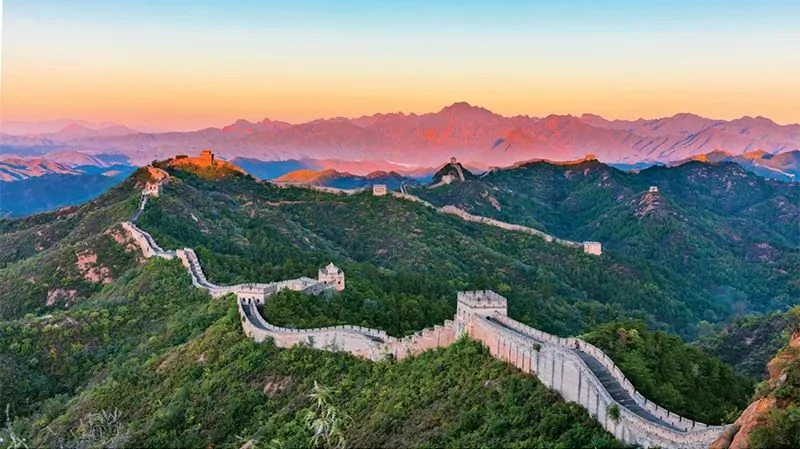
Like a colossal dragon winding across the vast landscapes of East Asia, the Great Wall stretches from the edges of the Northeast Plain and the Inner Mongolian Plateau, traversing mountains and deserts, all the way to the oases skirting the Taklamakan Desert in the far west. It connects eight majestic mountain ranges—including the Yan, Taihang, Helan, and Tianshan mountains—forming a breathtaking geographical and cultural divide.

But did you know that the Great Wall’s fame reached the Western world long before the modern era? As early as the 4th century AD, the Roman historian Ammianus Marcellinus documented it in his works, describing a “high-walled circular enclosure” surrounding the land of “Seres”—the ancient Greek and Roman name for China, meaning the “Land of Silk.”

Today, the Great Wall is not just a physical structure; it is the spiritual coordinates of Chinese civilization. Let’s embark on a journey to decode the secrets of this unparalleled architectural miracle.

📜 A Timeline in Stone and Earth: 2,000 Years of Evolution

The Great Wall is not a single wall built overnight; it is a living history book spanning over two millennia.

  • The Origins (7th – 3rd Century BC):The tradition of building defensive walls began during the Spring and Autumn and Warring States periods. Early walls, like the “Fangcheng” of the Chu State, marked the geopolitical shifts of ancient agrarian societies.
  • The First Unification (Qin & Han Dynasties):When China unified, the Great Wall scaled up. Emperor Qin Shi Huang connected and expanded existing northern walls, creating the legendary “Ten Thousand Li Great Wall” from Liaodong to Lintao. The Han Dynasty pushed it further west to the Yumen Pass, using ingenious local materials—like reeds and poplar wood mixed with sand in the arid Gobi desert—to build a comprehensive defense system of walls, beacon towers, and garrisons.
  • The Trench Era (10th – 13th Century):Contrary to popular belief, walls weren’t the only form of defense. During the Song, Liao, and Jin dynasties, deep trenches were often excavated as barriers. The Jin Dynasty’s “Border Trench” (Jin Great Wall) featured an elaborate multi-layered system of ditches and earthen walls, showcasing the defensive strategies of northeastern China.
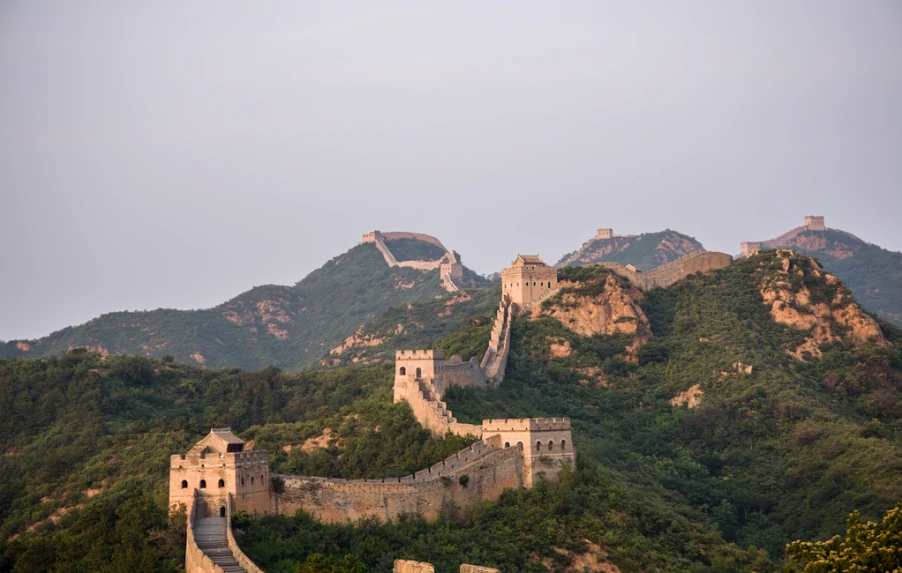
  • The Pinnacle (Ming Dynasty):The Great Wall we see today is largely the work of the Ming Dynasty. This era saw the peak of military engineering. The Ming builders introduced hollow enemy towers—a revolutionary design where soldiers could live, store weapons, and shoot arrows from protected vantage points, turning the wall into an impenetrable fighting fortress.

🛡️ The Art of Defense: Mountains, Passes, and Ancient “Telegraphs”

As a military defense project of unmatched scale, the Great Wall’s brilliance lies in its harmony with nature and its highly efficient communication system.

The 13 Great Passes

The wall’s defensive power relied on strategic passes—chokepoints built in steep canyons or river bends. From the Shanhai Pass in the east to the Jiayu Pass in the west, these 13 major gates were designed so that “one man can hold off ten thousand.” They were the anchors of the Great Wall, minimizing the need for massive troop deployments.

Adapting to the Terrain

The Great Wall’s construction is a masterclass in adaptability. On flat plains, walls were built tall and thick; on precipitous mountains, they were lower and narrower to save labor. Where the cliffs themselves were sheer enough, the mountain was the wall (“Mountain Risk Wall”). Over time, materials evolved from rammed earth—used since the Shang and Zhou dynasties—to the solid blue bricks that defined the Ming Dynasty structures.

The Ancient “Telegraph”: The Beacon System

Long before the internet or telegraphs, the Great Wall had a rapid communication network: the Beacon Towers. Originating in the pre-Qin era, this system was China’s military revolution.

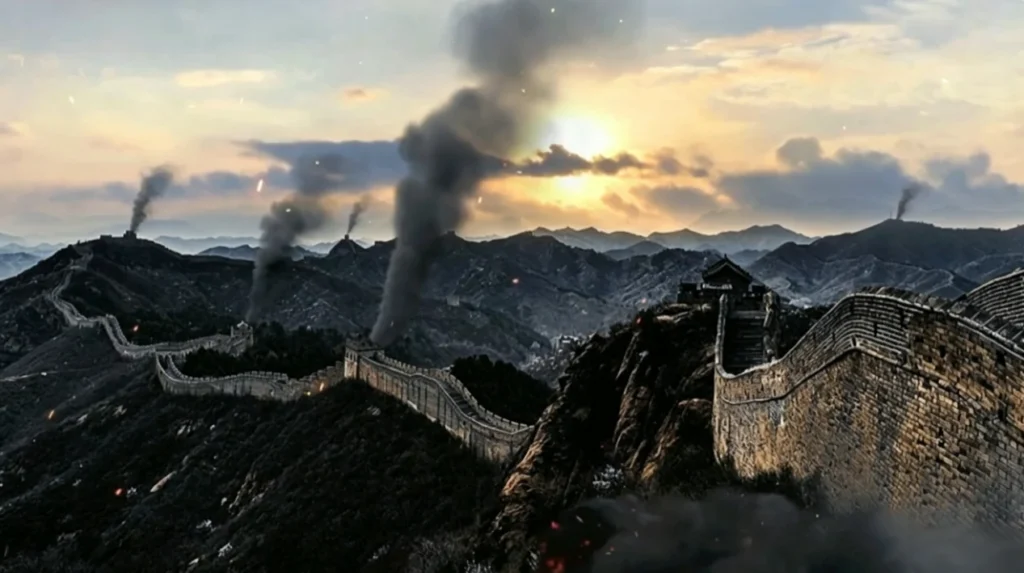
To transmit complex information about enemy numbers and directions, ancient Chinese soldiers invented a “password” using fire, smoke, and drums. By the Han Dynasty, the Beacon Fire Regulations strictly dictated the type and number of signals used under different weather conditions and times of day. By the Ming Dynasty, the code was highly specific: 1 beacon and 1 cannon shot meant about 100 enemies; 2 beacons and 2 shots meant 500; 5 beacons and 5 shots signaled an army of 10,000.

A fun fact: Because fire is hard to see during the day, soldiers burned damp materials like wolf dung and saltpeter to produce thick, towering columns of smoke. This is why beacon fires are often called “Wolf Smoke” (Langyan) in Chinese culture.

🕊️ The Paradox of the Wall: A Monument to Peace

Why was the Great Wall built? The intuitive answer is war. But the deeper, philosophical answer is peace.

The continuous construction of the Great Wall over 2,000 years is a testament to the Chinese civilization’s enduring pursuit of stability and its disdain for wanton aggression. As the early 20th-century American traveler William Edgar Geil noted after studying the Wall: “For many centuries, the Chinese have been devoting themselves to the art of peace, and in their hearts despise the warlike warriors.”

The Wall was a shield, not a sword. It was a clear demarcation line meant to prevent conflict, manage trade, and protect the agrarian way of life from nomadic raids. The Yuan Dynasty poet Sa Dula expressed this profound wish while standing at the Juyong Pass: “Why doesn’t Heaven drive this wall overseas to eliminate all weapons, so men plow and women weave, and the world is flat, with no war for ten thousand generations!”

🌄 Experiencing the Wall Today

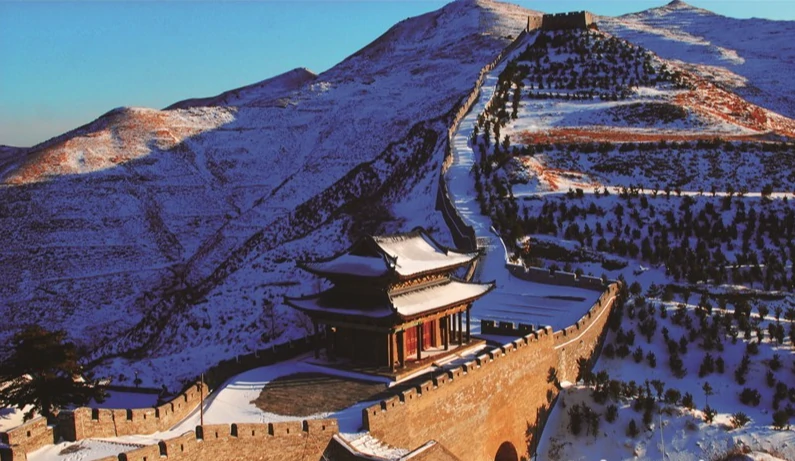
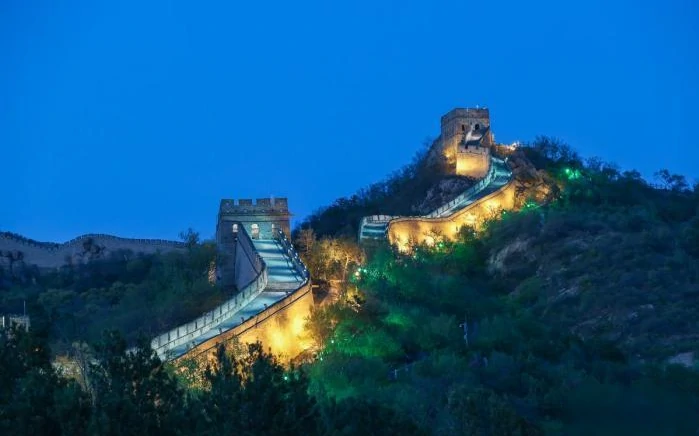
Today, the Great Wall is a UNESCO World Heritage site, drawing millions of visitors eager to walk in the footsteps of history. Places like Gubeikou, historically known as the “Key to the Capital,” showcase the awe-inspiring architecture of both the Ming and Northern Qi dynasties. In the modern era, heritage preservation and ecological restoration have breathed new life into these ancient ruins. Ancient villages, cultural heritage sites, and the wall itself are now seamlessly connected, offering travelers a deeply immersive journey through time.

“Until you reach the Great Wall, you are not a true hero.”

Whether you are marveling at the poetic lines of Tang Dynasty scholars or tracing the ancient brickwork with your fingers, the Great Wall offers an unforgettable encounter with the resilience, wisdom, and peaceful spirit of the Chinese people.

Have you ever been to the Great Wall? Feel free to share your most unforgettable memories, or the section of the Great Wall you dream of exploring!

Same category navigation

More to read next

From reading to action

Keep thoughtful guides close as you shape a calmer home.

Save ideas for later, explore room-based guidance, or share what you would like us to write about next.

Explore Room Guides Use room-based guides when you want a calmer way to choose placement, materials, and daily-use pieces.
Share A Future Topic Tell us what spaces, objects, or topics you'd like us to explore next. We’re always open to new ideas and inspiration.
Journal Dispatch

A quiet letter for spatial living.

Receive calm notes on placement, materials, and living with more spatial clarity.