Lapis Lazuli · A Fragment of the Night Sky
There is a kind of blue that isn’t the blue of the daytime sky.
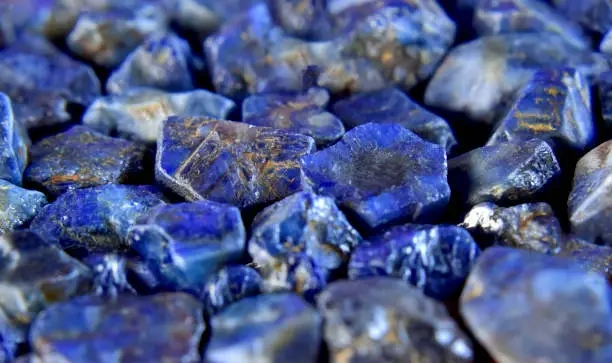
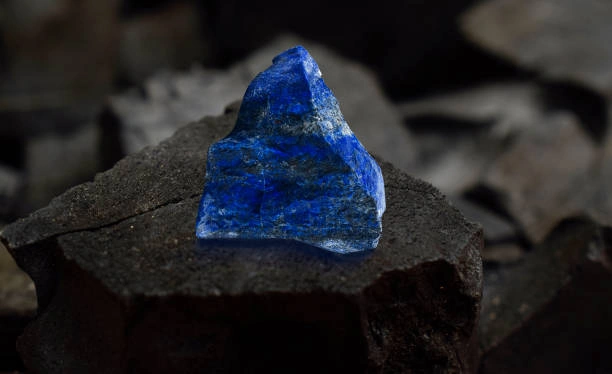
It’s the blue of night — so deep it almost becomes black, yet scattered with small flecks of gold. Like a rainy evening when the clouds finally part and a few stars appear above.
That is lapis lazuli.
Once Beloved by Kings and Scribes
The ancient Egyptians understood this stone well.
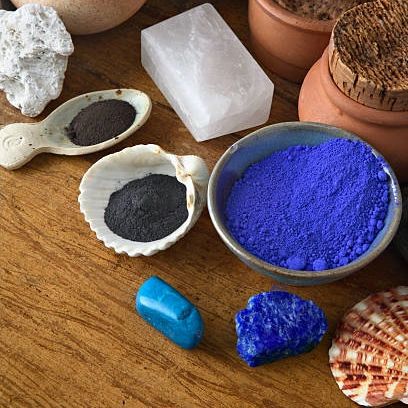
They ground lapis lazuli into powder to create the deep blue used around the eyes of pharaohs. They set it into gold and placed it on the chests of their most honored rulers. Scribes — the people responsible for writing and recording knowledge — also kept it close.
Not as decoration, but as a quiet companion.
Why?
Because that particular shade of blue invites you to go deeper.
It isn’t the kind of blue that relaxes you.
It isn’t the kind that feels melancholic either.
It’s the kind that makes you ask: “and then what?”
The kind that encourages you to keep thinking, to look inward, to follow an idea until it finally becomes clear.
A Stone Connected with “Knowing”
Lapis lazuli is often associated with words like wisdom and truth.
Those sound like big ideas. But the experience can be very simple.
Have you ever had a moment where you sit at your desk trying to write something, or trying to untangle a thought — but your mind feels scattered and nothing seems to settle?
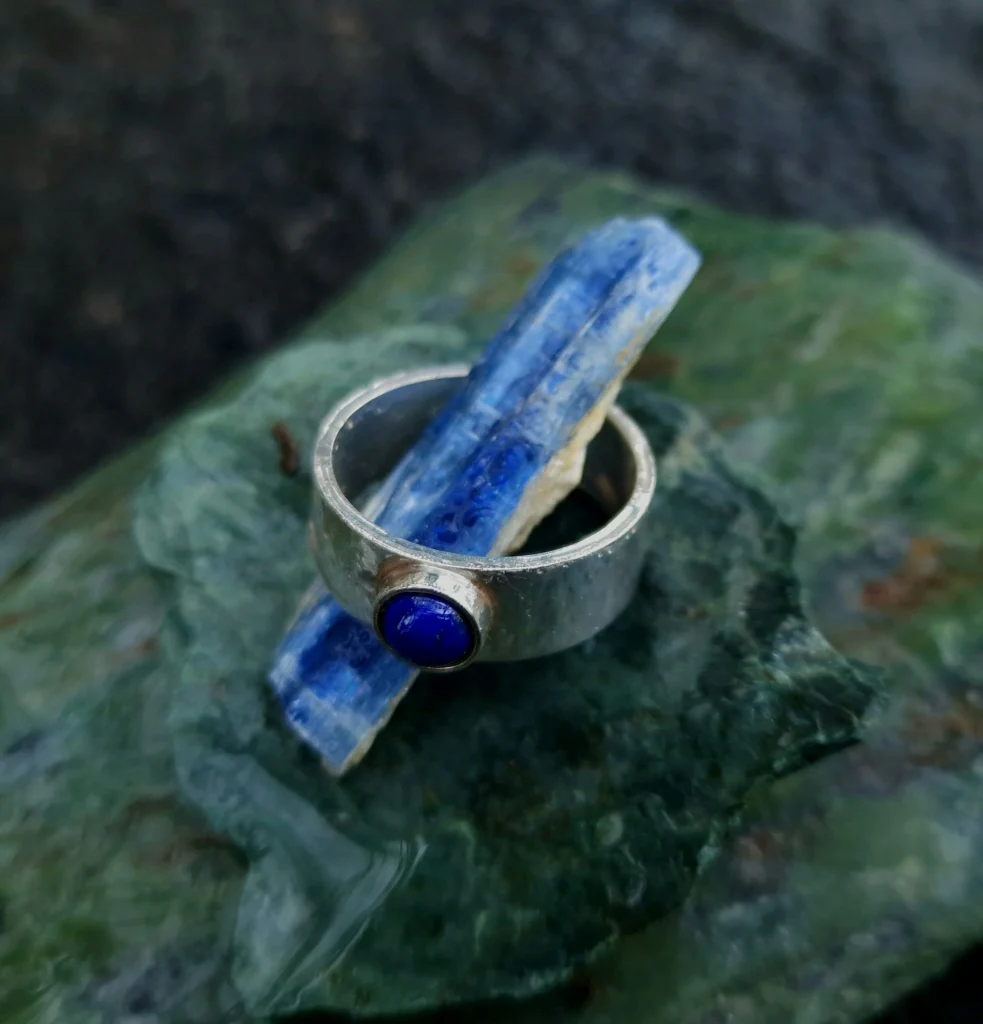
Now imagine a piece of lapis lazuli nearby. That deep night-blue surface, dotted with small golden flecks…
Something begins to slow down.
Not because the stone organizes your thoughts for you. But because it quietly encourages you to stay with them a little longer.
Why This Shade of Blue Feels Different
This blue has a very particular quality.
It isn’t light or drifting.
It doesn’t rush to tell you anything.
It simply feels deep, calm, and patient — as if saying: I’m here. You can take your time.
The small golden flecks look like scattered stars, or tiny points of light hidden deep within the stone. When you look closely, you might feel that some things reveal themselves only after a little time.
For people who write, reflect, study, or spend time in conversation with their own thoughts, this kind of blue feels just right.
Wherever It Sits, It Becomes a Quiet Guide
As a pendant, resting near the chest.
When you lower your head while writing, it may sway slightly — that small piece of deep blue appearing briefly in front of you. Not to pull your attention away, but to gently remind you of the words you’re trying to find.
Some people call it companionship. Others call it an anchor. In the end, it simply helps you remain in that space where thinking happens.
Placed on a desk or reading area — beside a lamp, or near a notebook.
When light touches it, the golden flecks may catch the light for a moment. Not as a display, but almost like a quiet signal: keep reading, keep writing, keep exploring the thought.
Placed beside a journal or notebook — you might glance at it before writing.
Not as a ritual, just as a small pause that lets the voices in your mind slow down.
It Doesn’t Rush to Give You Answers
Lapis lazuli won’t tell you whether an idea is right or wrong.
And it won’t solve a question for you.
What it does is simpler: it helps you remain with the question a little longer.
And sometimes, that is enough.
Because the things that truly matter are rarely discovered in a hurry. They need depth, quiet, and a space that feels like a night sky — something you can keep looking into.
Lapis lazuli isn’t the kind of stone that dazzles you at first glance.
But if you watch it for a while, you may notice something unexpected.
That deep blue feels almost like a place you can step into.
Those golden flecks feel like stars that move with you.
And then you lower your head again, and continue writing.