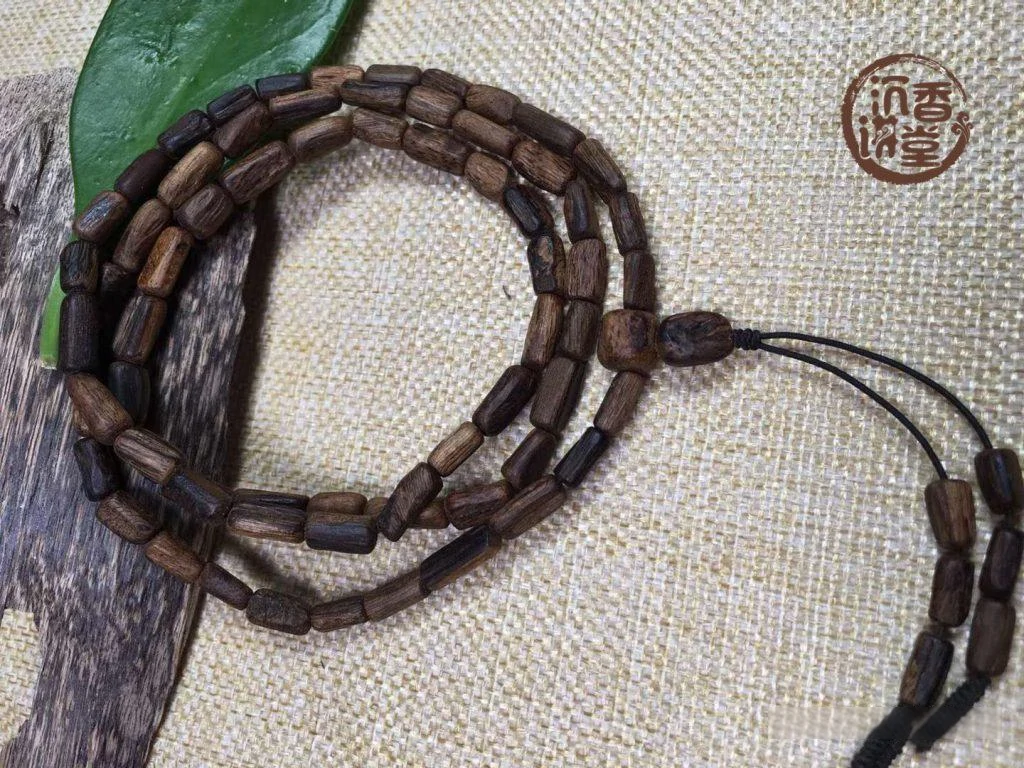
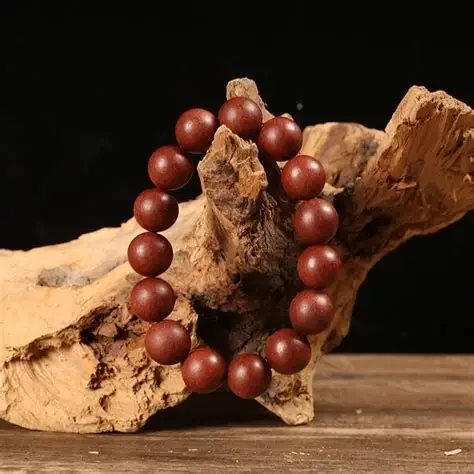
Traditional Herbal Bracelets · When Time Is Folded Into Fragrance
You may have seen wooden bead bracelets.
You may have seen crystal bracelets.
But have you ever seen a bracelet made from traditional Chinese herbs?
Not herbs simply threaded onto a string.
These herbs are ground into powder, kneaded into a paste, and pounded tens of thousands of times until they are formed again into smooth, gentle beads.
Each one is a conversation between time, craftsmanship, and the plant world.
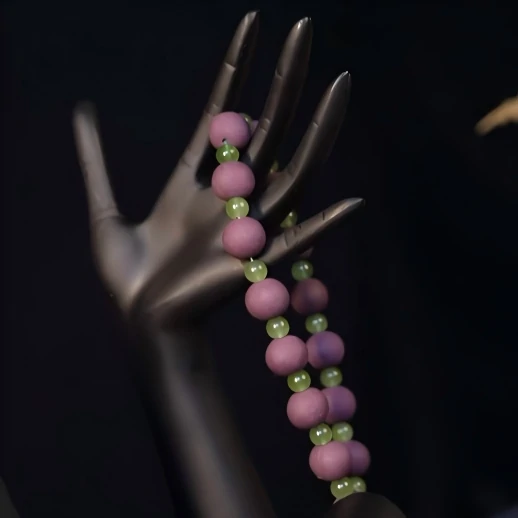
Scent Is More Than a Smell
In Eastern culture, fragrance has never been just about smell.
It has long been a way of understanding the world. Patchouli to lift and open, cyperus to ease stagnation, costus root to awaken, sandalwood to quiet the mind — each herb carries its own temperament, its own character. When they are brought together, it is never random. It is a carefully composed balance.
Like a piece of music.
Some notes rise, some fall, some move quickly, some slowly. Only together do they become harmonious.
This is what makes a traditional herbal bracelet so distinctive.
It does not rely on strong perfume, and it does not try to impress through appearance alone. What it holds is the quiet balance that slowly emerges as the herbs learn to settle into one another.
When you wear it, what you notice is not only fragrance.
It is time, plants, and the feeling of someone, somewhere, once taking care to help your heart become still.
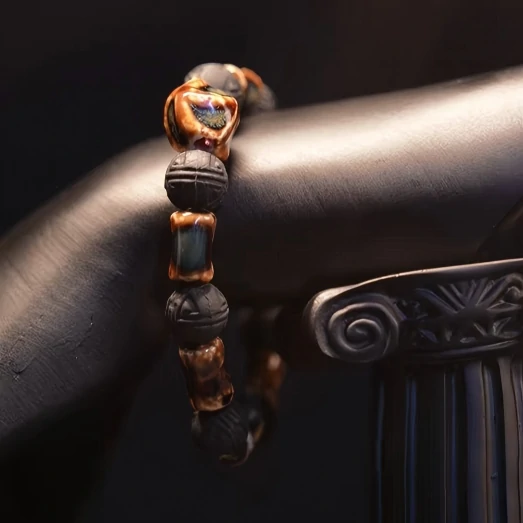
From Powder to Paste, From Paste to Bead
Making a single herbal bead cannot be rushed.
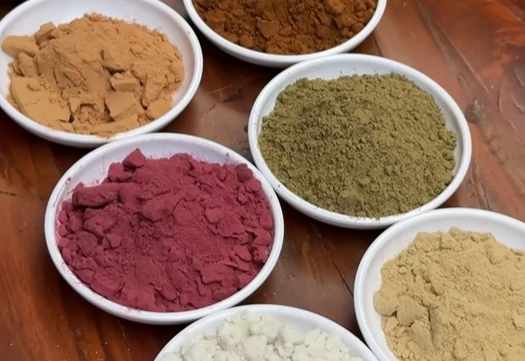
The herbs must be clean and fully dried. Patchouli, spikenard, angelica dahurica, Sichuan lovage, angelica root — each one is ground separately into an ultra-fine powder and sifted through a very fine mesh. The resulting powder is almost smoke-like, so light it scatters at the slightest touch.
Then the powders are blended in exact proportions.
This is where experience matters most. A little more of one herb, a little less of another, and the final fragrance changes completely.
Binding powder from nanmu wood is added, along with water, and everything is kneaded into a paste.
But this kneading is not casual. Water is added gradually, little by little. If it feels too dry, more water. If it feels too wet, more powder. It has to reach a very specific texture — not sticky, not crumbly, but supple, like dough with quiet resilience.
Tens of Thousands of Strikes
The most labor-intensive part is the pounding.
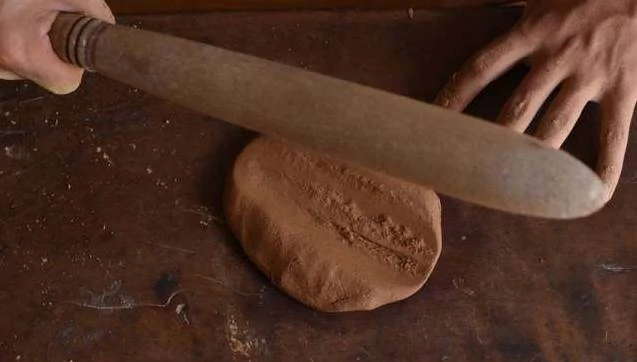
The finished paste is placed into a vessel and struck again and again with a wooden mallet or stone mortar. Not dozens of times, not hundreds, but tens of thousands.
You might wonder: is that really necessary?
Yes.
The pounding removes trapped air and compresses every fine particle together. The longer it is worked, the denser the paste becomes, the less likely the beads are to crack, and the more slowly the fragrance is released.
More importantly, the pounding is what allows the herbs to truly “meet” one another.
Patchouli and sandalwood may have nothing to do with each other at first. But after tens of thousands of strikes, their particles are pressed together, crowded together, until they slowly merge into an entirely new fragrance — one where neither can be separated from the other.
The process feels a little like two strangers becoming familiar.
It takes time.
It takes patience.
Resting the Paste, Letting Time Speak
Even after pounding, the paste cannot be used right away.
It must be sealed and left to rest for two hours. This is called waking the paste.
Just as dough needs resting, and tea needs opening, herbal paste needs time too.
Only after resting do the herbs begin to truly move within one another. What first felt like separate fragrances, each standing alone, gradually finds a shared rhythm in those two quiet hours.
When the container is opened again, what rises is no longer simply patchouli or sandalwood on its own, but a blended scent that feels whole — layered, subtle, and difficult to fully name.
That final step belongs to time.
Rolling, Air-Drying, Waiting
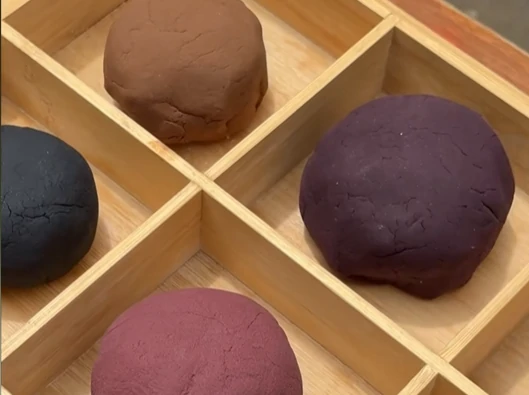
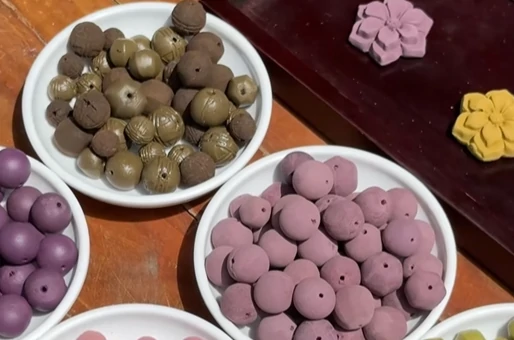
Once rested, the paste is rolled into small beads.
They should be fairly even in size, though perfect roundness is not the goal. Handmade objects are allowed a little irregularity — that is part of what gives them warmth.
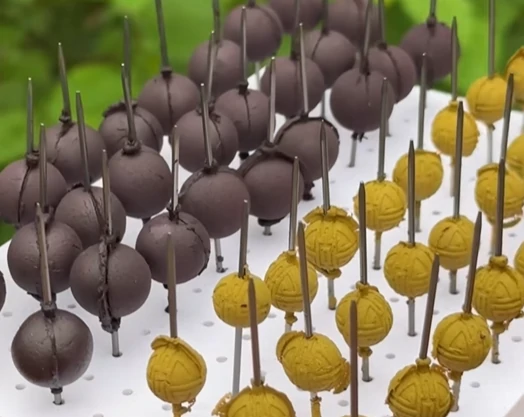
After rolling, the beads cannot be sun-dried or baked. They must dry naturally in the shade.
They are placed somewhere ventilated, where air and time slowly draw out the moisture. This may take days, or sometimes weeks, depending on the size of the beads and the mood of the weather.
And while they dry, the beads keep changing.
The color deepens slightly.
The texture hardens.
The fragrance softens from bright to restrained.
It feels a little like a person growing up — less impulsive, more settled, but richer at the core.
What You Wear Is More Than a Bracelet
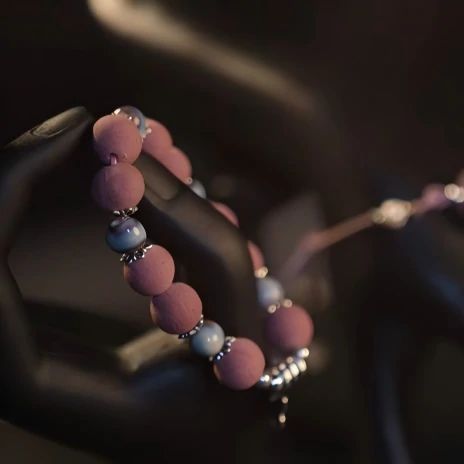
A traditional herbal bracelet is quiet on the wrist.
It does not call attention to itself. It is not the kind of piece people notice across a room. But when you lower your head, you may catch a faint trace of herbal fragrance — not strong, not sharp, just enough to let you settle.
Some people ask: what does it do?
If you mean, “What illness does it cure?” perhaps none at all.
But if you ask what it can offer, then perhaps the answer is this:
a feeling of reassurance.
That reassurance may come from the openness of patchouli, the stillness of sandalwood, the warmth of angelica, and from the fact that after tens of thousands of strikes, these herbs have finally learned how to breathe together.
A Craft That Is Slowly Disappearing
Not many people still know how to make herbal fragrance beads this way.
Not because the method is impossible, but because it is slow. From selecting the herbs to finishing the beads, every stage requires waiting. Waiting for the powder to become fine enough. Waiting for the paste to fully rest. Waiting for the beads to dry in shade. There is not a single step that can truly be rushed.
In a world that values speed above almost everything else, this kind of slowness feels almost out of place.
And perhaps that is exactly what makes it precious.
Because it reminds us that some things cannot be hurried.
Fragrance has to be cultivated slowly.
Beads have to dry slowly.
The human heart also settles slowly.
A traditional herbal bracelet is not simply an accessory.
It is a small space you can carry with you.
Inside it are the breath of plants, the texture of time, and the steadiness left behind after tens of thousands of strikes.
You wear it, and it says nothing.
But you know it is there.