NEW JOURNAL NOTES ON SPACE, OBJECTS, AND EVERYDAY ATMOSPHERE
Visit Shop
Back to All Articles

Unlocking the Ancient Skies: A Journey to the Dengfeng Observatory, China’s Oldest Astronomical Marvel

In this article
🏛️ The Predecessor: Zhou Gong’s Shadow Meter 🧱 The Main Event: Guo Shoujing’s Masterpiece 🔭 How Did It Work? Ancient “Pinhole Imaging” 📜 The Ultimate Achievement: The Shoushi Calendar

When we think of ancient architecture, we often picture imposing palaces or majestic temples. But tucked away in the small town of Gaocheng, Henan Province, lies a different kind of monument—one built not for kings, but for the cosmos.

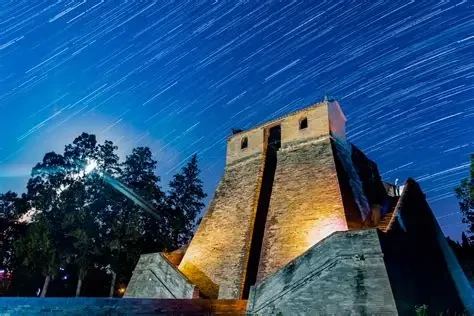
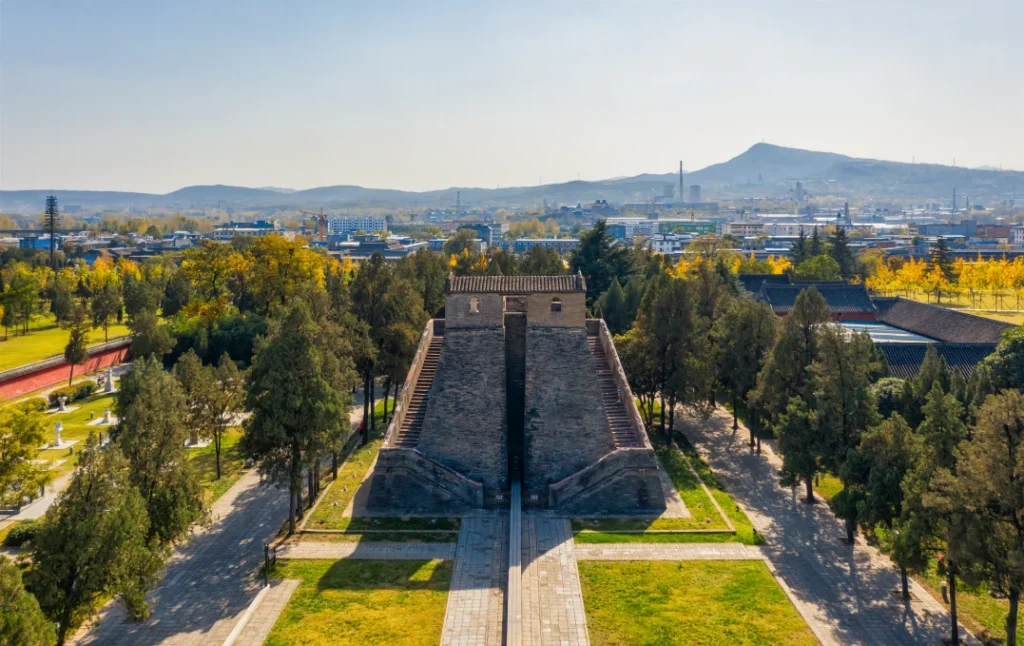
Welcome to the Dengfeng Observatory (登封观星台), the oldest astronomical observatory in China and a UNESCO World Heritage site. Here, ancient Chinese scholars didn’t just gaze at the stars; they measured the heavens, revolutionized calendar-making, and left a lasting legacy of scientific brilliance. Let’s step back in time and decode the secrets of this ancient architectural wonder!

🏛️ The Predecessor: Zhou Gong’s Shadow Meter

Before the grand observatory stood, the site was already a hub for astronomical observation. In the early Western Zhou Dynasty (around 11th century BC), the legendary Duke of Zhou (Zhou Gong) came here to measure the sun’s shadow to determine the “Center of Heaven and Earth” (Zhongzhou) while planning the capital city of Luoyang.

Originally, these early instruments were simple mounds of earth and wooden poles. It wasn’t until the Tang Dynasty (723 AD) that imperial astronomer Nangong Yue replaced them with a permanent stone structure: the Zhou Gong Shadow Meter (周公测景台).

This stone structure is a giant Guibiao (圭表). The bottom trapezoidal base is the Gui (the shadow ruler), and the vertical stone pillar on top is the Biao (the gnomon). By measuring the length of the sun’s shadow cast by the Biao onto the Gui, ancient scholars could track the solar terms and lay the foundation for the agricultural calendar—a massive leap in the history of astronomy!

🧱 The Main Event: Guo Shoujing’s Masterpiece

Fast forward to the Yuan Dynasty (1276 AD). The formidable Kublai Khan ordered the brilliant astronomer and engineer Guo Shoujing to reform the calendar. Guo established 27 observation stations across the vast empire, and the Dengfeng Observatory was built as the central hub of this network.

Unlike the simple Guibiao before it, the observatory is a formidable, fortress-like structure. It consists of two main parts:

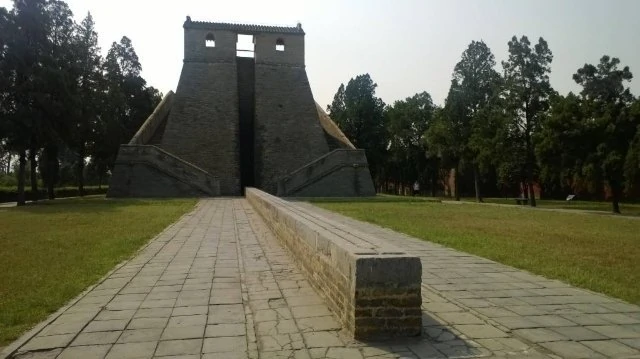
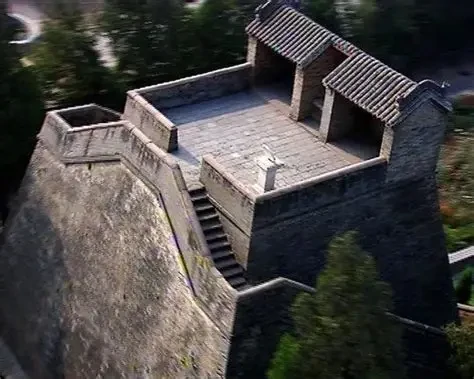
  1. The Platform:A square, inverted-doughnut-shaped brick body standing 9.46 meters tall (12.62 meters including the small chamber on top).
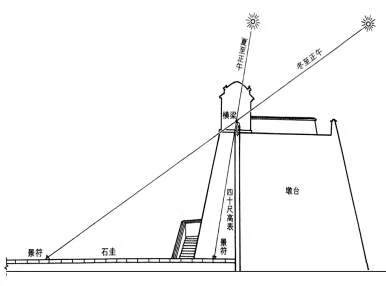
  2. The Sky-Measuring Ruler (量天尺):A long stone ruler extending north from the base, used to measure the precise length of the sun’s shadow.

🔭 How Did It Work? Ancient “Pinhole Imaging”

The observatory’s design is a stroke of genius. At the top of the platform, a horizontal beam with a small hole acts as the Biao. Sunlight passes through this hole and casts a shadow onto the Gui below.

Initially, the shadow was blurry, making precise measurements difficult. To solve this, Guo Shoujing invented a tiny bronze tool called the “Shadow Definer” (景符 – Jingfu). Using the principle of pinhole imaging, he placed the Jingfu between the beam and the stone ruler. The sunlight passed through the tiny pinhole of the Jingfu, projecting a crystal-clear, hair-thin image of the sun onto the ruler. This ingenious innovation drastically reduced measurement errors!

📜 The Ultimate Achievement: The Shoushi Calendar

What was the result of all this stargazing and shadow-measuring? In 1281, Guo Shoujing and his team promulgated the Season-Granting Calendar (Shoushi Calendar), the most advanced calendar in the world at the time.

They calculated the tropical year to be 365.2425 days. Does that number sound familiar? It is virtually identical to the Gregorian calendar used globally today—but Guo Shoujing calculated it over 300 years earlier!

Today, the Dengfeng Observatory is more than just an ancient ruin. As a core component of the “Historic Monuments of Dengfeng in ‘The Center of Heaven and Earth'” UNESCO World Heritage site, it stands as a bridge between the past and the present.

Whether you are a history buff, a science enthusiast, or simply a traveler looking to walk in the footsteps of ancient stargazers, the observatory offers a profound experience. Stand where Guo Shoujing stood, look up at the same sky, and marvel at the timeless wisdom of ancient Chinese civilization.

Have you ever visited an ancient observatory? What part of Guo Shoujing’s story amazes you the most?

Same category navigation

More to read next

From reading to action

Keep thoughtful guides close as you shape a calmer home.

Save ideas for later, explore room-based guidance, or share what you would like us to write about next.
Explore Room Guides Use room-based guides when you want a calmer way to choose placement, materials, and daily-use pieces.
Share A Future Topic Tell us what spaces, objects, or topics you'd like us to explore next. We’re always open to new ideas and inspiration.
Journal Dispatch

A quiet letter for spatial living.

Receive calm notes on placement, materials, and living with more spatial clarity.