Amethyst · The Quiet Guardian of the Night
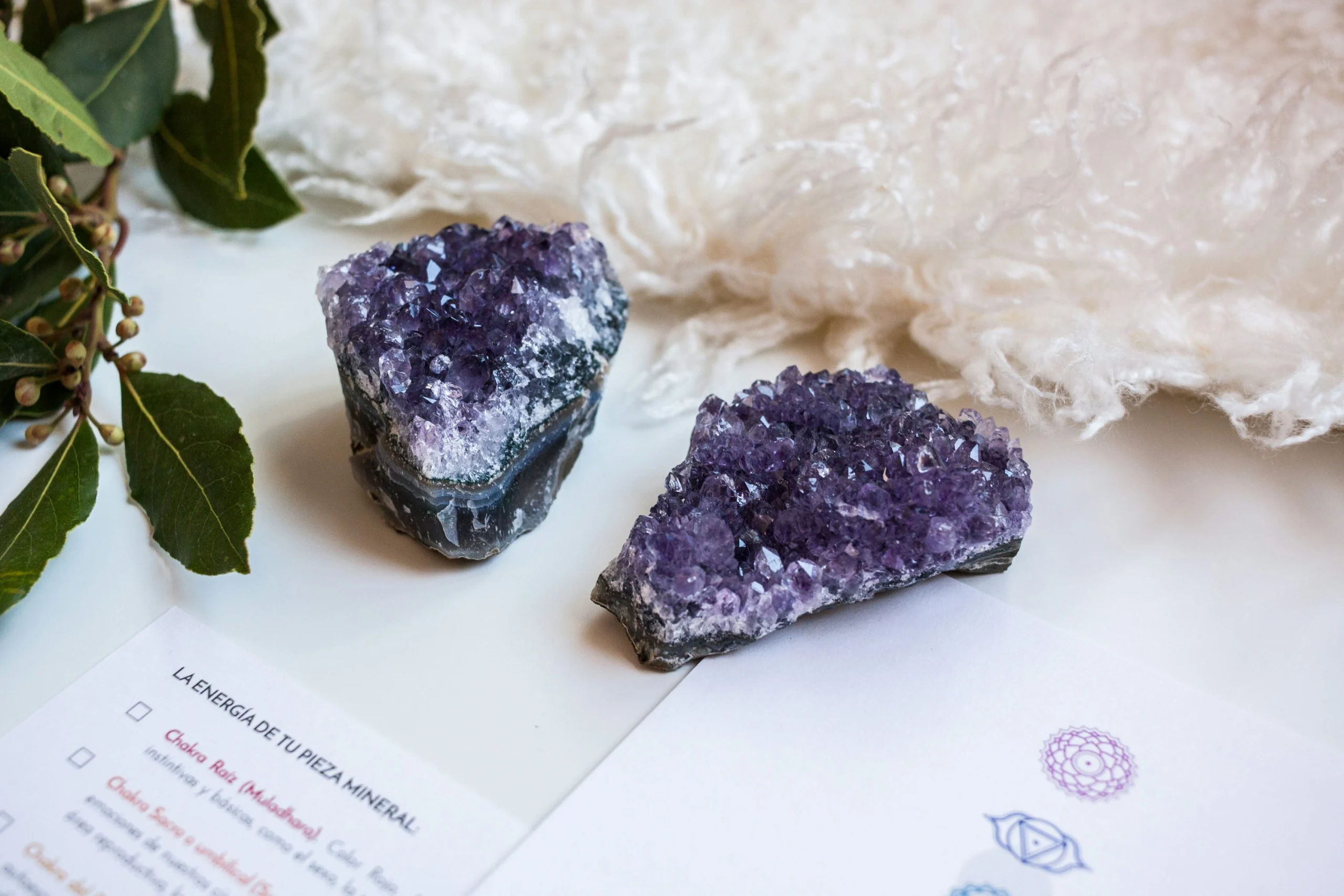
There is a shade of purple you don’t easily forget once you’ve seen it.
Not a loud or dramatic purple, but a soft, quiet one — like the color of the sky just before night fully arrives, when the mountains in the distance begin to fade into the evening.
That color belongs to amethyst.
It Has a Natural Understanding with the Night
Have you ever noticed how amethyst seems to invite you to slow down?
Not because someone gave it that meaning, but because when you actually hold it in your hand, or place it beside your bed, it seems to quietly do one thing:
It helps leave the leftover noise of the day outside the door.
In Western traditions, amethyst is often associated with easing stress and balancing emotions. That can sound a bit abstract. But there’s a simpler way to think about it.
It’s like a cup of warm water.
Not stimulating, not cold, not overwhelming — just something that makes you pause and think, “Alright… that’s enough for today.”
Why Purple?
Purple itself is an interesting color.
It’s not as urgent as red, and not as distant as blue. It sits somewhere in between — a color that invites you to pause without pulling you too deeply inward.
In many ancient cultures, purple was connected with awareness. Not in a grand spiritual sense, but in a quieter way.
You sit down. Your breathing slows slightly. The thoughts that were circling endlessly in your mind begin to loosen their grip.
That’s all it is.
Amethyst feels almost like that state has been shaped into a stone you can hold.
Wherever It Sits, It Brings a Sense of Calm
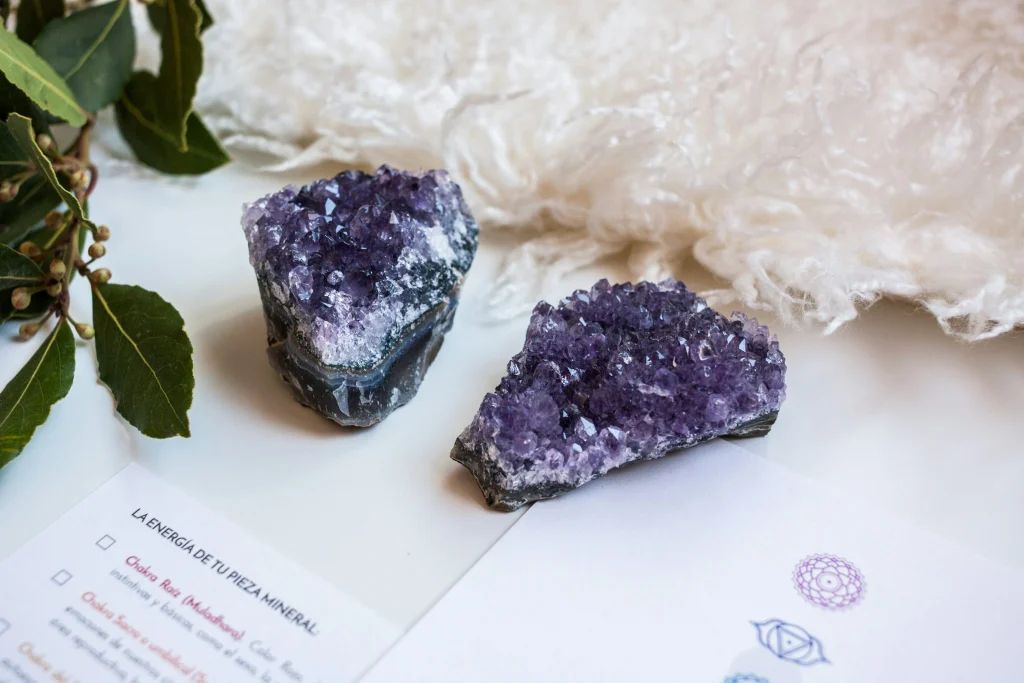
On a bedside table — perhaps the place where it feels most at home.
An hour or two before sleep, dim the lights and place a piece of amethyst beside your bed. You don’t have to stare at it or do anything special. It simply sits there, like a quiet reminder: it’s time to rest.
Some people say they sleep a little deeper.
Some say their dreams become quieter.
Others simply notice that when they lie down, their shoulders feel less tense.
In a meditation space — purple naturally supports a slower, more inward mood.
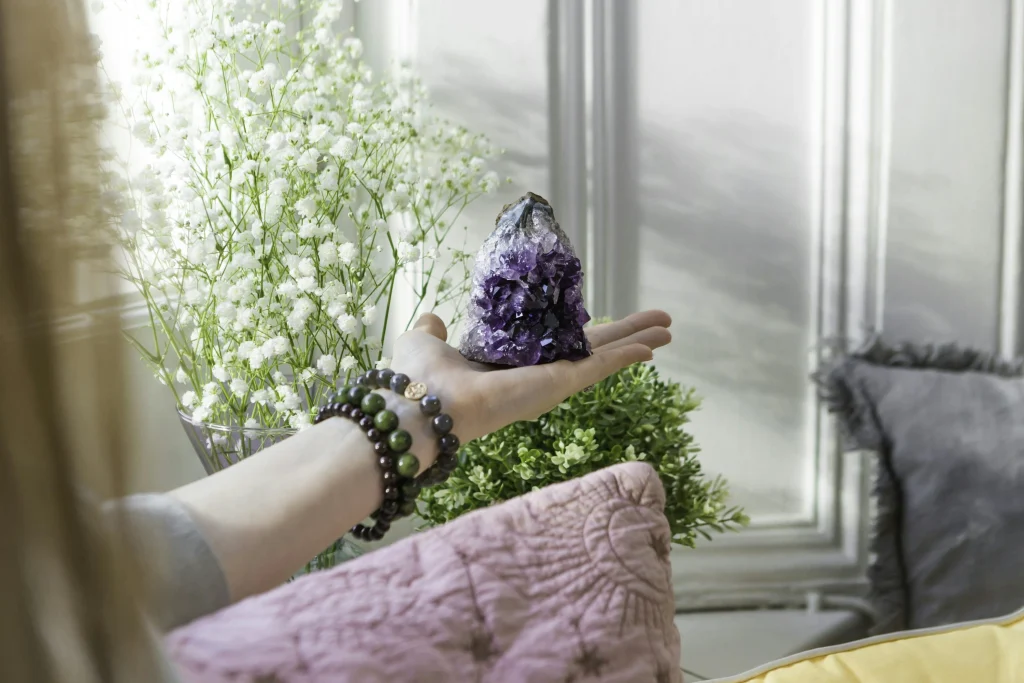
You might hold it in your hand, or place it on the floor in front of you. In dim light it almost disappears into the shadows, but as soon as a little light touches it, that soft purple glow returns — as if gently saying: I’m here, and so are you.
As a bracelet or necklace — resting against your skin throughout the day.
When you glance down and notice it, it becomes a small pause in the rhythm of your day. You don’t have to think about it. Just notice it for a moment, and then continue with whatever you were doing.
In a Space, It Becomes an Emotional Buffer
A room doesn’t always need a complete redesign.
Sometimes it only needs a corner — a place meant for doing nothing in particular.
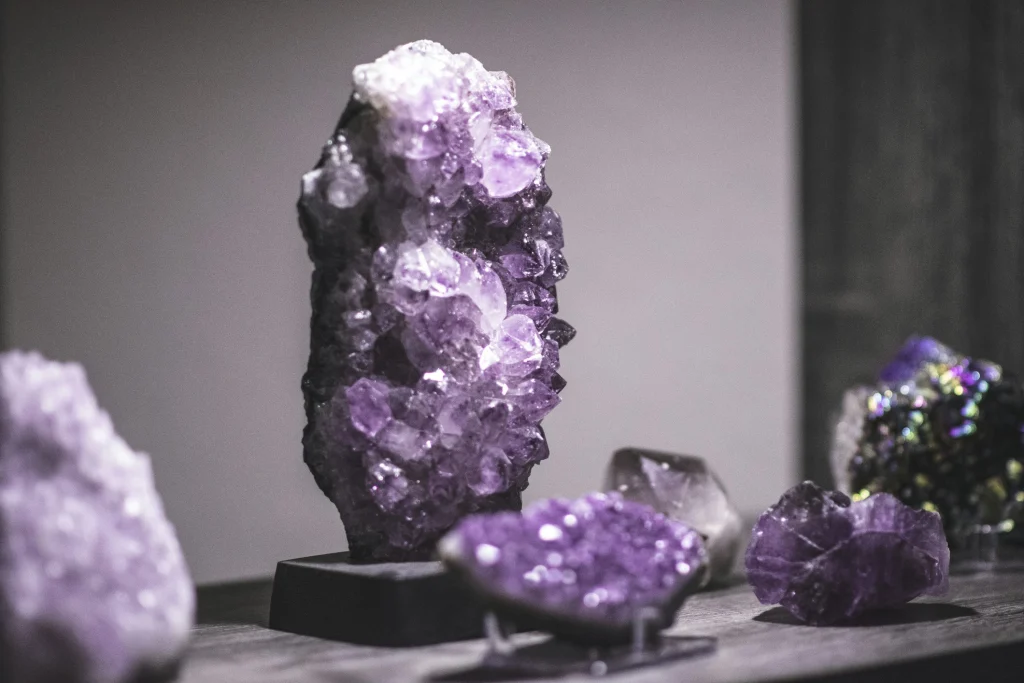
On a windowsill, or beside the bed, place a small piece of amethyst. Nearby there might be a book, or a simple cup.
Nothing else.
When you come home and step into the room, your eyes fall on that small corner. In that quiet moment, without saying anything, it has already absorbed a little of the day you carried with you.
Amethyst won’t make decisions for you.
And it won’t solve your problems.
But when you finally sit down, it helps you settle more easily into that simple state —The one where you don’t have to think about anything at all.
Just being there.
And sometimes, that’s enough.