NEW JOURNAL NOTES ON SPACE, OBJECTS, AND EVERYDAY ATMOSPHERE
Visit Shop
Back to All Articles

Don’t Pile These Things Next to Your Bed

In this article
A simple feng shui approach to a calmer, quieter, more sleep-friendly bedroom Why the area around your bed matters 1. Don’t pile clothes next to the bed 2. Don’t keep work by your pillow 3. Don’t let cables and electronics take over 4. Don’t store “temporary” clutter beside or under the bed 5. Be mindful of mirrors or overly stimulating decor What should be next to your bed? Final thought
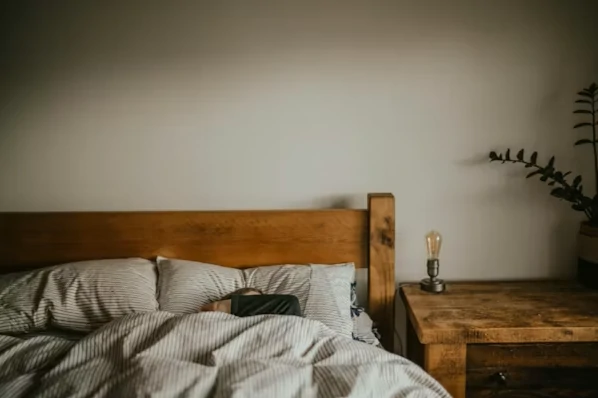
A simple feng shui approach to a calmer, quieter, more sleep-friendly bedroom

The bedroom should be the one room that asks the least from you.

Not the place that reminds you to reply to emails.
Not the place where everything that “doesn’t fit anywhere else” ends up.
Not a small battlefield of cables, clothes, half-finished tasks, and “I’ll deal with it tomorrow.”

In traditional feng shui, the bedroom is considered one of the most sensitive spaces in the home. It’s where the body rests, and where qi—often described as life energy—is meant to settle rather than scatter.

Modern sleep science, in a very different language, says something surprisingly similar: sleep tends to improve when the bedroom is calm, comfortable, and low in distraction. (sleepfoundation.org)

That’s why what sits right next to your bed matters more than most people think.

Why the area around your bed matters

A cluttered bedside doesn’t just look busy—it keeps your brain slightly “on.”

Research on visual clutter shows that when too many objects compete in your field of view, they also compete for your brain’s attention, making it harder to relax and process information. At the same time, sleep guidelines emphasize reducing friction, discomfort, and stimulation in the bedroom.

Put simply: if the space around your bed feels crowded, your body might lie down—but your mind hasn’t fully checked out yet. (pubmed.ncbi.nlm.nih.gov)

Feng shui would describe this as disrupted energy flow. A more modern way to put it: your sleep space shouldn’t double as storage, office, and rest zone all at once.

1. Don’t pile clothes next to the bed

The classic one.

The chair with “not dirty, not clean” clothes.
The laundry basket you’ll fold later.
The small pile on the floor that somehow never disappears.

From a feng shui perspective, this creates a sense of heaviness and stagnation. From a practical perspective, it turns your bedroom into a visual to-do list.

You might not consciously stare at it every night—but it’s still there, adding noise to the space. If you want a calmer bedroom, clothes need a real home, not a permanent halfway spot.

2. Don’t keep work by your pillow

Laptops, planners, paperwork, chargers, and that notebook full of tomorrow’s tasks all do the same thing: they keep your brain connected to “doing.”

The Sleep Foundation notes that when the bedroom doubles as a workspace, it becomes even more important to remove cues that keep your mind in work mode.

In feng shui terms, the bedroom should lean toward stillness—not activity.

So if your nightstand is starting to look like a mini office, that’s usually a sign the room is doing too much.

Even in small spaces, it helps to separate “rest items” from “work items.”
A glass of water and a book feel very different from an open laptop and a stack of tasks.

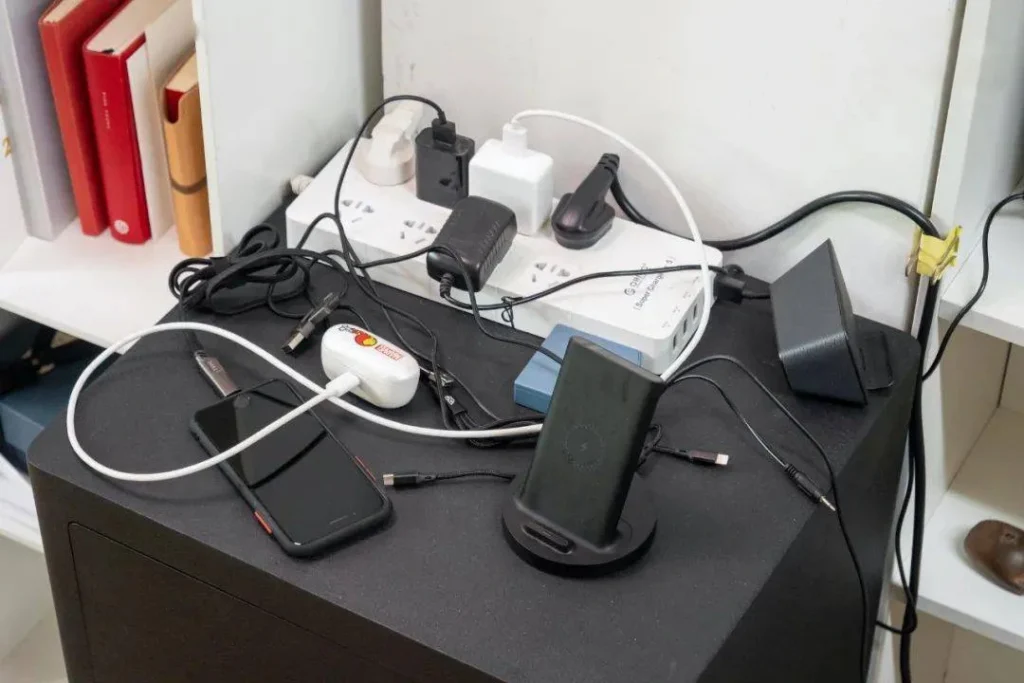
3. Don’t let cables and electronics take over

A charger here, a cable there, earbuds, a tablet, a watch…

Before you know it, your bedside table turns into a tangle.

This isn’t just about aesthetics. Light exposure plays a major role in regulating your circadian rhythm, which affects sleep timing, alertness, and mood.

That doesn’t mean one charger ruins your sleep.
But it does mean your bedside area should lean toward simplicity—not stimulation.

From a feng shui angle, tangled wires feel restless.
From a modern perspective, they just make the space feel busier than it needs to be.

4. Don’t store “temporary” clutter beside or under the bed

Shoeboxes. Packages. Books you “plan to sort.” A random bag that doesn’t belong anywhere.

This is where many bedrooms quietly lose their calm.

Sleep experts recommend reducing clutter and keeping pathways clear to create a more relaxing environment. Feng shui has long emphasized something similar: the space around the bed should feel open enough for calm energy to settle. (sleepfoundation.org)

If your bedside becomes the “deal with it later” zone, the whole room can start to feel emotionally unfinished too.

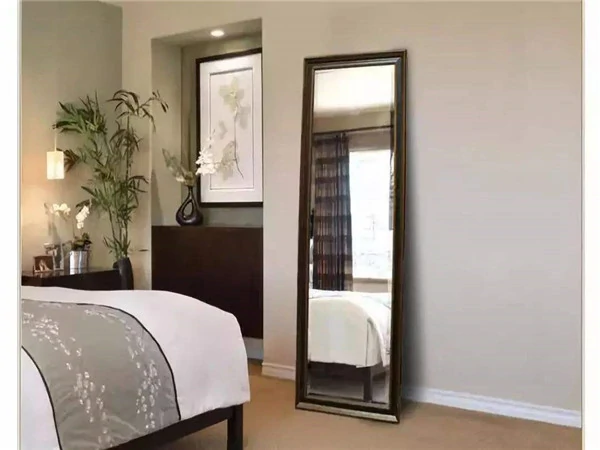
5. Be mindful of mirrors or overly stimulating decor

This one is more interpretive—but still useful.

Traditional feng shui tends to avoid strong reflective surfaces or overly active decor right next to the bed, because the bedroom is meant to feel settled, not visually busy.

Modern sleep advice doesn’t frame mirrors the same way, but it consistently favors environments that are calming and low in stimulation.

Different language, same idea:
the closer something is to your bed, the more it should support rest—not demand attention.

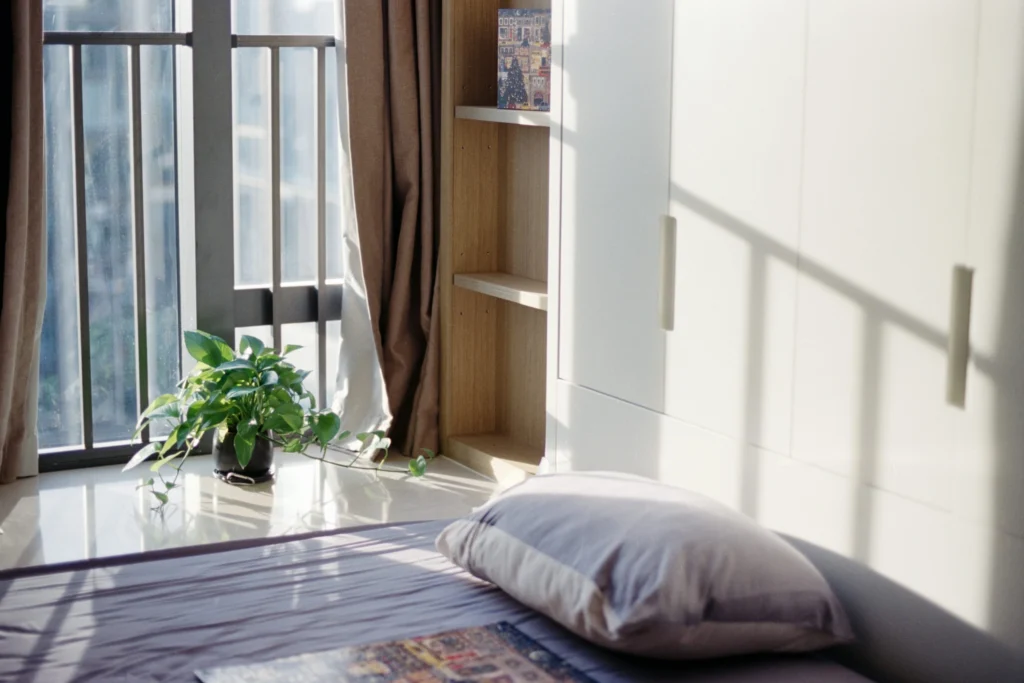
What should be next to your bed?

Honestly—not much.

A soft light.
Maybe a book.
Maybe a glass of water.
One or two things you actually use.

The goal isn’t to make your room look like a hotel.
It’s to stop your bedside from becoming a storage spillover.

A good bedroom isn’t empty for the sake of being empty.
It’s clear enough that your nervous system doesn’t have to keep “processing the room” while you’re trying to rest. (sleepfoundation.org)

Final thought

Feng shui is often seen as symbolic, but many of its ideas are surprisingly practical. The bedroom should feel safe, quiet, and supportive.

Modern sleep science says almost the same thing—just in different words.

So if your bedroom has been feeling a bit off lately, don’t start with a full makeover.

Start with the space right next to your bed.

Clear the clothes.
Move the work.
Untangle the cables.
Remove the “temporary” clutter.
Let the bed breathe a little.

Sometimes, better sleep doesn’t come from buying something new.

It starts with putting a few things away.

Same category navigation

More to read next

From reading to action

Keep thoughtful guides close as you shape a calmer home.

Save ideas for later, explore room-based guidance, or share what you would like us to write about next.

Explore Room Guides Use room-based guides when you want a calmer way to choose placement, materials, and daily-use pieces.
Share A Future Topic Tell us what spaces, objects, or topics you'd like us to explore next. We’re always open to new ideas and inspiration.
Journal Dispatch

A quiet letter for spatial living.

Receive calm notes on placement, materials, and living with more spatial clarity.