NEW JOURNAL NOTES ON SPACE, OBJECTS, AND EVERYDAY ATMOSPHERE
Visit Shop
Back to All Articles

How to Place Your Sofa So the Living Room Actually Feels Relaxing

In this article
A feng shui-inspired guide to flow, sightlines, and that hard-to-explain feeling of wanting to stay 1. Start with the path, not the sofa 2. Give the sofa a sense of support 3. Let the sofa “see” the room 4. Leave enough breathing room around it 5. If the room is small, simplify the job of the sofa A quick sofa layout checklist Final thought
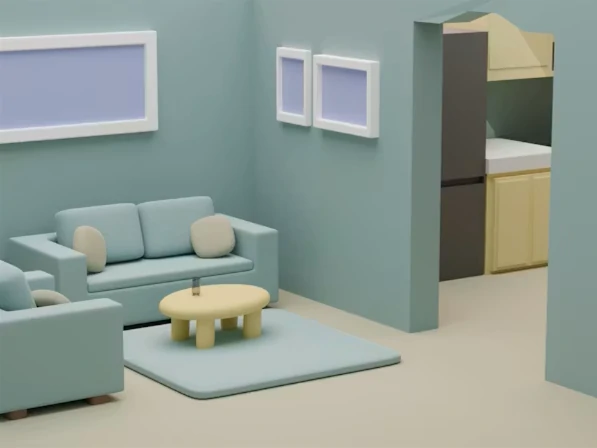
A feng shui-inspired guide to flow, sightlines, and that hard-to-explain feeling of wanting to stay

A sofa is never just a sofa. In a living room, it quietly decides how people move, where the eye lands, whether conversation feels easy, and whether the room says “come in and relax” or “careful, squeeze past this corner.” In traditional feng shui, that comes back to the flow of qi: the idea that a home feels better when energy can move in a balanced way through spaces and objects.

If you want a living room to feel calmer, you do not always need a bigger space or a more expensive sofa. Very often, you need a better relationship between the sofa, the walkway, and the rest of the room. That is where feng shui becomes surprisingly practical: it pushes you to pay attention to movement, visual balance, and how a room feels in the body, not just how it looks in a photo.

1. Start with the path, not the sofa

The first question is not “Which wall should the sofa go on?” It is “How do people move through this room?” If the sofa blocks the main route from the door to the seating area, the window, or the next room, the whole space starts to feel more tense than it needs to. In feng shui terms, that is a flow problem. In a modern attention-and-environment sense, it is also a friction problem: rooms are harder to relax in when your body keeps having to negotiate around objects.

A good living room path usually feels obvious. You should be able to enter, walk through, and sit down without awkward sidestepping. That is why one of the easiest layout upgrades is simply pulling the sofa a little out of the route, even if only by a few inches. Sometimes the room feels better almost immediately—not because anything “mystical” happened, but because the room stopped interrupting you.

2. Give the sofa a sense of support

One of the oldest feng shui instincts is that major seating should feel supported rather than exposed. The simple version: people usually feel more settled when the sofa has a solid visual anchor behind it, such as a wall, instead of floating awkwardly in the middle of the room with no sense of backing. Feng shui would describe this as creating stability in the room’s energy.

There is a modern design-and-psychology parallel here too. Prospect-refuge theory suggests that people often prefer places that offer both outlook and shelter: the ability to see the space, while also feeling protected. Research and reviews on prospect-refuge have repeatedly linked comfort and preference to this balance of view and backing. That is one reason seats with a wall behind them and a clear view ahead often feel more comfortable than seats that leave you visually exposed on all sides.

3. Let the sofa “see” the room

A relaxing sofa position is not just about what is behind you. It is also about what is in front of you. If the sofa faces directly into a wall at close range, or points into visual clutter, the room can start to feel mentally cramped. If it has a cleaner sightline—toward a window, a balanced focal point, or the broader room—the space usually feels easier to stay in. Visual competition research helps explain why: when too many things fight for your attention at once, the brain has to work harder to process the scene.

This does not mean every sofa has to face a perfect view or a giant picture window. It simply means the main seat in the room should not be punished by poor sightlines. If possible, give it something calm to look at: daylight, a balanced shelf, a fireplace, one clear art piece, or just open room. A sofa that can “see” the space usually helps the person sitting on it feel more at ease in the space too.

4. Leave enough breathing room around it

A sofa can be beautiful and still make a room feel stressed if it is squeezed too tightly by side tables, oversized coffee tables, baskets, lamps, and decorative extras. Feng shui tends to favor rooms that feel open enough for qi to circulate instead of getting trapped by too many little blockages. The practical version of that advice is simple: do not crowd the edges of your main seat.

This matters visually as well as physically. Cluttered visual fields compete for attention, and newer vision research continues to show that visual clutter changes how information flows through the brain. So if your sofa area feels “off,” the problem may not be the sofa itself. It may be that everything around it is asking for attention at the same time.

5. If the room is small, simplify the job of the sofa

In a compact living room, the sofa should not have to do everything at once. If it is the seating, the divider, the storage zone, the dumping ground, and the visual focal point all at the same time, the room gets overwhelmed fast. A feng shui-friendly move in small spaces is often to let the sofa do one job well: anchor the room without blocking it. That may mean a slimmer coffee table, fewer side pieces, or resisting the urge to fill every gap around it.

Small rooms also benefit from cleaner sightlines. When you can see across the room more easily, the room tends to feel larger and calmer. When the sofa placement chops up the room into too many competing fragments, it often feels smaller and more tiring, even if the square footage has not changed at all.

A quick sofa layout checklist

If you want the short version, a sofa usually feels more relaxing when:

It does not block the main walking route.
It has some sense of backing or visual support.
It can “see” the room instead of staring into clutter.
It has breathing room around it.
It sits in a zone people actually want to linger in.

Final thought

Feng shui is often treated like it is only about symbolism, but some of its oldest instincts are really about something very human: people relax better in rooms that feel clear, supported, and easy to move through. Sofa placement matters because it shapes all of that at once.

So if your living room never quite feels restful, do not rush to buy new decor first. Try moving the sofa. Sometimes the room is not asking for more things. It is asking for better flow.

Same category navigation

More to read next

From reading to action

Keep thoughtful guides close as you shape a calmer home.

Save ideas for later, explore room-based guidance, or share what you would like us to write about next.

Explore Room Guides Use room-based guides when you want a calmer way to choose placement, materials, and daily-use pieces.
Share A Future Topic Tell us what spaces, objects, or topics you'd like us to explore next. We’re always open to new ideas and inspiration.
Journal Dispatch

A quiet letter for spatial living.

Receive calm notes on placement, materials, and living with more spatial clarity.