NEW JOURNAL NOTES ON SPACE, OBJECTS, AND EVERYDAY ATMOSPHERE
Visit Shop
Back to All Articles

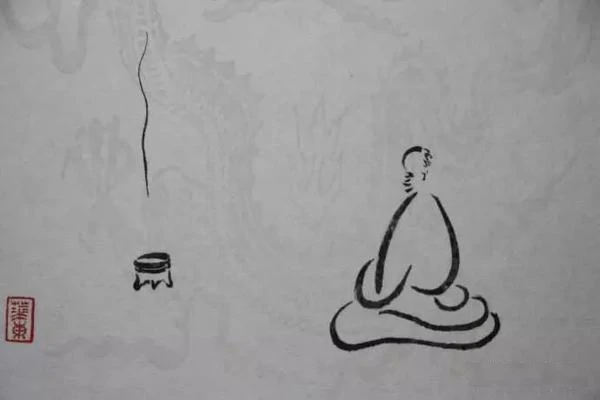
Parallel Universes and the Buddhist “Many Worlds”

In this article
Are We Really Living in Just One Universe? Parallel Universes: The Physicists’ Wild Idea The Buddhist View: Countless Worlds Where They Sound Similar Where They Differ: How You Reach Those Worlds A Shared Challenge to Human Self-Centeredness Why Any of This Matters

Are We Really Living in Just One Universe?

Have you ever wondered about this:

Is there another version of you, somewhere in another universe, living a completely different life?

Maybe in that universe, you are not scrolling on your phone right now. Maybe you are out for a run. Maybe you took a different job, moved to a different city, and ended up becoming someone else entirely.

It sounds like science fiction.

But physicists have seriously explored ideas like this. And what makes it even more interesting is that Buddhist cosmology, more than two thousand years old, also speaks of countless worlds beyond the one we see.

Parallel Universes: The Physicists’ Wild Idea

Let’s start with modern physics.

The idea of parallel universes did not come out of nowhere. It appears in a few different theoretical frameworks.

One is the Many-Worlds Interpretation of quantum mechanics. In this interpretation, quantum measurement does not collapse reality into just one outcome. Instead, all outcomes continue in parallel “worlds,” and what we experience is only one branch. It is one interpretation of quantum theory, not an experimentally confirmed fact about multiple universes.

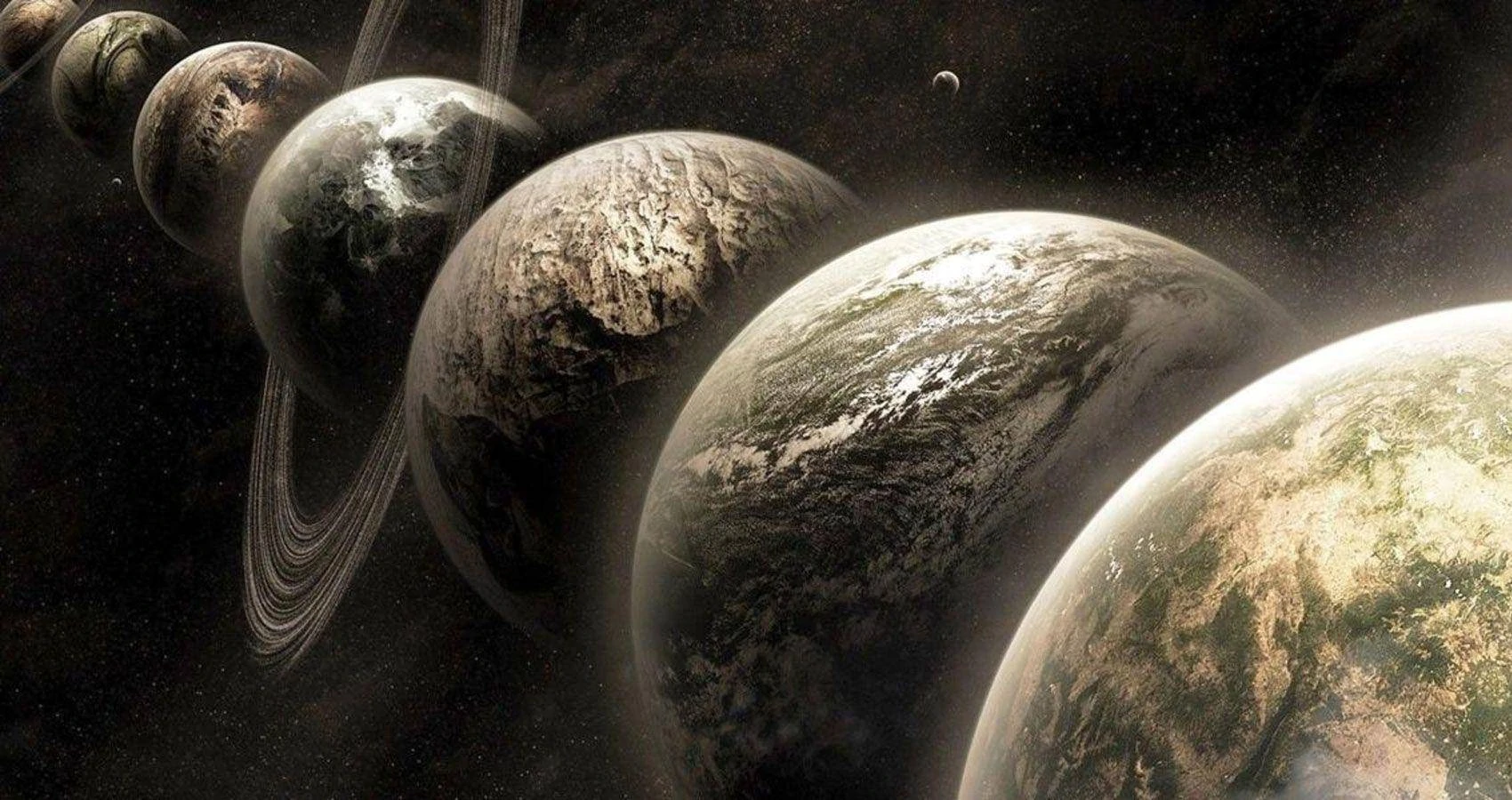
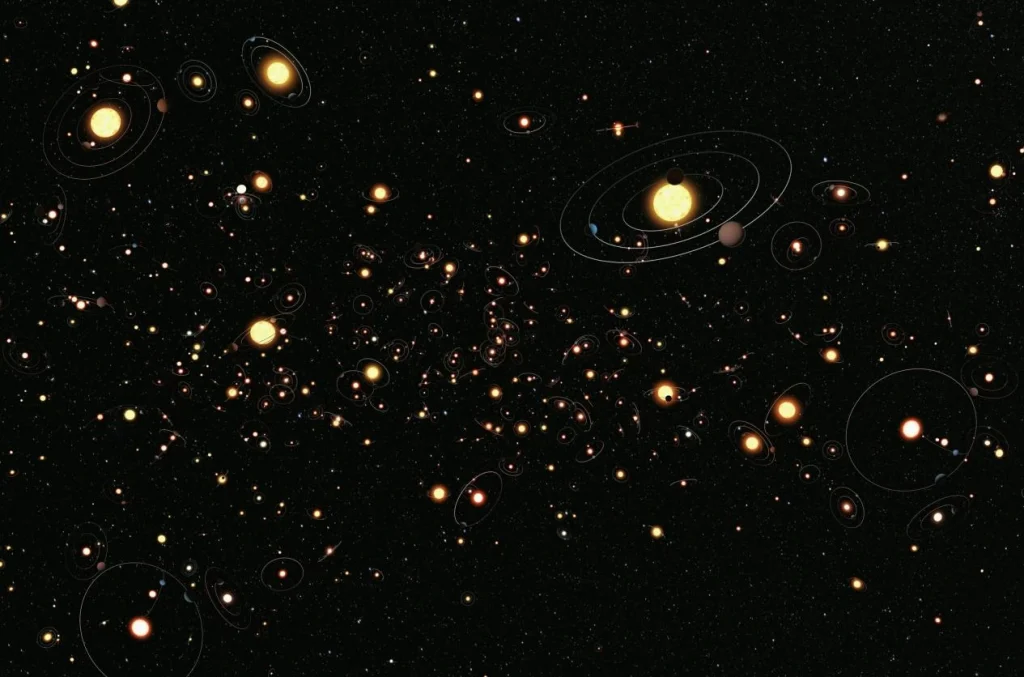
Another route comes from inflationary cosmology and multiverse ideas tied to eternal inflation. In some versions of the theory, inflation may keep happening in different regions, producing many “bubble universes,” while we live in just one of them. These ideas are taken seriously in cosmology, but they remain speculative.

There is also the idea of brane cosmology, which comes out of string-inspired physics. In some models, our universe could be a kind of membrane, or “brane,” existing in a higher-dimensional setting, with other branes—and possibly other universes—alongside it. This too is highly theoretical.

So none of these theories has directly proven that other universes exist. But together, they do suggest one striking possibility:

our universe may not be the only one. 

The Buddhist View: Countless Worlds

Now let’s go back more than two thousand years.

Buddhist cosmology describes reality on a scale even larger than many people imagine. In traditional Buddhist thought, there is not just one world. There are countless world-systems, each with its own beings, conditions, and forms of existence. Britannica describes Buddhist cosmology as involving an infinite number of cosmos, each structured within the cycle of birth, death, and rebirth.

Buddhism often speaks of three broad realms within samsara: the desire realm, the form realm, and the formless realm. The desire realm includes humans and other beings driven by desire; the form realm is subtler; and the formless realm is more abstract still. These are not “parallel universes” in the modern physics sense, but they are definitely multiple worlds or levels of existence within a much larger cosmic picture.

The famous expression often translated as “three thousand great thousand world system” points not to a literal total of 3,000 worlds, but to an immense cosmic scale. In Buddhist thought, the visible world is only a tiny fraction of reality.

So if modern physics says reality may be bigger than our one observable universe, Buddhism has been saying for a very long time that what we see is far from the whole picture.

Where They Sound Similar

If you place parallel-universe ideas and Buddhist cosmology side by side, one similarity stands out immediately:

neither assumes that our world is the only one.

In modern physics, some multiverse proposals suggest that there may be many universes, perhaps with different properties or different histories. In Buddhist cosmology, there are countless cosmos, realms, and world-systems, each with different conditions for existence.

Both, in their own very different ways, challenge the idea that the world we directly experience is all there is.

They both suggest:

what you see may be only a small part of a much larger reality.

Where They Differ: How You Reach Those Worlds

Of course, the differences are just as important.

In physics, parallel universes—if they exist—are generally not places we can visit. In most multiverse models, they are physically inaccessible to us. They are outside our observable range, or separated by the very structure of the theory itself. With current science, we cannot travel to them or directly inspect them.

In Buddhism, other worlds are not mainly separated from us by physics, but by karma and conditions of existence. Buddhist cosmology treats rebirth across different realms as part of samsara, governed by karma rather than by rockets or laboratory instruments.

So the starting point is completely different.

Physics says: these worlds may exist, but they are physically beyond our reach.
Buddhism says: worlds are connected through the moral and existential structure of samsara.

One is about cosmological theory.
The other is about spiritual cosmology.

But both point to the same humbling message:

reality is larger than the little piece directly in front of us.

A Shared Challenge to Human Self-Centeredness

There is another deep similarity here.

Both parallel-universe thinking and Buddhist cosmology challenge the human tendency to put ourselves at the center of everything.

Over the centuries, science has repeatedly pushed us away from the cosmic center. First Earth stopped being the center. Then the Sun stopped being the center. Then our galaxy stopped being the center. Multiverse theories push that decentering even further: perhaps even our entire universe is not unique.

Buddhist cosmology does something similar in a different language. By placing humans within a vast network of realms, rebirths, and world-systems, it reminds us that our present life is not the whole of existence.

This is not meant to make us feel meaningless.

It is meant to loosen the very human habit of thinking, my small world is the whole world.

And that shift in perspective can be surprisingly healthy.

Why Any of This Matters

You might ask: even if parallel universes exist, what difference does it make? I cannot go there anyway.

Fair question.

The value of these ideas is not necessarily that they solve a practical problem. It is that they stretch the imagination and change the way we relate to reality.

Once you start entertaining the possibility that there may be more than one world, you also start questioning whether your current frame of reality is complete.

That is true for physics.
And it is true for Buddhist thought as well.

The Buddhist idea of many worlds is not just there to satisfy curiosity about cosmic geography. It also serves as a reminder not to cling so tightly to the tiny slice of life directly in front of you. The larger your frame, the smaller your immediate anxieties can begin to feel.

That is not escapism.

It is perspective.

In the End

So let’s go back to the question we started with:

Is there another version of you in another universe, living a different life?

A physicist might say: maybe—but we do not have direct evidence. Some theories allow that possibility, but it remains speculative.

A Buddhist might answer differently: you may not need another universe to find another “you,” because even from one moment to the next, you are already changing. The self you were a moment ago is not exactly the self you are now.

Different traditions, different language.

But both point toward the same thought:

what you call reality may be only a small part of reality.

There may be something larger beyond what you can immediately see.

Not to pull you away from this life,
but to help you live this life with a wider mind.

Because when the world feels bigger,
the heart often does too.

Same category navigation

More to read next

From reading to action

Keep thoughtful guides close as you shape a calmer home.

Save ideas for later, explore room-based guidance, or share what you would like us to write about next.
Explore Room Guides Use room-based guides when you want a calmer way to choose placement, materials, and daily-use pieces.
Share A Future Topic Tell us what spaces, objects, or topics you'd like us to explore next. We’re always open to new ideas and inspiration.
Journal Dispatch

A quiet letter for spatial living.

Receive calm notes on placement, materials, and living with more spatial clarity.