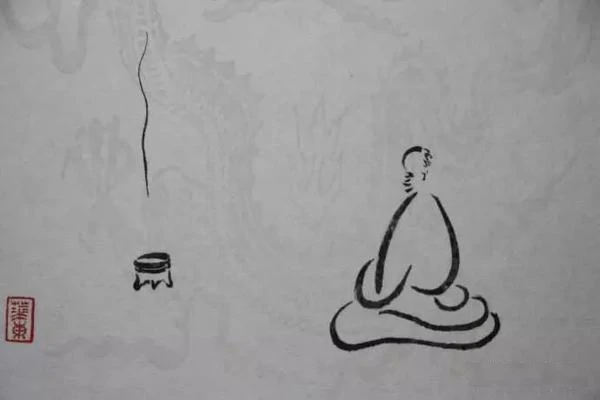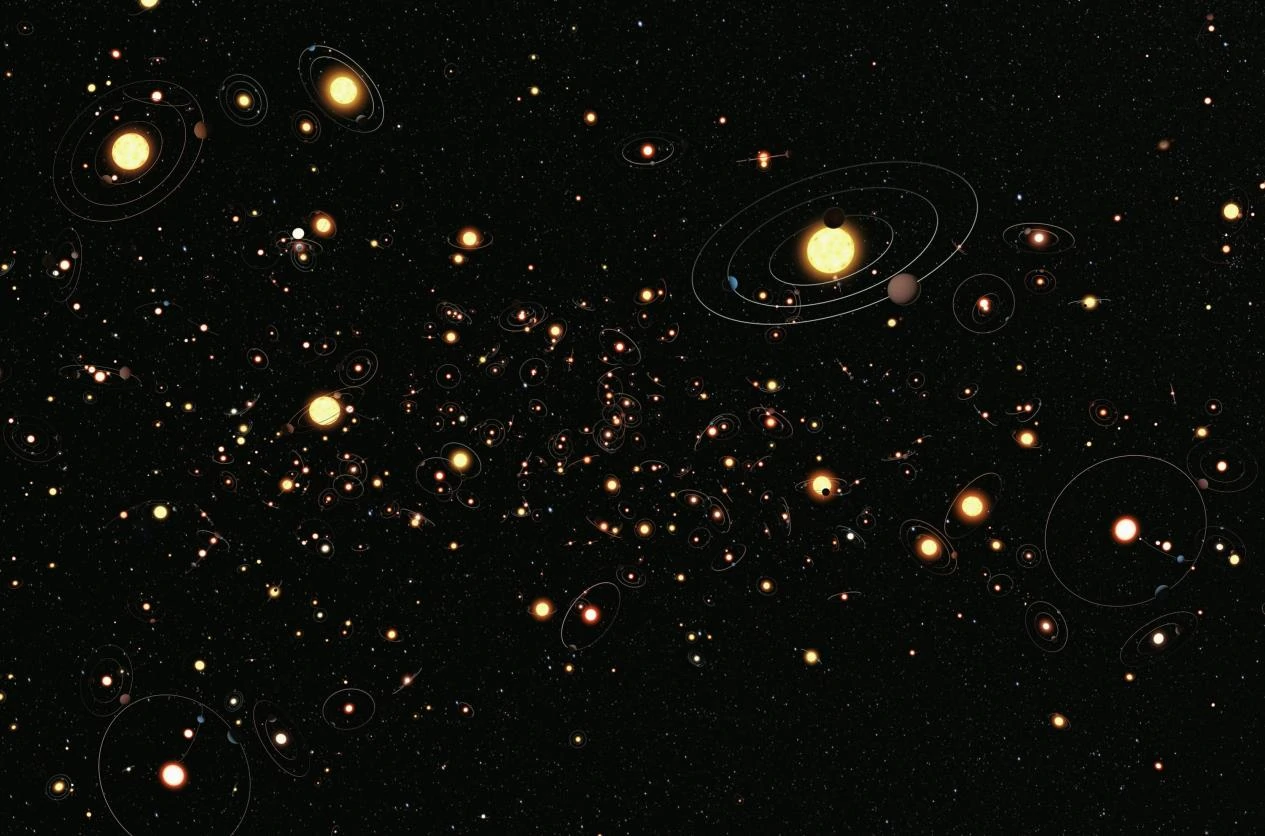
Quantum Theory and the I Ching
Ancient Wisdom in an Uncertain World
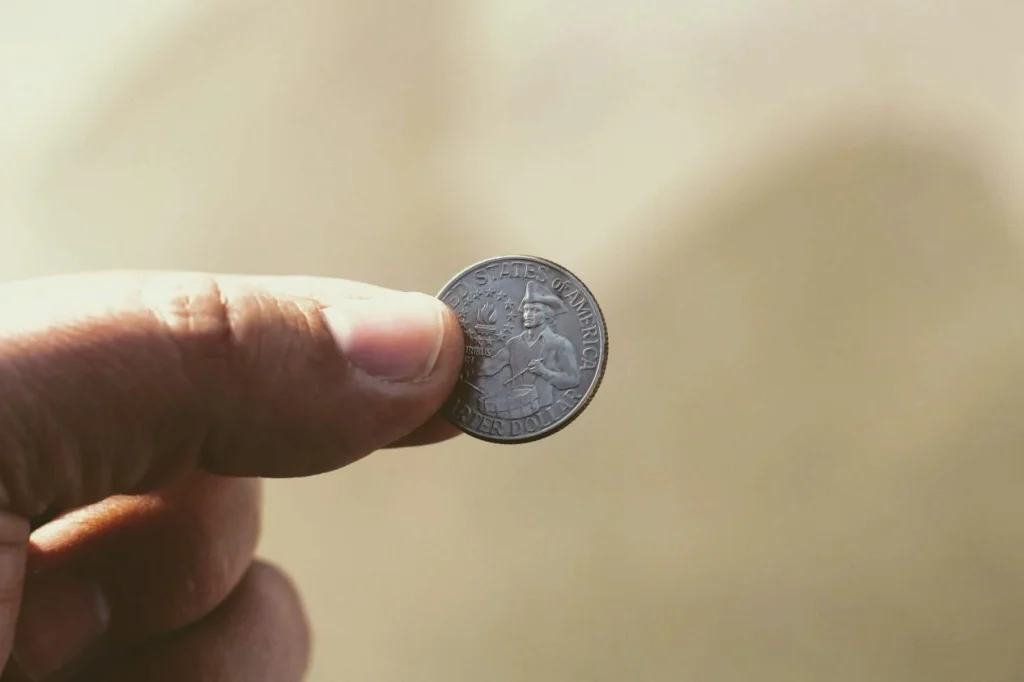
Have you ever thought about this:
There is a coin spinning in front of you. Before it lands, is it heads or tails?
You could say: both.
Or maybe: it has not “decided” yet.
That sounds playful, but in the microscopic world, reality really can behave in ways that feel just as strange. In quantum mechanics, particles are described very differently from everyday objects, and ideas like uncertainty, superposition, and entanglement are part of that picture.
An electron can be described by a spread of possibilities rather than a single classical path. Schrödinger’s famous cat thought experiment was designed to dramatize the odd implications of superposition. And entangled particles can display correlations across great distances, even though that does not allow faster-than-light communication.
This is the quantum world: a world where certainty gives way to probability.
What makes this especially interesting is that the ancient Chinese Yijing—better known in English as the I Ching or Book of Changes—uses a completely different language, yet also places change, transformation, and uncertainty at the center of how reality is understood.
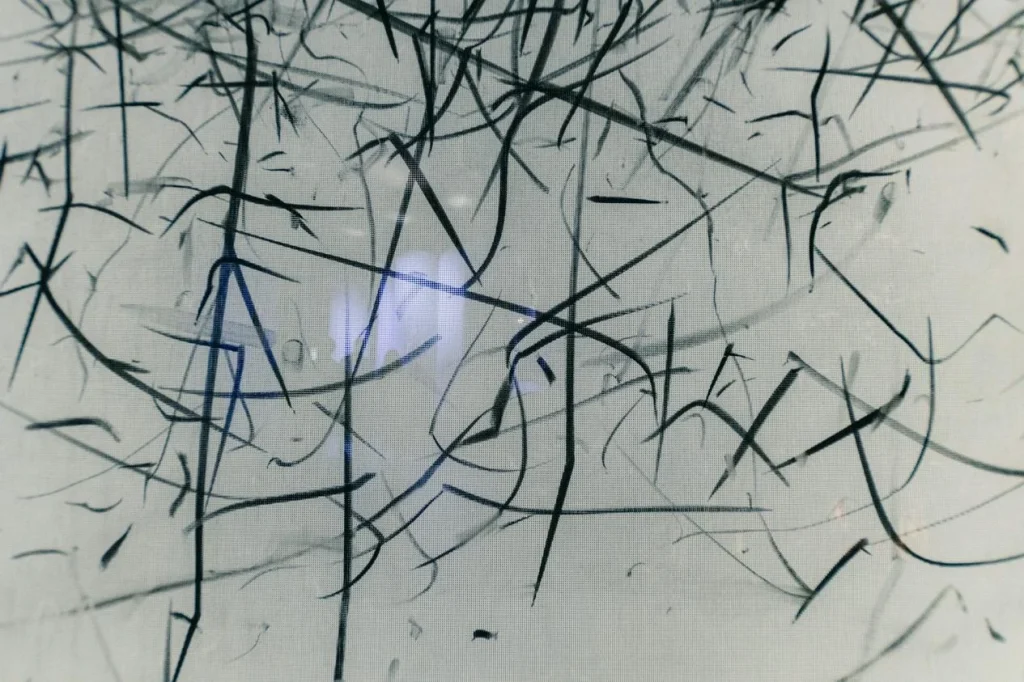
The Quantum World: Before the Coin Lands
Let’s start with quantum mechanics.
In classical physics, the world feels predictable. If you know where a ball is and how fast it is moving, you can calculate where it will be a moment later. That is the logic of a deterministic world.
But in the microscopic world, that logic breaks down.
Werner Heisenberg showed that you cannot know both the exact position and the exact momentum of a particle at the same time. This is the uncertainty principle. It is not just a problem with measurement tools. It is built into the way nature works at the quantum scale.
Then there is superposition. Before a measurement, a quantum system can be described as existing in a combination of possible states rather than one single fixed state. Schrödinger’s cat was invented as a thought experiment to show how strange this sounds when translated into everyday language: before the box is opened, the cat is described as both alive and dead in the formal setup of the paradox.
It sounds absurd. But the basic framework of quantum mechanics has been confirmed again and again in experiments, and it remains one of the most successful theories in all of science.
The I Ching: Change Is the Only Constant
Now let’s turn to ancient China.
The I Ching began as a divination text, but over time it also became a deep philosophical work. At its core is one simple idea:
change.
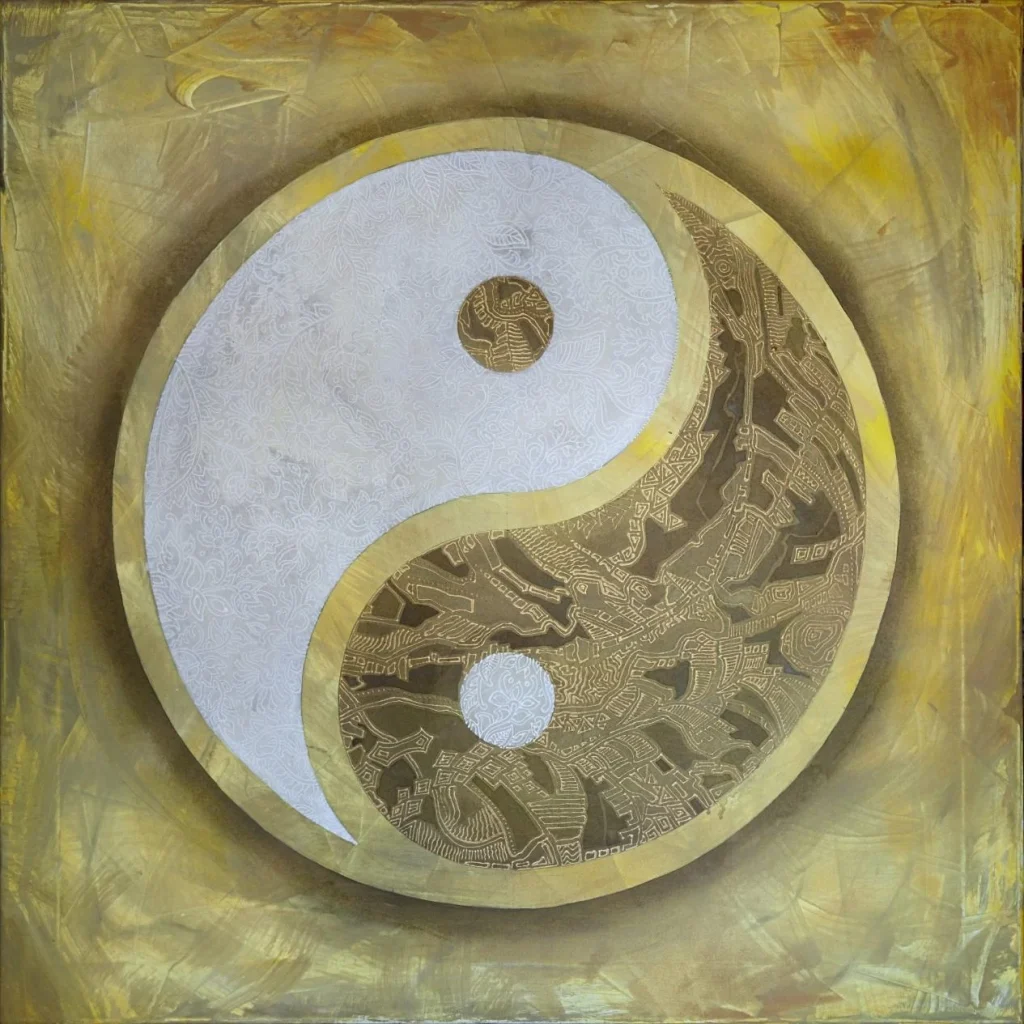
The I Ching uses two basic symbols to describe the world: yin and yang.
Yin is associated with stillness, darkness, inwardness, and contraction.
Yang is associated with movement, brightness, outwardness, and expansion.
But yin and yang are never fixed. Day becomes night. Summer becomes winter. Activity turns into rest, and rest eventually turns back into activity.
The I Ching uses its system of sixty-four hexagrams to describe states of change and the transitions between them. It is not trying to freeze the world into a permanent picture. It is trying to show that reality is always moving, always shifting, always becoming something else. The text is deeply tied to a philosophy of change rather than static being.
In that sense, the I Ching and quantum theory do seem to touch a similar nerve: both resist the idea that reality is simply fixed, stable, and fully predictable.
Where They Sound Similar: The World Is Not Fully Certain
Quantum mechanics and the I Ching come from completely different eras and civilizations. Still, they share one deep intuition:
the world is not simply fixed in advance in the way classical determinism imagined.
In Newton’s universe, if you knew the starting conditions precisely enough, you could in principle calculate everything that followed.
Quantum mechanics changed that picture. It gives probabilities rather than definite classical outcomes in many situations. You can describe the likelihood of finding an electron here or there, but not always assign it one fully classical trajectory before measurement.
The I Ching operates differently, but it also does not offer a rigidly fixed future. Instead, it presents a way of understanding patterns of transformation. You are in one condition now, but what comes next depends on how the pattern unfolds. The emphasis is not on absolute prediction, but on reading change wisely.
Both, in their own way, suggest that uncertainty is not a mistake in our thinking. It is part of how reality is encountered.
Quantum Entanglement and the Logic of Relationship
There is another interesting echo here: quantum entanglement.
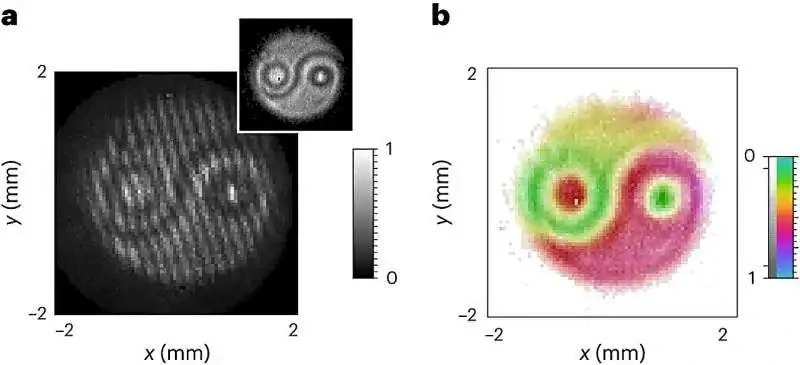
When two particles are entangled, they are described by a shared quantum state. Measuring one can determine the corresponding properties of the other, even when they are far apart. This is the phenomenon Einstein famously disliked and associated with “spooky action at a distance.” But modern physics is clear on an important point: entanglement produces strong correlations, yet it does not allow usable faster-than-light signaling.
That can feel oddly reminiscent of yin and yang in the I Ching.
Yin and yang are not fully separate things. Each contains the seed of the other. Each responds to the other. One rises, the other falls. They are two aspects of a larger whole, not isolated pieces.
Entanglement is not the same concept. It belongs to physics, not philosophy. But it does point to a similar intuition: what looks separate on the surface may still belong to one deeper system.
One insight comes from experiment.
The other comes from symbolic thought.
But both point toward interconnectedness.
The Role of the Observer
Quantum mechanics has another feature that many people find unsettling: measurement matters.
Before measurement, a quantum system can be represented as a spread of possibilities. During measurement, the result appears in one definite form. Physicists debate how best to interpret this, but it is fair to say that in quantum mechanics, the observer and the observed cannot always be treated as completely unrelated in the way classical intuition once assumed.
The I Ching carries a somewhat comparable mood.
When someone consults the I Ching, they are not simply pulling a fixed answer out of an objective machine. The question, the moment, the person, and the resulting pattern all belong to one situation. The reader is not standing completely outside the event. They are already part of it.
Again, these are not identical ideas.
But both suggest something important:
you are not just a spectator. You are a participant.

Of Course, They Are Not the Same
That said, the differences are just as important as the similarities.
Quantum mechanics is science. It has mathematical structure, experimental success, and predictive power. Its uncertainty can be expressed with precision in probabilities and formal equations.
The I Ching is not science in that sense. It does not calculate electron positions. It does not generate laboratory predictions. What it offers is a way of thinking—a symbolic framework for understanding transformation, timing, and relationship.
Quantum mechanics answers: how does the microscopic world behave?
The I Ching asks: how should we understand change?
One works in the laboratory.
The other works in reflection, philosophy, and interpretation.
Still, they meet at one meaningful point: both remind us that reality is more complex, more relational, and less rigid than common sense often assumes.
Why Ancient Wisdom Still Matters
You might ask: if we already have quantum mechanics, why do we still need the I Ching?
That is a fair question.
Quantum mechanics gives us equations, experiments, and astonishingly accurate models of the microscopic world. But it does not tell us how to emotionally live inside a reality that is uncertain, changing, and interconnected.
The I Ching cannot help you run a particle experiment. But it can help train a certain kind of mind: one that accepts change, tolerates uncertainty, and pays attention to relationships rather than clinging to fixed states.
And in today’s world, that mindset matters.
You cannot predict every detail of tomorrow.
You cannot control every variable.
But you can learn how to move with change instead of fighting it at every step.
That is where the old wisdom still feels alive.
It does not give you quantum equations.
It gives you a way to be a little more at ease in a world that refuses to stay still.
In the End
Quantum theory says that at the microscopic level, reality does not always come to us as fixed certainty. It often comes as probability, possibility, and relationship.
The I Ching says that nothing in life stays fixed. Everything moves through patterns of change.
One speaks in mathematics.
The other speaks in symbols.
One emerged in the 20th century.
The other was written down roughly three thousand years ago.
But both, in their own way, whisper the same reminder:
Do not assume the world is static.
Do not assume you can control everything.
Do not assume you stand outside reality as a detached observer.
The world changes.
You change.
You are part of the change.
That may sound unsettling at first.
But there is also something freeing about it.
If everything were already fixed, nothing you did would matter.
It is precisely because the world is open, shifting, and uncertain that your choices can mean something.