NEW JOURNAL NOTES ON SPACE, OBJECTS, AND EVERYDAY ATMOSPHERE
Visit Shop
Back to All Articles

Einstein and Laozi

In this article

Einstein: Space and Time Are Not Rigid Laozi: The Dao Cannot Be Fully Spoken, Yet It Is Everywhere What They Share: The World Is Dynamic Another Shared Theme: Following the Nature of Things Two Languages, One Intuition

A Curious Resonance Between Relativity and the Dao

Have you ever thought about this:

If you got on a spaceship moving close to the speed of light, traveled through space, and then returned to Earth, something strange would happen: people on Earth would have aged more than you.

That is not an illusion.
It is not just science fiction.
It is one of the predictions of relativity, and time dilation has been confirmed in experiments and measurements, including differences in how clocks tick under different speeds and gravitational conditions.

Time is not absolute. It can change. It depends on how fast you are moving, and on how close you are to a massive object.

More than a hundred years ago, that idea shocked the world because it challenged something most people assumed was obvious: that time is the same for everyone.

But here is the interesting part: more than two thousand years ago in China, Laozi may have been pointing toward something strangely similar—just in a completely different language.

Einstein: Space and Time Are Not Rigid

Let’s start with Einstein.

In Newton’s world, time and space were absolute. One second was one second, no matter where you were. One meter was one meter, no matter what you were doing. Space and time were like a giant fixed framework: the universe moved inside it, but the framework itself did not change.

Einstein said: not quite.

In special relativity, time and space depend on the observer’s motion. In general relativity, gravity is understood not as a mysterious force pulling at a distance, but as the curvature of spacetime. The closer you are to a massive object, the more time slows relative to a different observer. The faster you move, the more time slows as well.

Even more fascinating, space and time are not separate things. They are woven together as spacetime. You cannot really change one without affecting the other.

And this spacetime is not rigid. It bends. It stretches. Matter and energy shape it, and in turn that curved spacetime influences how matter moves. That is the core picture of Einstein’s universe.

So Einstein’s universe is not a giant clock sitting still in the background. It is more like a vast, flexible fabric—dynamic, responsive, and interconnected.

Laozi: The Dao Cannot Be Fully Spoken, Yet It Is Everywhere

Now let’s turn the clock back more than two thousand years.

Laozi, the figure traditionally associated with the Tao Te Ching, opens with a famous line often translated as: “The Dao that can be spoken is not the constant Dao.” The basic idea is simple, even if the phrasing sounds mysterious: the deepest principle of reality cannot be fully captured in words. You can describe its expressions, but not exhaust its essence.

So what is the Dao?

Laozi never pins it down with a neat definition. Instead, he uses images. The Dao is like water—soft, but powerful enough to wear down stone. It is like a valley—empty, yet able to hold everything. It is like a mother—giving rise to all things without trying to possess them.

Then comes one of the most famous lines in the text: “Dao gives birth to One; One gives birth to Two; Two gives birth to Three; Three gives birth to the ten thousand things.”

In other words, all things emerge from an underlying source or principle. From unity comes polarity, often understood through yin and yang. From polarity comes interaction, and from interaction comes the endless unfolding of the world.

The key point is that the Dao is not a creator issuing commands. It is not a ruler standing outside the universe telling things what to do. It is the underlying way things unfold naturally. Laozi calls this wu wei—often translated as “non-forcing” or “effortless action,” not doing nothing, but not imposing unnecessary control.

What They Share: The World Is Dynamic

Put Einstein and Laozi side by side, and one surprising common point appears immediately:

both see the world as dynamic, not static.

Newton’s universe feels stable and fixed. Space is a permanent stage. Time is a steady stream. Matter moves, but the stage itself stays the same.

Einstein breaks that picture open. In his universe, spacetime is active. Matter shapes spacetime, and curved spacetime shapes the motion of matter. Reality is relational and dynamic, not frozen in place.

Laozi’s universe is dynamic too. The Dao is not a thing. It is a process. The world is not assembled like a machine; it unfolds, transforms, and gives rise to itself continuously.

These two ways of thinking are separated by more than two millennia and grew out of completely different cultures. And yet both suggest something similar:

Do not imagine the universe as a dead machine.
It is closer to a living process.

Another Shared Theme: Following the Nature of Things

There is another resonance between Einstein and Laozi: both, in very different ways, point toward the importance of not forcing reality into our preferred shape.

Einstein did not invent the laws of spacetime. He tried to describe how the universe already works. Physics, at its best, does not command nature. It listens carefully enough to discover its patterns. Relativity was not a decision about how time should behave; it was a recognition of how time and space actually behave.

Laozi says something similar in philosophical language. The Dao does not force the world. Spring comes, and flowers bloom. Winter comes, and leaves fall. Things follow their own nature. The wise response is not to dominate every process, but to understand its rhythm and move with it.

That idea feels especially relevant now.

We are used to trying to control everything—time, outcomes, productivity, even emotion. But both Einstein and Laozi, each in their own way, remind us that some realities do not bend simply because we want them to. Spacetime has its structure. Nature has its rhythm.

This is not an argument for passivity.
It is an argument for paying attention first.

Two Languages, One Intuition

Einstein speaks in the language of mathematics and physics.

Laozi speaks in the language of metaphor and poetry.

One says: spacetime curves, matter and energy determine that curvature, and curvature influences motion.
The other says: the Dao gives rise to all things, acts without forcing, and lets the world unfold according to its nature.

On the surface, they sound completely different.

But if you sit with them long enough, both seem to point toward a shared intuition:

the world is interconnected, not isolated. It is changing, not fixed. And it follows patterns deeper than human preference.

That is not only a question for physics.
And it is not only a question for philosophy.

It is also a question about how we live.

In the End

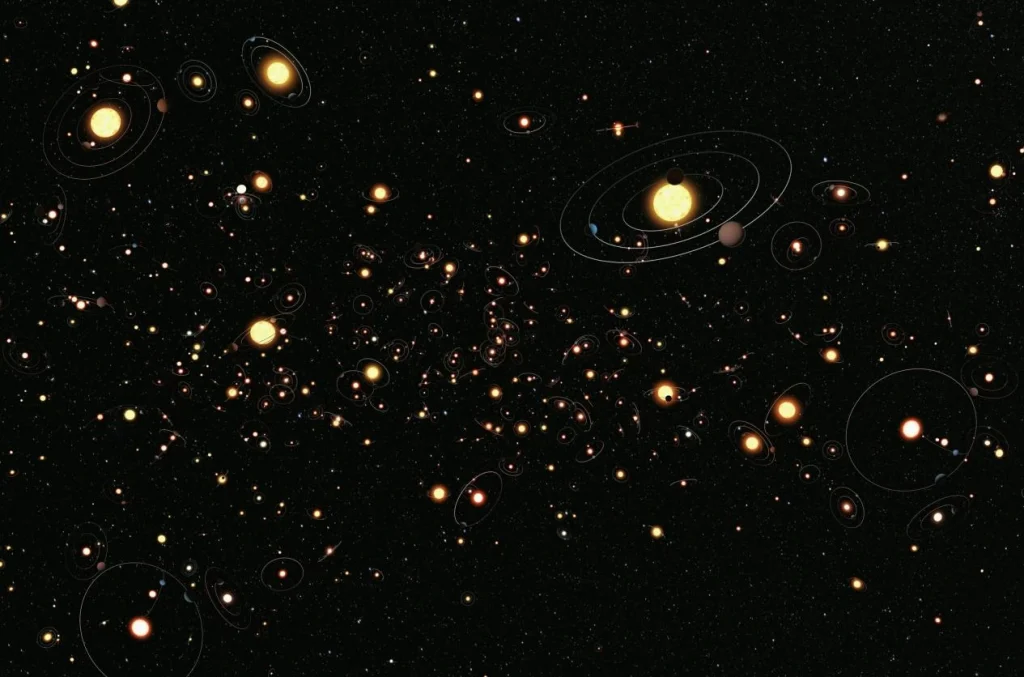
The next time you look up at the stars, you might hold two thoughts at once.

Einstein would tell you that the spacetime around those stars is curved, and that light travels through that curved geometry before it reaches your eyes.

Laozi would remind you that the stars are not being pushed around by human will. They follow the deeper order of things—the Way.

One speaks in equations.
The other speaks in images.

But both suggest that the universe is stranger, more subtle, and more harmonious than it first appears.

And we are not outside it, watching from a distance.

We are part of it.

Same category navigation

More to read next

From reading to action

Keep thoughtful guides close as you shape a calmer home.

Save ideas for later, explore room-based guidance, or share what you would like us to write about next.
Explore Room Guides Use room-based guides when you want a calmer way to choose placement, materials, and daily-use pieces.
Share A Future Topic Tell us what spaces, objects, or topics you'd like us to explore next. We’re always open to new ideas and inspiration.
Journal Dispatch

A quiet letter for spatial living.

Receive calm notes on placement, materials, and living with more spatial clarity.