Three Thousand Years of Chinese Feng Shui
In this article
From Survival Instinct to Environmental Wisdom
When people talk about feng shui, the conversation often swings between two extremes. Some treat it as something mystical and mysterious. Others dismiss it outright as superstition.
But if we step back and look at feng shui historically, a very different picture appears.
At its heart, feng shui grew out of something deeply practical: the long-term human effort to understand the environment, choose good places to live, and create spaces that support life. It was rooted in the observations of an agricultural civilization, shaped by philosophy, and deeply connected to social structure and daily survival.
So instead of approaching feng shui through fear or fantasy, it makes more sense to look at it through history. How did it begin? How did it change over time? And why did it become such a lasting part of Chinese culture?
This article traces that story through historical texts, archaeology, and architectural evidence, while keeping the focus on what can actually be understood and discussed today.
1. The Beginning: Survival Instinct and Early Belief
Prehistoric China to the Shang and Zhou dynasties
Feng shui did not appear out of nowhere. Its earliest roots lie in something very simple: the human need to survive.
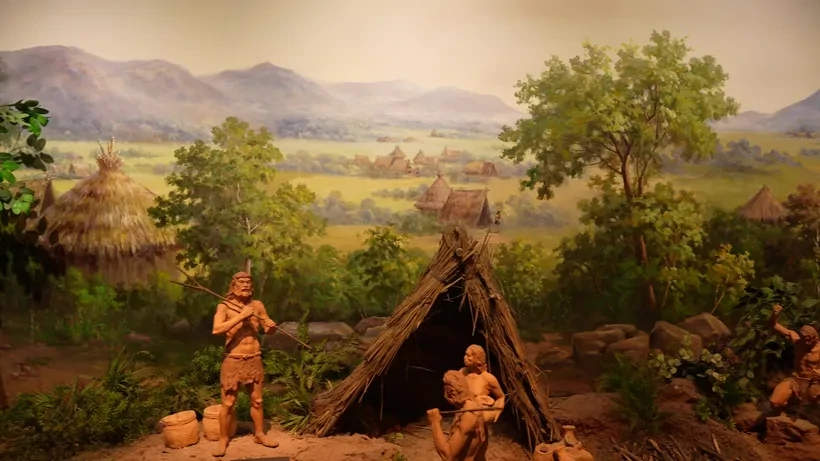
Six thousand years ago, the Banpo site near present-day Xi’an was built on higher ground by the river, backed by the plateau. That location was not random. It offered access to water, protection from floods, better sunlight, and shelter from harsh winds.
The same logic appears at the Hemudu site from around seven thousand years ago, where stilt houses were built near wetland areas. This was a practical response to moisture and flooding.
These choices show that early people were already paying close attention to safety, climate, resources, and comfort. In a basic sense, this is where feng shui begins.
As ideas about ancestors and the afterlife developed, site selection became important not only for the living, but also for the dead. In the Hongshan culture, sacred tombs and ritual platforms were placed along mountain ridges, linking landscape with spiritual meaning. Shang royal tombs were often placed on higher ground near curved riverbanks, which later generations would associate with the ideal idea of protective, embracing water.
This suggests that the early logic of “good placement” was already expanding beyond daily shelter into ritual and burial culture.
By the Shang and Zhou periods, major decisions were often tied to divination. Oracle bone inscriptions include questions about whether a royal residence should be built in a certain place. The Book of Documents also records how the Zhou court surveyed the landscape and then used divination when choosing the site of Luoyi, the future capital.
So from an early stage, practical observation of the land and ritual decision-making were already working together. This would later become a defining feature of feng shui.
2. Building a Theory: Philosophy and Early Technical Systems
Spring and Autumn period to the Han dynasty
As Chinese thought developed, feng shui began to absorb philosophical ideas and turn into a more organized body of knowledge.
Several major concepts shaped its framework.
Yin and yang, especially through the Yijing tradition, helped people think about contrast and balance: light and shade, high and low ground, warmth and cold, dryness and moisture.
The Five Elements, especially as developed by thinkers like Zou Yan, linked direction, matter, and cosmic order. East, south, center, west, and north were no longer just directions. They also carried symbolic meaning.
Qi, discussed in texts like the Guanzi, became especially important. Qi was understood as a vital force or life-energy running through the world. One of feng shui’s most famous aims, “gathering qi and shielding it from dispersal,” comes directly from this way of thinking.
The unity of heaven and humanity also played a major role. If human life and the natural world were connected, then the arrangement of land, buildings, and space could reasonably be seen as influencing human well-being.
During this period, feng shui also began to emerge as a specialized skill. The Rites of Zhou mentions officials responsible for land measurement and burial planning. By the Han dynasty, bibliographic records in the Hanshu listed works such as Kan Yu Jin Kui and Gong Zhai Di Xing, early texts linked to site selection and the study of terrain.
Although these books are now lost, their existence shows that feng shui had already begun moving into a more formal, written form. The term kanyu, originally referring to heaven and earth, gradually became one of the formal names for the field.
Han imperial tomb building also reflects this growing complexity. The Qin and Han periods saw enormous attention given to tomb construction and burial site selection. At the same time, critics like Wang Chong attacked many popular burial taboos, which tells us something important: feng shui was already influential enough to attract serious criticism.
In other words, by the Han period, feng shui was both widely practiced and already being debated.
3. Maturity: Core Texts and the Rise of the Form School
Wei, Jin, Northern and Southern dynasties to Tang
This was the period when feng shui took a major step forward and began forming the classic theories later generations would build on.
The most famous turning point is the text known as the Book of Burial, traditionally linked to Guo Pu. Although it was probably compiled later than Guo Pu himself, its influence was enormous.
This text gives one of the best-known definitions of feng shui: qi is scattered by wind and stopped by water, so the goal is to gather it and allow it to settle.
It also clearly states a core idea: the purpose of burial is to connect with living qi.
From there, the text lays out the key components of classic feng shui:
- Dragon: the movement and energy of mountain ranges
- Cave or site: the point where qi gathers
- Sand: surrounding hills or landforms that protect the site
- Water: what guides and contains qi
- Orientation: the direction the site faces
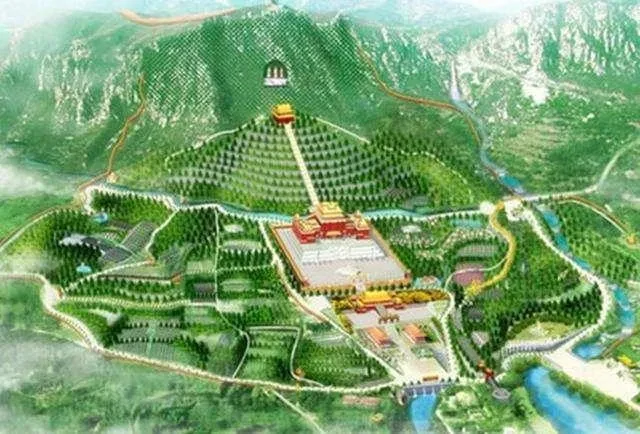
It also describes the famous ideal landscape pattern of the Four Symbols: a protective mountain behind, embracing forms to the left and right, and open space or water in front.
This became the foundation of the Form School, also known as the landscape-based approach to feng shui.
Another important early text, the Yellow Emperor’s House Classic, focused more on houses for the living rather than tombs, and helped shape the early development of residential feng shui.
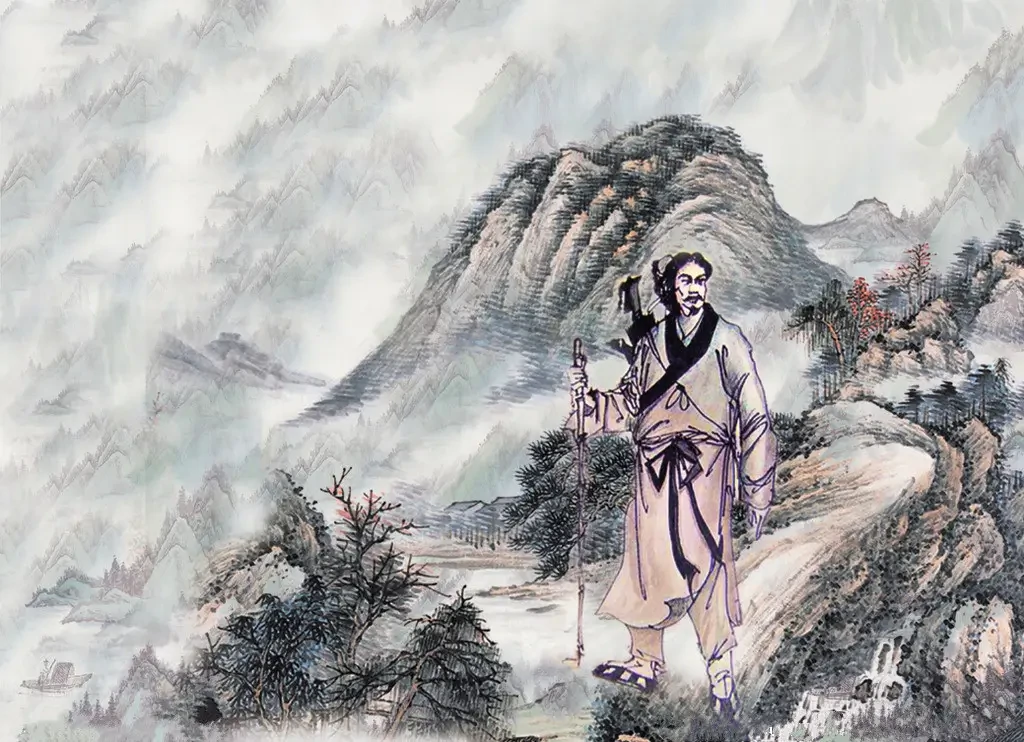
A major historical figure in this stage is Yang Yunsong, often called Master Yang. During the late Tang period, he is said to have brought court feng shui knowledge south to the Jiangxi region, where he practiced extensively and helped develop the Form School in a more systematic way.
Texts associated with him or his tradition, such as Shaking the Dragon Classic and Doubting the Dragon Classic, became major references for later generations. These works emphasized close reading of the actual land rather than overreliance on abstract calculations.
Yang’s approach was practical, landscape-centered, and strongly tied to direct observation. For that reason, he became one of the most respected names in feng shui history.
During the Tang period, technical tools also improved. Archaeological finds from Xi’an include early forms of directional plates with marked orientations, showing the development of instruments that later evolved into the feng shui compass.
At the same time, the Tang state was not entirely comfortable with how far these ideas had spread. Officials such as Lü Cai criticized overly superstitious burial practices and attacked exaggerated claims. This tension between practical environmental knowledge and excessive ritualism would remain part of feng shui’s history for centuries.
4. Flourishing and Division: New Schools and New Debates
Song and Yuan dynasties
The Song period was a golden age for feng shui theory. This was when the field expanded dramatically, diversified, and developed into multiple competing schools.
The Form School continued to develop along the path shaped by Yang Yunsong, focusing on mountains, water, protective landforms, and site reading.
At the same time, the Compass School or Liqi School rose in importance. With better compasses and increasingly complex numerical systems, feng shui began paying more attention to direction, timing, cosmic cycles, and mathematical correlations.
Several major branches emerged:
- Eight Mansions School, which matched house orientation with directional patterns and was especially popular in northern China
- Three Harmonies School, which paid special attention to water flow and directional relationships through heavenly stems and earthly branches
- Early forms of Flying Star theory, which later developed into the Xuan Kong tradition and focused on the changing relationship between time and space
This was also an age when elite scholars took feng shui seriously enough to discuss it. Some accepted its basic principles, while others criticized its excesses. Either way, it had become part of larger intellectual life.
As printing expanded, feng shui knowledge also spread more widely among ordinary people. It was no longer only court knowledge or specialist knowledge. It increasingly became part of everyday cultural thinking.
Another important figure from this period is Lai Buyi, a semi-legendary master associated with the Southern Song. He became especially influential in the development of Liqi methods, particularly those linking celestial patterns with earthly geography.
A text attributed to him, Cui Guan Pian, played an important role in extending compass-based feng shui toward astral and directional interpretation. Later legends credit him with technical innovations on the compass itself, though some of these claims are probably later additions.
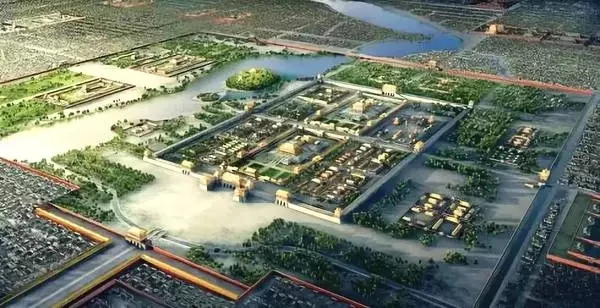
The Yuan dynasty also offers a striking example of feng shui principles in large-scale planning. The design of Dadu, the precursor of Beijing, integrated ritual planning from classical texts with landscape logic. Mountains, water, central axis design, and cosmological symbolism were all brought together in the making of an imperial capital.
5. Synthesis, Competition, and Overgrowth
Ming and Qing dynasties
By the Ming and Qing periods, feng shui had become both highly developed and highly crowded.
On one hand, this was an age of major summaries, influential books, and grand applications. On the other hand, it was also a time when theories multiplied rapidly, arguments intensified, and a great deal of confusion entered the field.
During the Ming dynasty, large collections such as the Yongle Encyclopedia preserved many earlier feng shui texts. The book Dili Renzi Xuzhi by Xu Shanji and Xu Shanshu became one of the most important Form School works of the era, offering detailed discussion of landforms and regional case studies.
Imperial tomb design also reached new levels of refinement. The Ming Tombs near Beijing are one of the most famous examples. Their location reflects classic Form School priorities: mountain protection at the rear, surrounding hills, flowing water, and carefully chosen orientation.
Late Ming and early Qing also saw the rise of Jiang Dahong, one of the most influential figures in the development of Xuan Kong Flying Star theory. He argued strongly for his own line of interpretation and criticized rival schools, especially the Three Harmonies tradition.
His work pushed Liqi feng shui into more complex and abstract territory. Later masters, especially in the Qing, continued developing these systems.
At the same time, feng shui compasses became more elaborate, often containing dozens of layers of information. Residential feng shui books also multiplied, and feng shui ideas spread into almost every corner of social life.
This period also brought a problem: too many books, too many authors, and too much low-quality material.
As literacy and printing expanded, many lower-level scholars began publishing feng shui books of uneven value. Some had little practical experience and simply copied, mixed, or exaggerated older theories. This led to a flood of contradictory material, much of it overly technical, speculative, or disconnected from actual environmental observation.
So while the Ming and Qing were undeniably high points in feng shui’s reach and sophistication, they were also periods when the field became crowded with excess, confusion, and inflated claims.
6. Modern Times: Decline, Criticism, and Reassessment
From the late nineteenth century onward, feng shui entered a very different world.
With the arrival of Western science, engineering, and modern intellectual movements, feng shui came under heavy criticism. Many reform-minded thinkers dismissed it as superstition.
After 1949, in mainland China, feng shui was largely condemned as part of “feudal superstition,” and open teaching or public practice was greatly restricted. Much of the tradition survived only through private transmission or folk practice.
But in recent decades, things have changed.
As attitudes toward traditional culture have become more open and nuanced, feng shui has started to be reexamined. Instead of being treated only as superstition, it is increasingly discussed as part of China’s cultural heritage, environmental thinking, and historical understanding of the relationship between people and place.
In that sense, feng shui is not simply “coming back.” It is being seen again in a different light.
Today, its value may lie less in rigid formulas and more in what it preserves: long-term observations about landscape, climate, orientation, settlement, architecture, and the emotional experience of space.
Looking Back: Why This History Still Matters
When we look back across three thousand years of feng shui history, what stands out is not magic, but continuity.
Again and again, feng shui returned to the same core questions:
Where is it safe to live?
How should people respond to land, light, wind, and water?
What kinds of spaces make human life feel supported?
How can built environments work with nature instead of against it?
That is why feng shui still matters.
Not because every old rule must be copied literally, and not because every claim made in its name should be accepted. But because within its long history there is a serious record of human beings paying attention to place.
And that, even now, remains deeply relevant.
If we approach feng shui with openness, historical awareness, and critical thinking, it becomes something much richer than either blind belief or casual dismissal.
It becomes a cultural memory of how people learned to live with the world around them.