NEW JOURNAL NOTES ON SPACE, OBJECTS, AND EVERYDAY ATMOSPHERE
Visit Shop
Back to All Articles

Feng Shui vs. Western Minimalism: Where They Overlap, and Where They Differ

In this article

What They Share: Both Dislike Clutter Where They Differ: The Emotional Temperature Is Different Another Difference: Function vs. Energy Can They Work Together?

You have probably met both kinds of people.

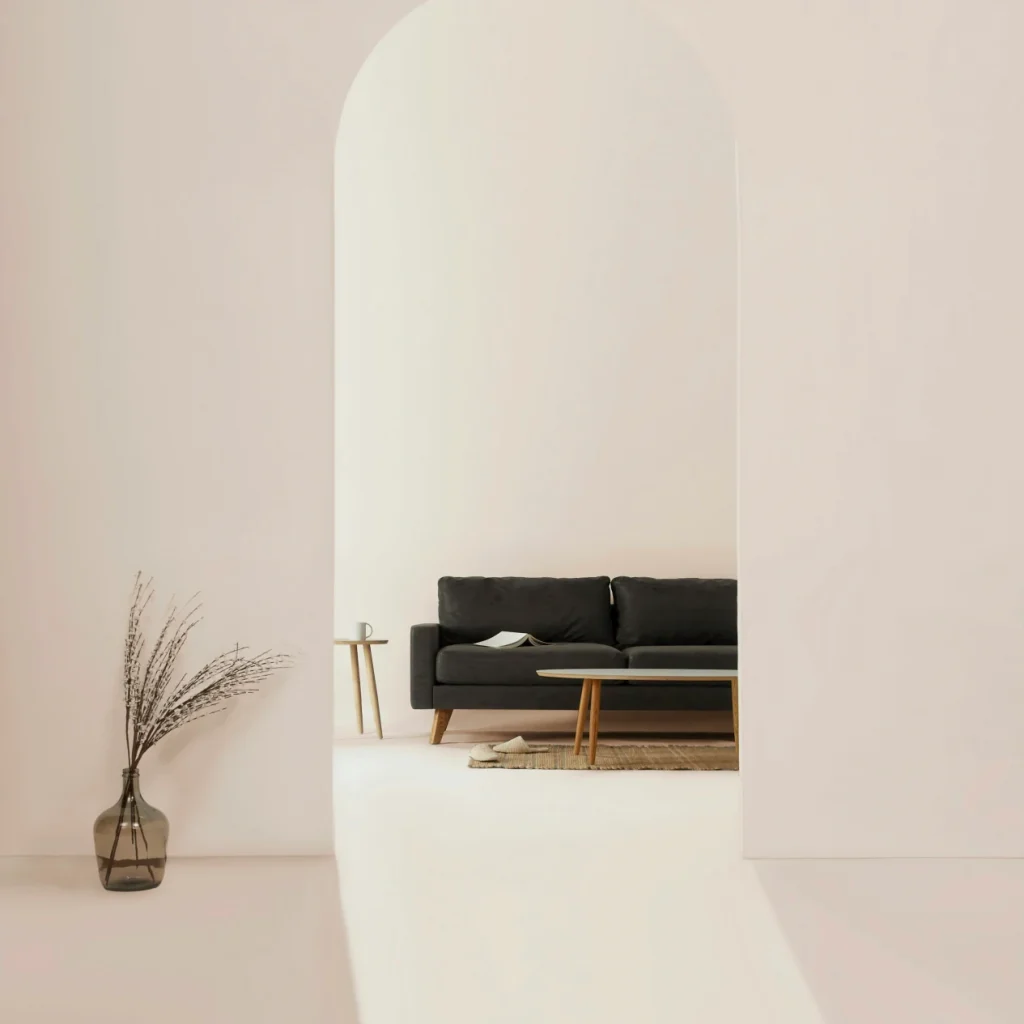
One lives with very little: a white wall, a sofa, a floor lamp, and almost nothing else.
Ask how they do it, and they will say, “Less is more.”

The other also does not own much, but everything has its place.
The sofa sits against the wall. The desk faces the window. A plant softens the corner.
Ask why it is arranged that way, and they will say, “It just feels right.”

The first is Western minimalism.
The second is feng shui.

At first glance, they may look similar.
But at their core, they are quite different.

What They Share: Both Dislike Clutter

Let’s start with what they have in common.

The core of minimalism is less.
No unnecessary objects.
No excess color.
No visual clutter.
What remains is meant to feel essential, pure, and calm.

Feng shui also dislikes disorder. In traditional feng shui, there is an idea that important spaces should feel open, bright, and clear. When clutter builds up, the space feels blocked, and people feel uncomfortable in it.

So whether you are following minimalism or feng shui, the first step is often the same:

remove what does not need to be there.

Both approaches understand something very simple: when a space is too full, people do not feel at ease.

This is not abstract philosophy. It is something you feel immediately. Walking into a room packed with objects feels very different from walking into one that is clean and open. Minimalists might call it visual noise. Feng shui might describe it as blocked energy.

The words are different, but the body’s response is the same:
you either feel comfortable, or you do not.

Where They Differ: The Emotional Temperature Is Different

But there is one fundamental difference between them.

Minimalism often feels cool.
Not cold in temperature, but cool in character.

White walls. Concrete. Straight lines. Metal. Glass.
No extra decoration.
No “unnecessary” color.
It pursues a kind of absolute purity.

For many people, that coolness is exactly the appeal. It feels clear, refined, and free from excess.

Feng shui, however, is less comfortable with that kind of coldness.

Feng shui values balance. If a space feels too cold, too empty, or too stark, it may also feel emotionally distant. Traditional feng shui would say the balance is off. What it tends to prefer is a sense of warmth—not too hot, not too cold; not too dry, not too heavy. Warmer tones, softer materials, and better airflow all help create that feeling.

Minimalism says, “Less is more.”
Feng shui says, “Not too much, not too little—just enough.”

Take a plain white wall as an example.

A minimalist may see it as perfect: clean, pure, and free of distraction.
A feng shui perspective might say: it needs a little warmth. Add softer light, a green plant, or a textured wood element. Not simply because it looks better, but because the space may feel more human with that added warmth.

Another Difference: Function vs. Energy

Minimalism starts with function.

Do I use this object?
If not, remove it.
Is this design necessary?
If not, simplify it.

Everything that remains should have a purpose. Anything beyond that can feel excessive.

Feng shui looks at things differently.
It is less focused on the object alone, and more on the energy of placement.

Take a chair, for example.

A minimalist may look at whether it is comfortable and whether it fits the room aesthetically.
A feng shui perspective looks at where it is placed. If you sit there and can see the door, you may feel more at ease. If your back is exposed and unsupported, you may feel less settled.

It is the same chair.
The object has not changed.
But the relationship between the chair and the room has changed—and so has the feeling.

Minimalism pays attention to the object.
Feng shui pays attention to the relationship between the object and the space.

That is why a minimalist might place a chair in the center of the room because it looks striking there.
A feng shui approach may not, because without support behind it, the seat may not feel as comfortable in use.

Can They Work Together?

Absolutely.

Minimalism helps you subtract.
It reminds you that you probably do not need as much as you think. In most homes, a large portion of what fills the space is rarely used. Once those things are removed, the room feels bigger—and often, your mind feels lighter too.

Feng shui helps you arrange.
It asks: now that only the important things remain, where should they go so the space feels most comfortable?

Having fewer objects helps.
But if those objects are poorly placed, the room may still feel off.

So the order can be simple:

First, use the eye of minimalism to clear out what is unnecessary.
Then, use the eye of feng shui to place what remains where it feels best.

After clearing, the space feels lighter.
After proper placement, the space feels alive.

That is how a home can have both the clarity of minimalism and the warmth of feng shui.

Not empty.
Not crowded.
Just enough.

Same category navigation

More to read next

From reading to action

Keep thoughtful guides close as you shape a calmer home.

Save ideas for later, explore room-based guidance, or share what you would like us to write about next.

Explore Room Guides Use room-based guides when you want a calmer way to choose placement, materials, and daily-use pieces.
Share A Future Topic Tell us what spaces, objects, or topics you'd like us to explore next. We’re always open to new ideas and inspiration.
Journal Dispatch

A quiet letter for spatial living.

Receive calm notes on placement, materials, and living with more spatial clarity.