From Qi to Strings
In this article
A Conversation Between Ancient Energy and Modern Vibration
Have you ever wondered about this:
What is the most fundamental thing in the universe?
In other words, if you kept breaking everything down, layer by layer, what would be left at the very end? What is the thing that cannot be broken down any further?
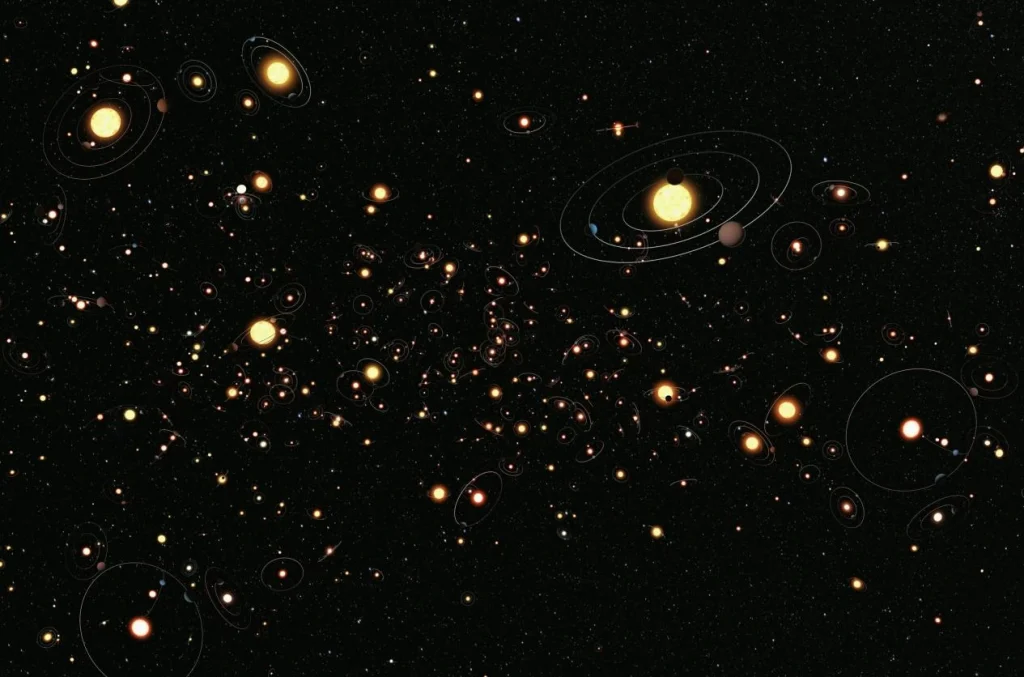
The ancient Greeks said: atoms. Tiny, solid, indivisible particles.
Modern physicists said: not quite. Atoms can be split into protons, neutrons, and electrons. Those can be broken down further into quarks. And after quarks?
String theory says: beyond quarks, there may be something like a tiny vibrating string.
What is interesting is that more than two thousand years ago, Chinese thinkers had their own answer.
They called it qi.
One idea comes from cutting-edge modern physics.
The other comes from ancient Eastern philosophy.
Could they, in some distant way, be trying to describe the same thing?
Qi: Invisible, Yet Everywhere
Let’s start with qi.
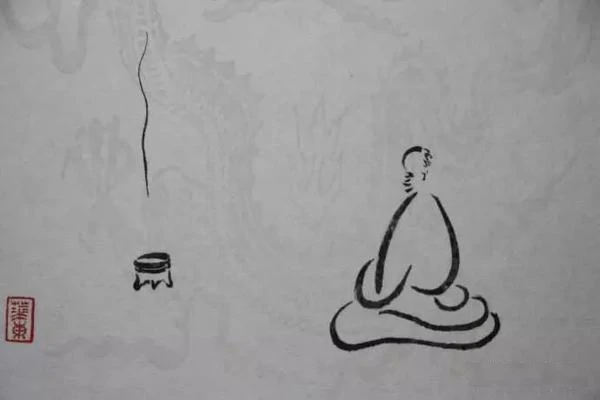
You have probably heard the word before. In Chinese medicine, people talk about qi and blood. In tai chi, people speak of guiding qi with intention. In calligraphy and painting, there is the idea of qi yun sheng dong—a kind of living vitality or inner rhythm.
Qi is everywhere, but it is not easy to define.
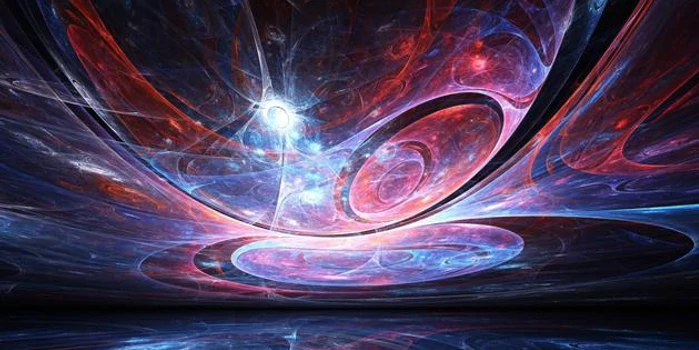
Ancient Chinese thought described qi as the basic substance of the universe.
It is not exactly solid, liquid, or gas—though in some ways it feels like a blend of all three. It can flow, gather, disperse, and transform. When it gathers, it becomes visible things: stone, trees, water, the human body. When it disperses, it returns to an invisible state, diffused throughout the world.
Qi also has another important quality: it is never still.
It is always moving. Its movement follows the patterns of yin and yang—rising and falling, expanding and contracting, gathering and releasing. In this view, the flow and transformation of qi shape the forms and changes of all things.
You could think of qi like this:
it is living matter.
Not dead, mechanical substance, but something dynamic—something that carries energy, tendency, and pattern.
A traditional Chinese doctor looks at the condition of a person’s qi: is it weak, blocked, stagnant, rising in the wrong direction?
A feng shui practitioner looks at the qi of a home: is it flowing, stuck, vibrant, fading?
Qi is one of the most basic ways traditional Chinese thought understands the world.
Strings: The Universe as Vibration
Now let’s turn to modern physics.
String theory is a bold idea. Its goal is to unify all the fundamental forces of physics—gravity, electromagnetism, the strong force, and the weak force—within one framework.
How does it try to do that?
By redefining what the smallest unit of matter actually is.
In standard particle physics, the smallest building blocks are treated as point particles. An electron is a point. A quark is a point. A point has no size, no shape, no dimensions.
String theory says: maybe that is not the whole story.
Maybe the most fundamental unit is not a point, but a one-dimensional string—something unimaginably tiny, like a microscopic strand.
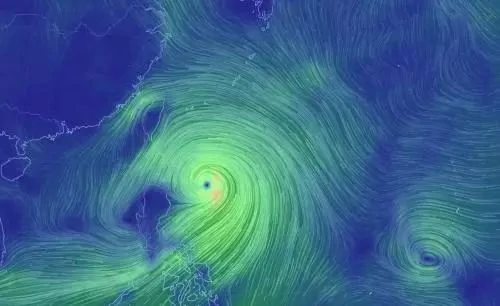
This string is not static. It vibrates.
And different patterns of vibration appear to us as different particles. One vibration may show up as an electron. Another as a quark. Another as a photon.
A useful image is the string of a violin.
It is the same string, but depending on how it vibrates, it produces different notes. In string theory, the same idea applies: different vibrational patterns produce different forms of matter.
This gives string theory a beautiful image of the cosmos:
Where Do They Sound Similar?
If you place qi and strings side by side, some surprisingly interesting similarities appear.
1. Neither is “dead”
In older mechanical models of reality, matter can feel static. It simply sits there unless something else pushes it.
But qi is not like that. It is always flowing, changing, gathering, and dispersing.
Strings are not like that either. They are always vibrating.
In both cases, existence is not understood as something fixed and frozen. It is understood as something dynamic.
They are not just “things.”
They are processes.
2. Both aim toward unity
Qi and strings both try, in their own ways, to explain the diversity of the world through a single underlying principle.
In traditional Chinese thought, all things are different forms of qi. A stone is dense qi. Wind is moving qi. A human being is a more complex expression of qi.
In string theory, all particles may be different vibrational modes of the same fundamental string. An electron is one vibration. A quark is another. The diversity of matter emerges from different patterns of the same basic reality.
That is a deep shared impulse: the search for unity beneath diversity.
Here, science and philosophy seem to meet.
3. Both are connected to rhythm, frequency, and change
Qi may be invisible, but its movement follows patterns. The rise and fall of yin and yang, the changing of the seasons, the mutual transformations of the five elements—these all describe rhythm.
String theory makes vibration even more explicit. Frequency is central. Different frequencies produce different particles. Much of the variety of the universe comes from differences in vibrational mode.
One tradition speaks in terms of rhythm and transformation.
The other speaks in terms of vibration and frequency.
The language is different, but both suggest the same broad idea:
the world is not made of static things, but of patterned movement.
Of Course, They Are Also Very Different
Finding resonances between qi and string theory does not mean they are the same thing.
The differences are huge.
Their origins are different
Qi comes from ancient observation of the body, nature, seasonal cycles, and lived experience. It comes from how people felt the world directly.
If you have practiced tai chi or qigong, you may understand why qi was never just an abstract concept. For many people, it describes something sensed rather than measured.
Strings, by contrast, come from mathematics and theoretical physics. No one “feels” a string directly. It emerges from equations, symmetry, and attempts to resolve problems in modern physics.
Their methods of validation are different
Qi cannot be measured in a clean, universally accepted scientific way. If someone says, “I felt qi moving,” a scientist will likely ask for data.
String theory also has its own problem: it has not yet been directly confirmed by experiment. But it is mathematically rich and tries to solve problems other theories struggle with.
So neither one is simple. But they belong to very different kinds of knowing.
Their functions are different
Qi is meant to be lived with. It is part of medicine, movement, health, landscape, and everyday understanding.
String theory is meant to explain. It does not diagnose illness, arrange a home, or guide daily life. It addresses a foundational physics question: what is the universe made of?
One is a practical cultural framework for life.
The other is a scientific attempt to describe ultimate structure.
Looking at Strings Through the Lens of Qi
So what happens if, for a moment, we stop worrying about which one is “right” and simply use qi as a lens through which to look at string theory?
Could the string in string theory be understood, metaphorically, as something like qi?
Qi is dynamic, flowing, vibrational.
Strings are too.
Qi is used to explain the formation and transformation of things.
Strings also try to explain how different forms of matter arise.
Qi has rhythm, tendency, and pattern.
String vibration determines the properties of particles.
Ancient Chinese thought says: when qi gathers, form appears; when it disperses, it becomes invisible again.
String theory says: different vibrational patterns give rise to different particles.
Put that way, the resemblance is hard to ignore.
Of course, this does not mean ancient Chinese thinkers “already knew” string theory. They did not. They had no modern mathematics, no particle colliders, no tools of contemporary physics.
But through observation, intuition, and inner reflection, they may have touched the same deeper question:
What if the foundation of reality is not dead matter, but dynamic process?
What if the world is not static, but alive with movement?
What if everything is not isolated, but connected?
That question is still with us.
And their answer can still be thought-provoking today.
In the End
From qi to strings, we have traveled a very long way.
From the felt experience of the body to the abstract mathematics of modern physics.
From sensed energy to calculated vibration.
They are not the same.
But they meet in one important place:
both are trying to find the most fundamental layer of reality—the thing that explains how the world forms, changes, and connects.
Science moves forward. One day, string theory may turn out to be incomplete, or even wrong, and be replaced by a better theory.
But qi is not a scientific theory in that sense. It is a way of seeing—a way Chinese civilization has understood life, body, nature, and change for thousands of years. It is not something that will be “proven” or “disproven” in the same way.
You may not use qi to solve a physics equation.
But you might still use it to understand your body, your home, the rhythm of the seasons, or the pace of your own life.
That may be one reason ancient wisdom still matters today.
It does not argue with science over who is right.
It simply offers another way of seeing the world:
a little more holistic,
a little more dynamic,
and a little less rushed.