The Psychological Benefits of Indoor Plants
How a Little Greenery Can Help You Feel Less Stressed
In fast-paced modern life, more people are paying attention to mental well-being—and sometimes the most effective support is also one of the simplest. Indoor plants can do more than decorate a room. Research suggests they may help reduce stress, improve mood, support attention, and make both homes and workplaces feel more comfortable and restorative. This article looks at the psychological benefits of houseplants and offers a few practical ways to use them well.

A small dose of green can lift your mood
One of the biggest psychological benefits of indoor plants is how they can make a space feel more alive and emotionally lighter. The Royal Horticultural Society’s overview of houseplants and human health notes that indoor plants have been linked with improved psychological well-being, including lower stress and better mood. More broadly, the American Psychological Association’s overview of nature and mental health explains that exposure to nature is associated with lower stress, improved attention, and better mood—benefits that help explain why even a small amount of greenery indoors can feel so calming.
Part of that effect comes from simple visual contact. Greenery tends to soften a room, break up hard surfaces, and make indoor environments feel less mechanical. That may sound small, but small sensory shifts matter. A 2022 systematic review on the effects of indoor plants on human functions concluded that indoor plants generally have positive effects, especially on physiology and cognition.
Indoor plants can help reduce stress
Plants are also closely associated with stress relief. A well-known experimental study on interaction with indoor plants found that actively interacting with indoor plants reduced both physiological and psychological stress compared with computer-based mental work. Another study on green plants and mental stress found that indoor greenery may elicit positive emotions and help reduce mental stress.
This does not mean one pothos in the corner will solve burnout. But it does suggest that plants can support a calmer baseline—especially in spaces where people spend long hours working, resting, or recovering from the day. In that sense, houseplants are less a miracle cure and more a quiet environmental support.
Greenery may help with focus and productivity too
Indoor plants are not only about feeling calm. They may also help people feel more focused. The APA’s reporting on nature and attention notes that time around nature can help restore focus and reduce mental fatigue. In office settings, plants have also been linked to better comfort and workplace experience. A 2023 field study on office workers found significant improvements in things like complaints about dry air, perceived privacy, and the attractiveness of the workspace after plants were introduced.
That does not mean plants automatically turn everyone into a productivity machine. But they can make a room feel easier to work in, and that alone can help. A more comfortable environment often supports clearer thinking, steadier attention, and less sensory fatigue—especially in spaces dominated by screens, bright surfaces, and repetitive visual input.
They offer a simple way to reconnect with nature indoors
One reason indoor plants can feel so grounding is that they create a small but real connection to nature. The APA has highlighted a wide range of mental-health benefits linked to nature exposure, including lower stress and better mood. Houseplants do not replace time outdoors, of course—but they can bring some of that “nature effect” into spaces where people spend most of their day.
That matters even more now, when many people live in apartments, work from home, or spend long hours inside. A simple green plant on a desk, shelf, or windowsill can make a room feel less closed-off and a little more human. Sometimes that shift is not dramatic, but it is still meaningful.
Caring for plants can be calming in its own right
The psychological benefits do not come only from looking at plants. Caring for them matters too. Watering, pruning, repotting, or even just noticing new growth can create a small sense of rhythm and accomplishment. The RHS has also reported that more frequent gardening is associated with better well-being and lower perceived stress. While gardening and indoor plant care are not exactly the same thing, they share an important quality: both create a simple, hands-on interaction with living things.
That is part of why plant care can feel grounding. It gives you a small task with visible results. In a life full of abstract work, constant notifications, and invisible stress, that kind of simple, living feedback can be surprisingly soothing.
What about air purification?
Indoor plants are often marketed as natural air purifiers, and there is some truth behind that idea. NASA’s classic plant research explored how plants can help remove certain pollutants in tightly controlled environments, and later reviews have continued to study plants as part of indoor air-quality strategies. However, the RHS notes that strong real-world air-cleaning effects in normal homes are often less dramatic than marketing suggests, and some reviews point out that plants alone may have limited full-scale impact in typical indoor settings. So it is fairer to say that plants may support a healthier-feeling indoor environment—but their psychological benefits are often more immediate and reliable than exaggerated “miracle air purifier” claims.
A few practical tips
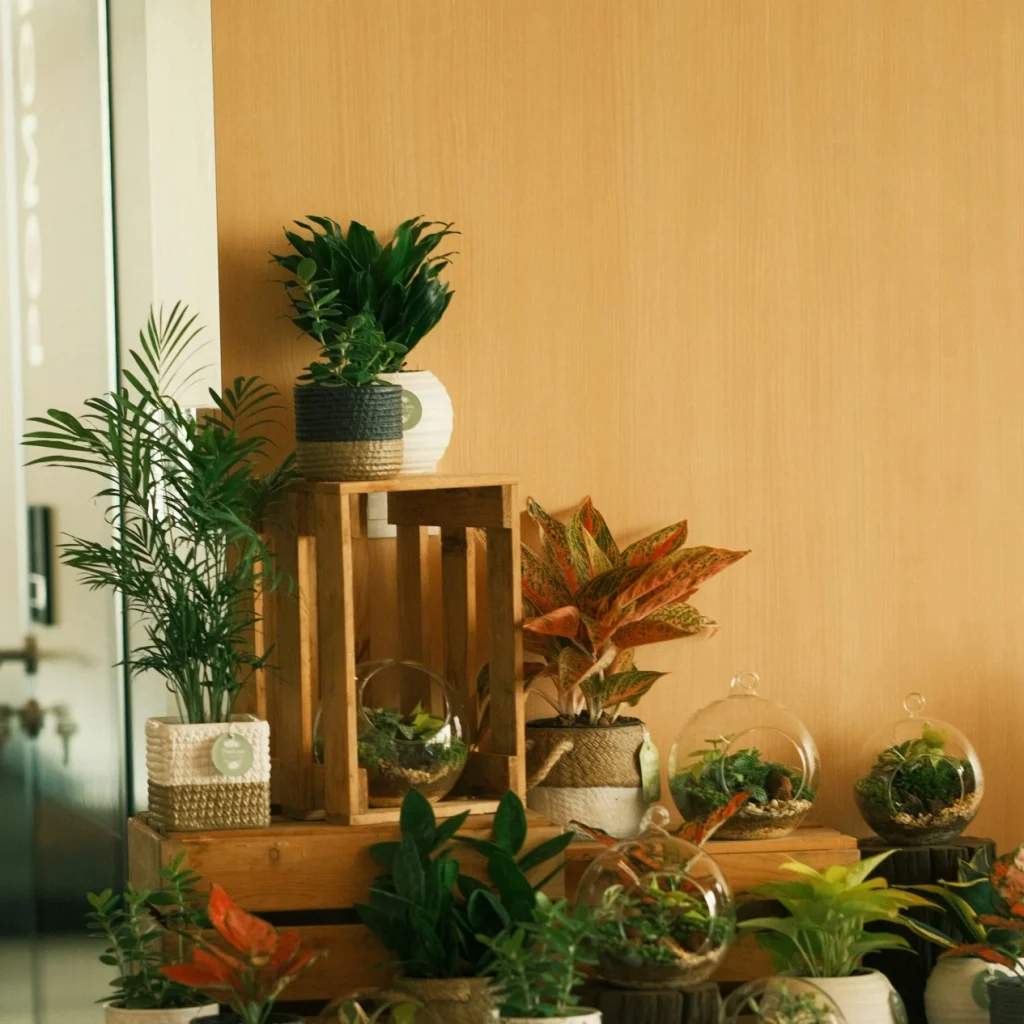
If you want to use indoor plants for stress relief, keep it simple. Choose plants that match your light conditions and your actual lifestyle. Healthy plants are more calming than struggling ones. Start with one or two in places where you spend real time—your desk, living room, bedside table, or kitchen shelf. And do not underestimate easy-care choices. The goal is not to create a jungle overnight. The goal is to make your space feel softer, calmer, and more alive.