
What Messages Is Your Living Space Sending to Your Nervous System?
In this article
Have you ever had a moment like this: You unlock your front door after a long day, only to be greeted by a mountain of clothes on the sofa, scattered bills on the coffee table, and yesterday’s unwashed coffee cup. In that split second, your shoulders involuntarily hunch, your breathing becomes shallow, and an unexplainable wave of irritability washes over you?
Or perhaps the opposite: You step into a room with soft, warm lighting, vibrant green plants, and a gentle breeze, and you find yourself unconsciously letting out a long sigh, the tension in your back instantly melting away?
Today, let’s dive into neuroarchitecture and environmental psychology to decode the secret messages your living space is whispering to your nervous system.

The “Hidden Dialogue” Between Space and Nerves: Which Button Is Your Home Pressing?
Our nervous system acts like an exquisitely sensitive radar, constantly scanning the environment to determine whether we are “safe” or “in danger.” This mechanism stems from our ancestors—in the distant past, quickly spotting threats in the environment (like a tiger in the tall grass) was the key to survival.
Today, while there are no tigers in our living rooms, our nervous system still evaluates your (living room), bedroom, and kitchen using the exact same criteria.
1. Clutter and Chaos: “Alert! Unfinished Threats Here!”
What happens to your brain when your field of vision is bombarded with clutter? Research in environmental psychology shows that cluttered environments lead directly to sensory overload. Every item out of place—an unopened letter, an empty water glass, a jacket draped over a chair—sends a tiny visual reminder to your brain: “This isn’t done yet.”
This triggers the Zeigarnik effect, a psychological phenomenon where people remember uncompleted tasks better than completed ones, leading to heightened anxiety. Your amygdala (the brain’s alarm center) stays activated, prompting the body to pump out stress hormones like cortisol. The message your nervous system receives is: “Danger is not yet cleared; stay on high alert!”
So, even when you’re lying on the couch trying to relax, you feel mentally exhausted because your brain is frantically processing all this visual noise in the background.

2. Light and Rhythm: “Is It Wartime or Rest Time?”
Light is the most powerful zeitgeber (time-giver/cue) for the nervous system. Your optic nerve doesn’t just handle vision; it directly connects to the brain region controlling your circadian rhythm.
If your home is as dim as a cave during the day, but glaring with overhead lights and phone blue-light at night, your nervous system gets completely confused. Harsh, cool white lights and flickering LEDs activate your sympathetic nervous system (the fight-or-flight system), tricking your body into thinking it’s broad daylight and you must remain highly vigilant. Conversely, warm, low-color-temperature light acts like a lullaby, activating the parasympathetic nervous system (the rest-and-digest system), telling the body: “The day is over; you can drop your guard.”
3. Space Layout and Field of Vision: “I Have Nowhere to Hide; I Feel Vulnerable”
Think about it: when you sit at a desk with your back facing an open door or window, don’t you feel a bit on edge?
Evolutionary psychology introduces the prospect-refuge theory. Humans evolved to prefer environments that offer both a wide view (prospect, to spot resources and danger) and back protection (refuge, to avoid being ambushed). When your desk or bed faces the door with nothing behind you, your nervous system defaults to a “vulnerable” state, ready to react to a threat from behind at any moment. The message this layout sends is: “Don’t relax; keep watching your back!”
4. Lack of Natural Elements: “This Land Cannot Sustain Me”
Modern industrial materials like concrete, glass, and plastic are entirely alien to the human brain. Our nervous system evolved over millions of years in natural environments. When your space lacks natural light, plants, the sound of water, or wood textures, your body subconsciously feels barren and depleted.
The biophilia hypothesis suggests that humans possess an innate tendency to seek connections with nature. Spaces that incorporate natural elements can significantly lower heart rate, blood pressure, and cortisol levels. A home without plants transmits a message to the nervous system: “This is a barren wasteland; survival resources are scarce.”
System Rewrite: How to Make Your Home Say “I Love You” to Your Nervous System
Now that we know how space “speaks,” we can take proactive steps to reprogram your home environment, turning it into a healing sanctuary for your nervous system.
Step 1: Clear Visual Noise, Cut the “Unfinished” Signals
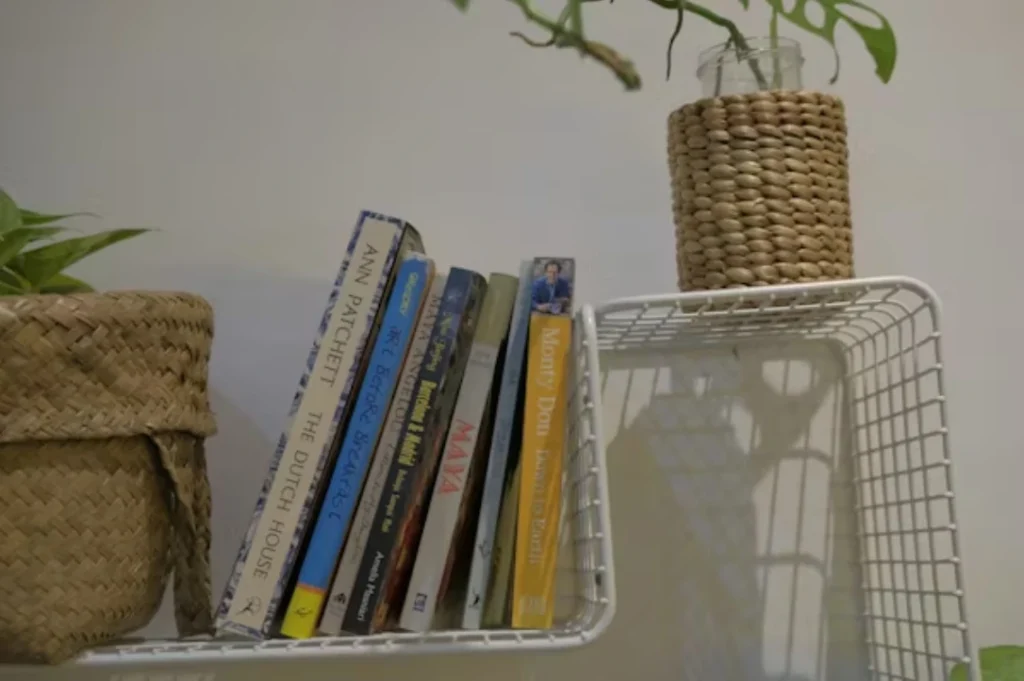
You don’t need to embrace the harsh extremes of minimalism, but you do need to establish visual boundaries. Put away clutter that doesn’t need immediate attention in cabinets with doors or stylish storage baskets. Keep at least 30% of your desktops clear. When you close your eyes and open them again, and there are no items fighting for your attention, your nervous system receives a clear message: “Everything is under control; you are safe.”
Step 2: Simulate Natural Rhythms, Hack the Lighting Code
During the day, pull back the curtains to let natural light wake up your serotonin. At night, within two hours of sunset, turn off the main overhead lights and switch to warm-yellow floor lamps, table lamps, or candles. This “sunset mode” lighting shift sends an unmistakable directive to your nervous system: “Shut down combat mode; initiate repair protocol.”
Step 3: Create a “Sanctuary,” Rebuild a Sense of Safety
Rearrange your core furniture. Ensure your bed and desk have “backing”—meaning they are against a solid wall, and you can easily see the room’s entrance. If spatial limits prevent this, place a tall, lush plant or a solid wooden bookshelf behind you as a symbolic barrier. This instantly soothes the amygdala’s alarm, telling your nervous system: “Your back is covered; you can focus on the present.”
Step 4: Inject Biophilic Design, Awaken Life Resonance
You don’t need to turn your home into a tropical jungle. Even a low-maintenance pothos plant, a cutting board with natural wood grain, or a wind chime catching a gentle breeze can work wonders. When you see a new leaf on a plant or touch a wooden texture, your nervous system instinctively receives the message: “Life is growing; this place is full of vitality and nourishment.”

Conclusion: Your Home is the Externalization of Your Nervous System
Your living space is never a passive backdrop; it is a living, breathing entity in deep dialogue with your nervous system. A cluttered, harsh, and lifeless space constantly drains your psychological capital, while an orderly, warm, and nature-infused space silently recharges you.
Tonight, when you walk through your front door, try standing in the entryway. Close your eyes, take a deep breath, and then open them. Really feel it: what story is your home telling you right now? If the message is anxiety and exhaustion, it’s time to rewrite the script. Because the highest form of healing isn’t somewhere far away—it’s right in the room where you wake up every single day.
Ready to rewrite the messages your home is sending you? Start by clearing just one surface today, and feel the shift in your nervous system!