NEW JOURNAL NOTES ON SPACE, OBJECTS, AND EVERYDAY ATMOSPHERE
Visit Shop
Back to All Articles

The Science of Feeling at Home: Why Comfort and Overstimulation Live on a Knife’s Edge

In this article
The Cozy Paradox Your Brain’s Bandwidth Limit: Environmental Load Theory When Comfort Turns into Chaos: Stimulus Load Nature as Medicine: Stress Recovery Theory The Scandinavian Secret: Hygge Why Nature Feels Right: Biophilic Response Recharging Attention: Attention Restoration Theory The Balance Point: Prospect-Refuge Theory Finding Your Balance: Practical Adjustments The Takeaway
The Cozy Paradox

You’ve felt it before.

You walk into one home and instantly relax—your shoulders drop, your breathing slows, and the space seems to wrap around you like a soft blanket. Then you enter another space—equally stylish, equally curated—and within minutes, you feel restless, distracted, even slightly irritated.

What’s going on?

We often blame our mood—bad sleep, too much caffeine, a long day. But the real answer is more subtle: your home is constantly negotiating with your nervous system. Every texture, light source, sound reflection, and visual layer either soothes your brain or quietly drains it.

The difference between a home that restores you and one that exhausts you isn’t just taste—it’s science.

Your Brain’s Bandwidth Limit: Environmental Load Theory

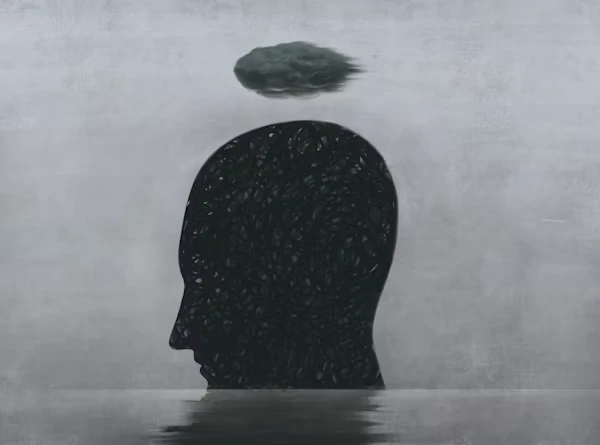
Your brain has limits. Hard limits.

In Environmental Load Theory, researchers propose that humans can only process a finite amount of sensory input at any given time—light, noise, visual detail, spatial complexity, even social cues.

Think of your attention like a Wi-Fi network. One device streaming? Smooth. Ten devices competing? Everything slows down.

Your home works the same way.

A space filled with competing visual elements, harsh lighting, layered sounds, and clutter forces your brain into constant filtering mode. That filtering is work—and it’s exhausting.

The tricky part? You don’t notice it in the moment. You just feel drained by the end of the day.

When Comfort Turns into Chaos: Stimulus Load

So does that mean cozy homes—full of blankets, books, candles—are bad?

Not at all.

The issue isn’t how much you have. It’s how well it works together.

In environmental psychology, this is called stimulus load—the total amount of sensory input your environment demands.

A high stimulus load home often includes:

  • Visual overload (too many objects competing for attention)
  • Acoustic chaos (echoing spaces, layered noise)
  • Lighting inconsistency (harsh overhead lights mixed with screens and warm lamps)

When this load becomes constant, your nervous system never fully relaxes. It stays in a low-level alert state—what feels like background stress.

Nature as Medicine: Stress Recovery Theory

If overstimulation is the problem, nature is the solution.

Stress Recovery Theory, developed by Roger Ulrich, shows that natural elements trigger immediate physiological calm.

Even brief exposure to:

  • plants
  • natural light
  • water
  • organic textures

can lower cortisol, slow heart rate, and reduce muscle tension.

One of the most famous findings? Patients with a window view of trees recovered faster than those facing a wall.

Your home isn’t just where you live—it actively shapes your stress levels.

A single plant or a window view isn’t decoration. It’s a biological intervention.

The Scandinavian Secret: Hygge

The Danish concept of Hygge is often translated as “coziness,” but it’s deeper than that.

It’s about psychological safety.

Hygge works because it intentionally reduces environmental load:

  • soft lighting instead of harsh overheads
  • warm textures instead of cold surfaces
  • fewer focal points instead of visual clutter

It creates a space where your brain can stop scanning for threats.

True comfort isn’t about adding more—it’s about removing friction.

Why Nature Feels Right: Biophilic Response

Humans are wired for nature.

The Biophilia hypothesis suggests we have an innate attraction to natural environments because they supported survival throughout evolution.

This explains why:

  • wood feels warmer than plastic
  • linen feels calmer than synthetics
  • greenery reduces stress instantly

Your brain constantly scans for signals of safety. Natural elements quietly say: you’re safe here.

Artificial, chaotic environments often send the opposite message.

Recharging Attention: Attention Restoration Theory

Another key layer comes from Attention Restoration Theory, developed by Stephen Kaplan and Rachel Kaplan.

They identified two types of attention:

  • Directed attention (focused, effortful, draining)
  • Involuntary attention (effortless, restorative)

Nature activates what they call “soft fascination”—gentle stimuli like:

  • flickering candlelight
  • rustling leaves
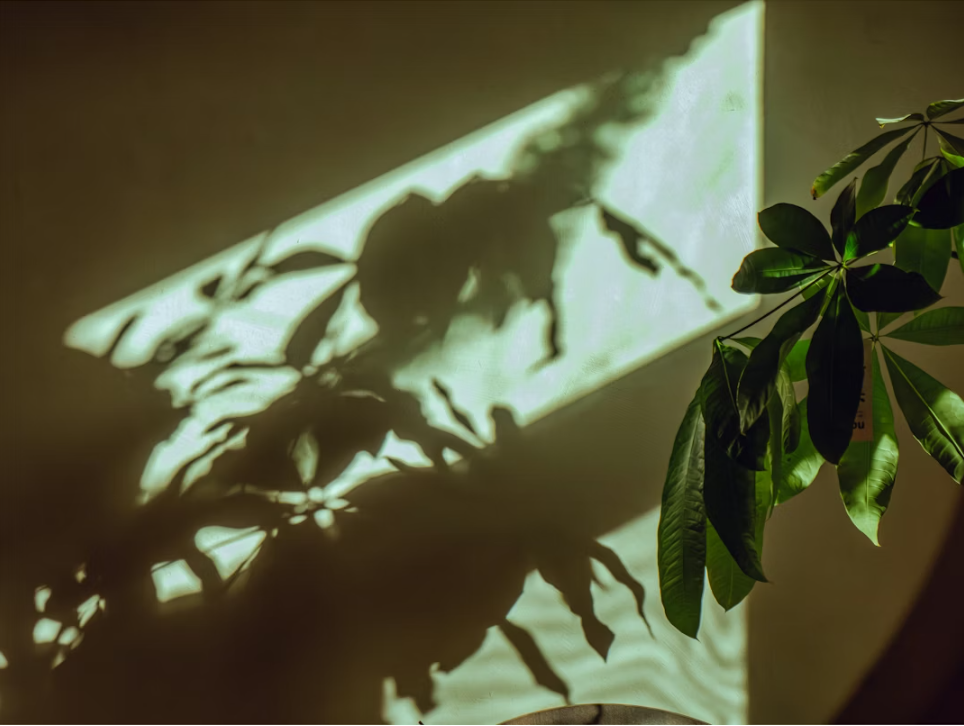
  • moving shadows

These allow your brain to rest without shutting down.

A well-designed home includes these micro-rest moments by default.

The Balance Point: Prospect-Refuge Theory

Comfort also depends on how safe you feel in a space.

Prospect-Refuge Theory, proposed by Jay Appleton, explains that humans seek two things:

  • Prospect: clear visibility and awareness
  • Refuge: protection and enclosure

Too much openness → you feel exposed
Too much enclosure → you feel trapped

The ideal space offers both:

  • a view of the room or outside
  • a sense of backing or shelter

This is why:

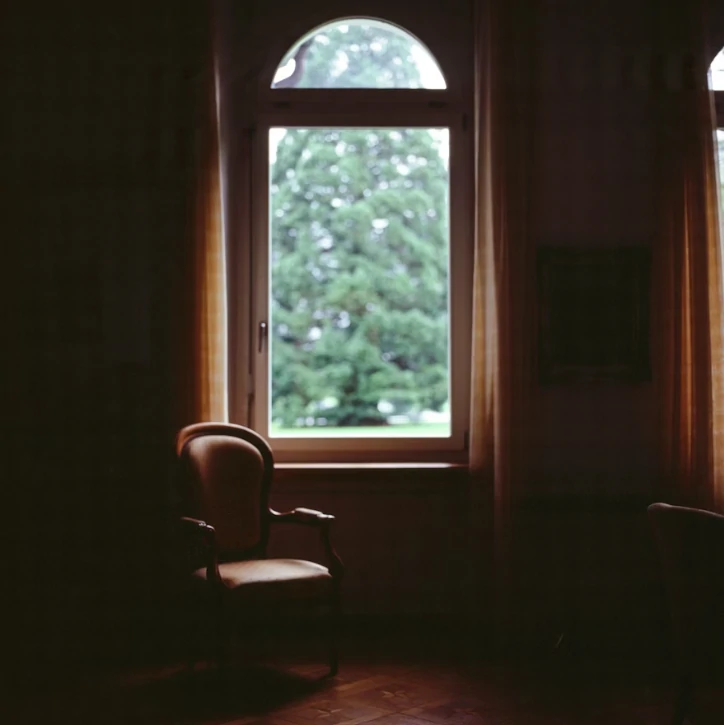
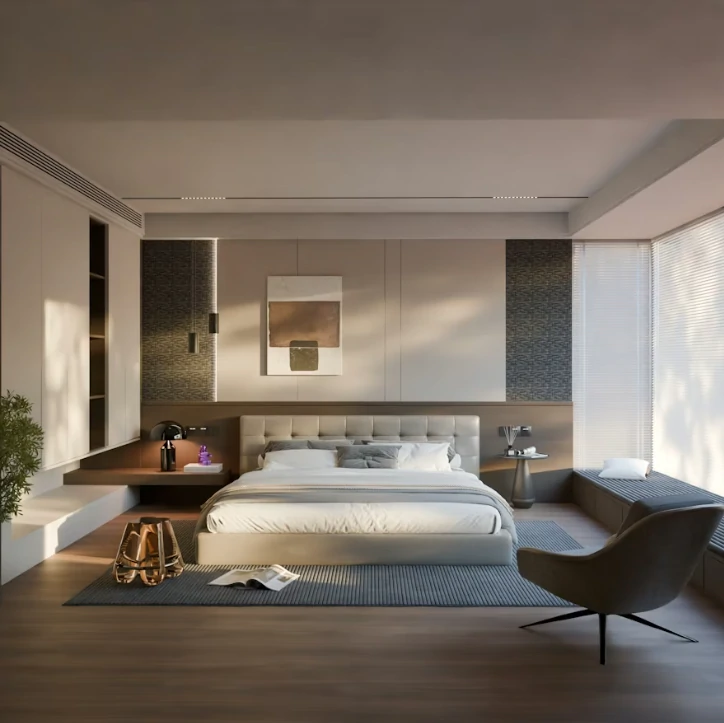
  • window seats feel calming
  • corner sofas feel secure
  • chairs against walls feel better than those floating in space

It’s not style—it’s instinct.

Finding Your Balance: Practical Adjustments

There’s no universal “perfect home.” But there is a better balance.

Here are simple ways to adjust your space:

  1. Use the 3-Second Rule
    Walk into a room. If more than two things compete for your attention immediately, reduce visual noise.
  2. Create a Sensory Budget
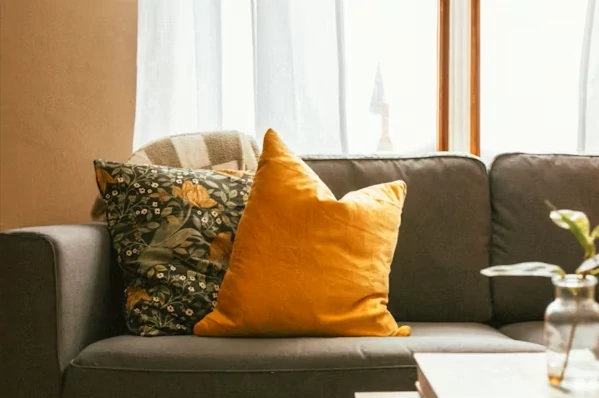
    Balance bold elements (patterns, colors) with calm ones (neutral textures, matte finishes).
  3. Build Transition Zones
    Use rugs, lighting, or layout shifts to signal changes between work and rest.
  4. Add Nature Intentionally
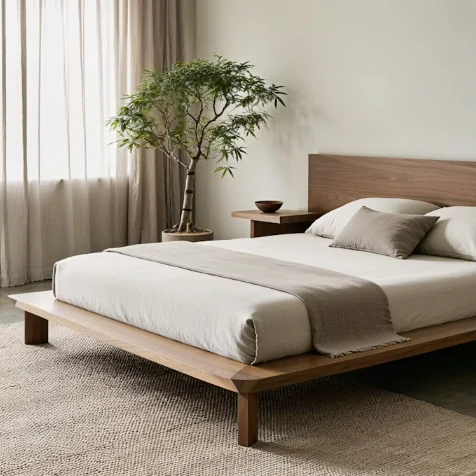
    One plant. One window. One natural material. That’s enough to shift your baseline.
  5. Dim the Evenings
    Reduce overhead lighting at night. Use lamps or candles to lower stimulation.

The Takeaway

Feeling at home isn’t accidental.

It’s the result of a delicate balance between stimulation and calm, openness and protection, activity and recovery.

Too little stimulation feels lifeless.
Too much becomes overwhelming.

But when you understand how your brain responds to space—through environmental load, biophilia, and attention restoration—you can design a home that supports you instead of draining you.

Tonight, try something small:

  • turn off one harsh light
  • move one visually distracting object
  • sit where you feel both safe and aware

That’s not just decorating.

That’s neuroscience.

Same category navigation

More to read next

From reading to action

Keep thoughtful guides close as you shape a calmer home.

Save ideas for later, explore room-based guidance, or share what you would like us to write about next.

Explore Room Guides Use room-based guides when you want a calmer way to choose placement, materials, and daily-use pieces.
Share A Future Topic Tell us what spaces, objects, or topics you'd like us to explore next. We’re always open to new ideas and inspiration.
Journal Dispatch

A quiet letter for spatial living.

Receive calm notes on placement, materials, and living with more spatial clarity.