Moonstone · The Quiet After the Tide
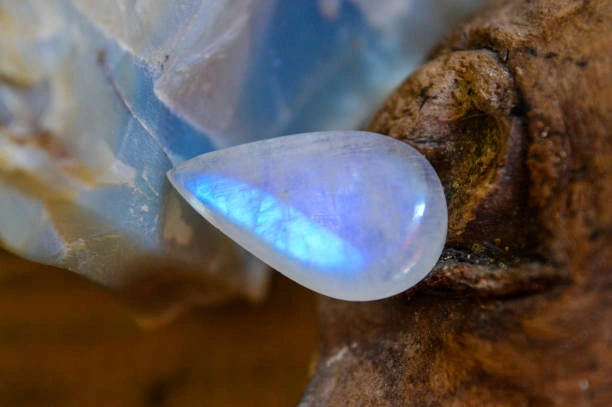
There is a kind of stone that looks as if moonlight has been gently captured inside it.
Not the bright glow of a full moon, but something softer — hazy, diffused, like moonlight slipping through thin clouds and spreading quietly across the night sky.
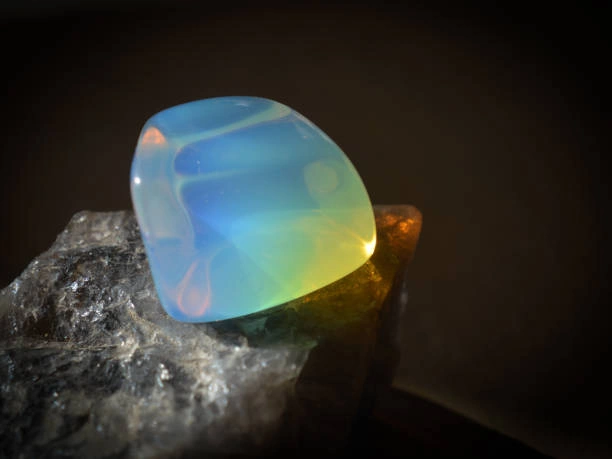
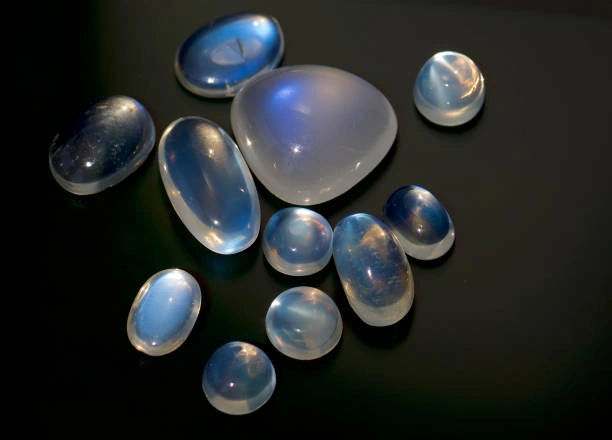
When you turn it in your hand, a pale blue-white glow appears beneath the surface.
Soft and shifting, like the reflection of the moon moving slowly across water.
That is moonstone.
Why It Often Feels Like the Tide Has Just Gone Out
Moonstone is often associated with water.
Not because it literally belongs to water, but because the feeling it gives is very similar to the moment after the tide has receded.
The rush of the waves is gone.
The noise of the day has faded.
What remains is the quiet shoreline — a gentle breeze, damp sand, and the simple presence of yourself in that space.
This feeling has a name: inner balance.
It isn’t emptiness, and it isn’t chaos either.
It’s that in-between moment where what needed to leave has already gone, and what should remain is still there.
You sit for a moment, doing nothing at all.
Moonstone feels like that state — turned into a stone you can hold in your hand.
That Glow Feels Like Something Still Happening
What makes moonstone truly special is the light that seems to live inside it.
It’s not a surface reflection.
It floats within the stone.
As you move it slightly, the glow shifts slowly, like the moon drifting behind clouds.
Pale blue. Soft white. Edges so gentle they almost disappear.
Some people call this effect adularescence, but it often feels more poetic than scientific.
Like water.
Like a dream.
When you look at it, you don’t feel the urge to capture it or hold onto it.
You simply think:
It’s there — and that’s enough.
For people who need quiet moments, who need time alone with their own thoughts, this kind of light feels exactly right.
Wherever You Place It, It Feels Like a Small Piece of Moonlight
Placed in the bedroom — perhaps the most natural place for moonstone.
On a bedside table beside a small lamp.
Before sleep, you might glance at it once. There’s nothing you need to do. It simply sits there with its soft glow, almost as if it’s saying:
The day is over now. You can rest.
Some people place it beside their pillow, believing it helps them sleep more peacefully. Others simply enjoy those quiet moments before sleep when their eyes fall on the stone.
Soft light. No thoughts required.
Worn as a ring or pendant — close to the skin.
When worn on the hand, you might notice the glow shifting as you move your fingers. When worn near the chest, it appears occasionally when you look down — like a small reminder:
I’m still here.
During any day, there are moments when we need to pause. Sometimes even a single glance at that gentle light is enough.
Placed in a quiet corner — on a windowsill or in a calm space in the home.
Not something to look at constantly. But when you need to step back, when you need a moment with yourself, it will already be there waiting.

It Has a Quiet Relationship With “Knowing”
Moonstone never tells you directly what to do.
It doesn’t push you forward like tiger’s eye.
It doesn’t ground you heavily like black tourmaline.
Instead, it simply exists beside you with that faint glow, giving you space to sit quietly for a while.
And then you might realize something:
Some things, you already knew.
They were never hidden — only forgotten in the noise of a busy day.
Moonstone doesn’t give you answers.
It simply helps you remember them.
A Presence That Gently Holds You
Moonstone doesn’t make decisions for you.
It won’t suddenly change who you are.
What it does is quieter than that. When you finally sit down and allow yourself to become still, it helps you ease into that state — the one where nothing needs to be solved right away.
The state where you can simply exist for a moment.
Like the moon hanging quietly in the sky — saying nothing, yet always there.
Like the calm shoreline after the tide has gone out, just quiet enough for you to hear your own breathing.
Moonstone is not a stone that demands attention.
It doesn’t sparkle loudly.
It doesn’t shine brightly.
But when you finally slow down, you may notice something unexpected.
You realize that you already knew what you needed to know.