Selenite · A Vessel for Light
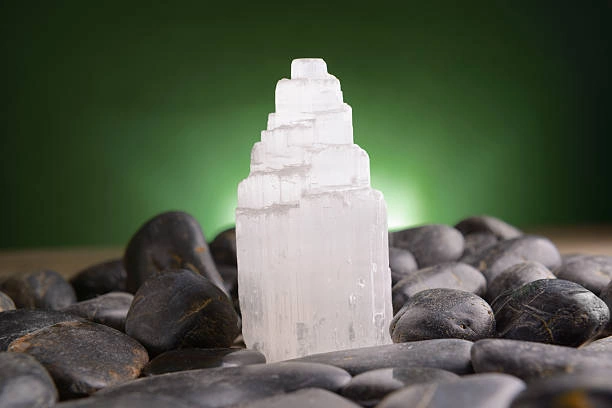
There is a kind of stone that looks as if light has finally found a shape.
Not harsh light.
The kind that slips through a gap in the curtains just after dawn — pale, cool, and not yet warm.
When you look at it, it feels as if the air becomes a little lighter.
That is selenite.
A Name Borrowed from the Moon
The name selenite comes from Selene, the ancient Greek goddess of the moon.
Not because it is a stone version of the moon, but because of its soft, translucent quality — as if moonlight had condensed into something solid. Ancient people saw something lunar in it: gentle, quiet, softly luminous in the dark.
It is not a stone that tries to light up a space.
It is a stone that reminds you there was always light within the darkness to begin with.
It Doesn’t Block — It Lets Things Pass
Selenite is often associated with “clearing a space.”
But not in the way a broom clears dust away. What it does feels much quieter:
It allows what is stuck to move on by itself.
Have you ever walked into a room that looked perfectly clean, yet somehow still felt heavy?
Not because the air was stale, but because something seemed to be lingering there — emotion, memory, the residue of the day.
You place selenite there, and it does nothing obvious.
But after a while, that heaviness seems to soften a little.
It is not that the stone clears things for you.
It simply gives those things a way to leave.
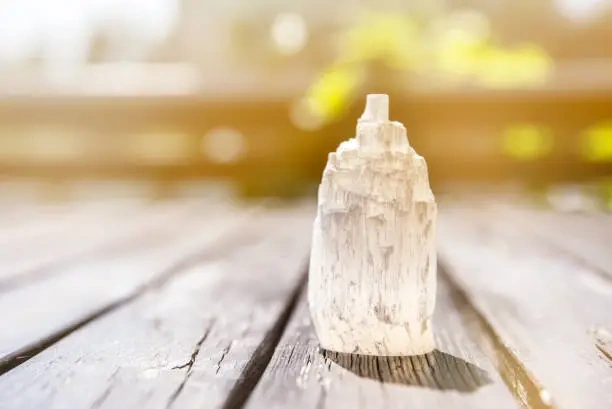
A Texture That Feels Breathable
What makes selenite so distinctive is the way it seems both translucent and not.
It is like ice, but not as cold.
Like light, but not as untouchable.
When you look at it, your eyes feel as though they can pass through it — but never all the way. They stop somewhere within it, and then gently dissolve.
Some people touch it and think:
so smooth, so cool, so light.
Some people see it and their first response is simply:
exhale.
That long, quiet exhale — and then suddenly, without realizing it, their shoulders begin to drop.
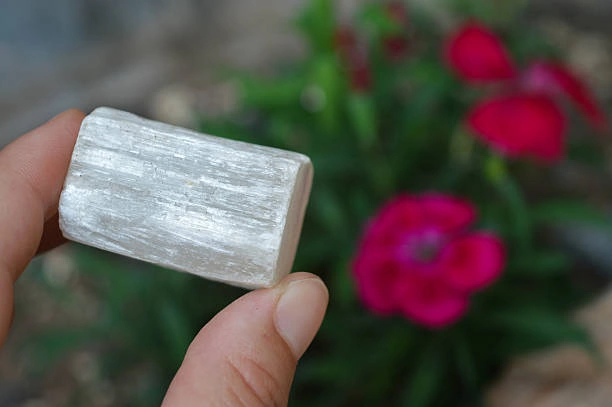
Wherever It Sits, It Makes a Little More Room
Place it on a bookshelf or display shelf — it does not need special attention.
It can sit beside books, or among other objects. But once it is there, the space around it starts to feel a little wider. Not physically wider, but perceptibly so.
Those books stacked together somehow seem less crowded.
Place it somewhere that asks for quiet — a corner of the bedroom, a windowsill, or a part of the home people do not move through very often.
Selenite does not push you.
It simply sits there, and when you happen to notice it, it reminds you that you can breathe.
Place it in a meditation space — this is where it is often most at home.
Hold it in your hand, or set it on the floor in front of you. When light passes through it, it casts a faint, soft glow nearby. Not the kind of light that demands concentration, but the kind you can gently drift with — you look at it, think of nothing, and simply remain.
Use it when a space feels like it needs resetting — when a room starts to feel a little too dense, a little too heavy. Leave a piece of selenite there overnight, and when you walk back in the next day, something may feel subtly different.
Not because of magic.
But because sometimes we need a small ritual to tell ourselves, and the space around us:
we can begin again.
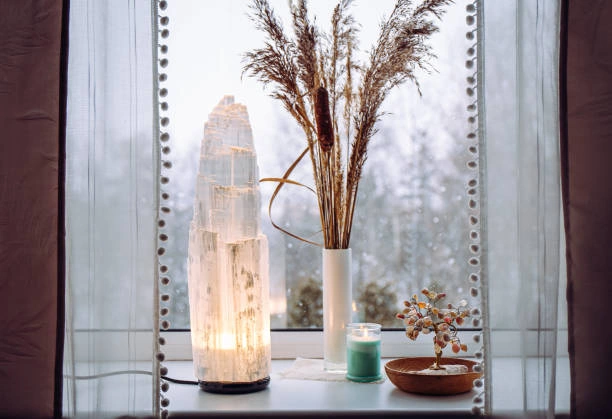
It Is Not Here to Hold On
One of the most distinctive things about selenite is that it does not seem to hold onto anything.
Unlike some stones, which feel dense and grounding in the hand, selenite feels light — almost as if it could slip away at any moment.
And strangely, that quality of holding onto nothing is exactly what makes it such a beautiful channel.
An emotion comes, passes through it, and moves on.
A thought comes, passes through it, and lands on the page.
Something from someone else comes, passes through it, and is returned.
Selenite does not keep things for you.
It simply allows them to pass.
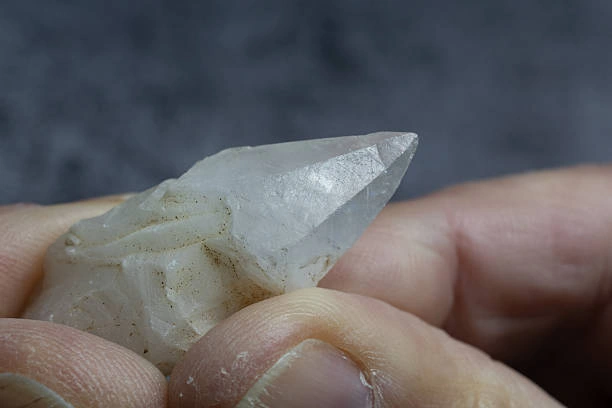
Selenite is not the kind of stone that asks to be held onto tightly.
You do not need to keep it in your hand all the time.
You do not need to keep looking at it.
You do not need to keep thinking about it.
You only need to place it there.
And when you need it —
it helps clear a path.
So that what needs to come can come,
what needs to go can go,
and you can remain in the quiet place in between.