The Emptier the Living Room, the Lighter the Mind
An overlooked way to reduce stress, through the lens of feng shui
A lot of people assume stress relief has to come from something bigger: travel, meditation, aromatherapy, better sleep, or at the very least, a less annoying job. All of those help. But there is another method that is cheaper, faster, and strangely effective: leave a little more empty space in your living room. In traditional feng shui, this is often explained through the smoother flow of qi, the vital energy of a space. In modern terms, it overlaps with ideas from environmental psychology: the way a room looks and feels can shape stress, attention, and recovery.
By “empty,” I do not mean cold, lifeless, or styled like a showroom. I mean less buildup, less visual noise, and more room to breathe. A living room with a bit more openness often feels calmer not because empty space is magical, but because the body and mind respond to it differently. When a room is too full, the eyes keep working. The brain keeps sorting. The nervous system never fully gets the message that it can relax.

Why the living room collects stress so easily
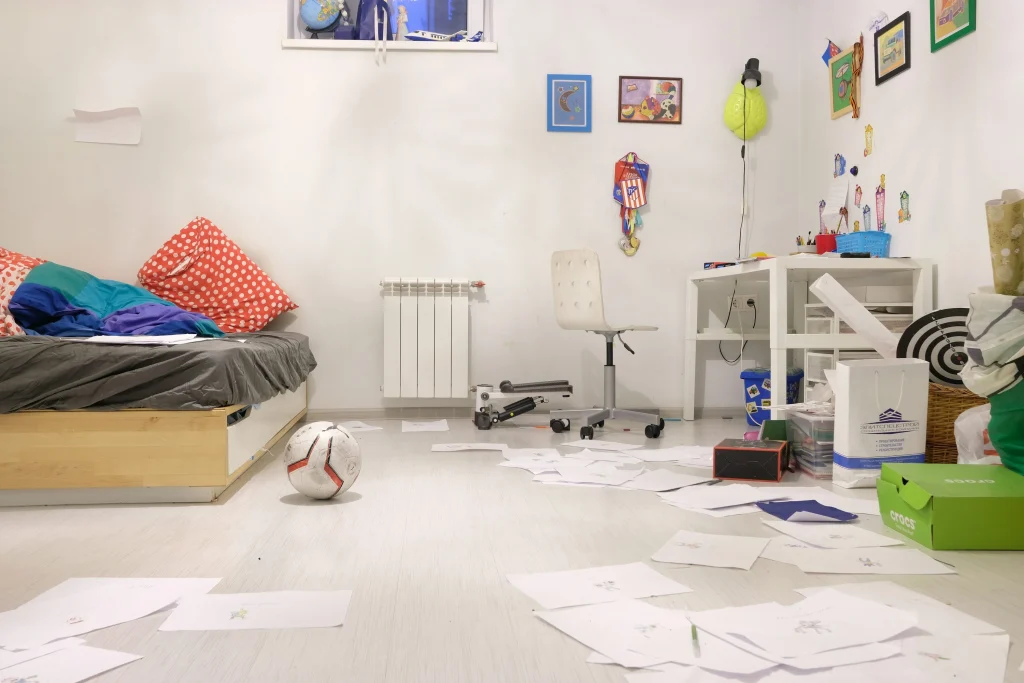
The bedroom is mainly for sleep. The kitchen is mainly for cooking. The study is mainly for work. But the living room does everything. It is where you drop your bag, leave the package “for now,” stack unread magazines, charge random cables, toss a blanket, park the remote, and let a dozen small things wait until later. That is why living rooms often end up looking “not that messy,” while still making people feel mentally crowded. Research associated with Princeton’s attention work suggests that visual clutter competes for attention and tires cognitive function over time.
Feng shui has a very plainspoken way of describing this: when the space is blocked, the energy does not move well. You do not even have to fully believe in qi to recognize the effect. If sightlines are broken, pathways are tight, and every surface is asking for attention, you may sit down physically without ever really settling mentally. That “I’m home, but I still can’t relax” feeling is sometimes less about your personality and more about your living room being too full.
There is also some evidence that stressful home environments show up in the body. One study found that women who described their homes as more stressful had flatter daily cortisol slopes and more depressed mood across the day. That does not mean one cluttered coffee table ruins your life. It does mean the atmosphere of home is not trivial.
Why feng shui cares so much about a living room being “open,” “bright,” and “smooth”
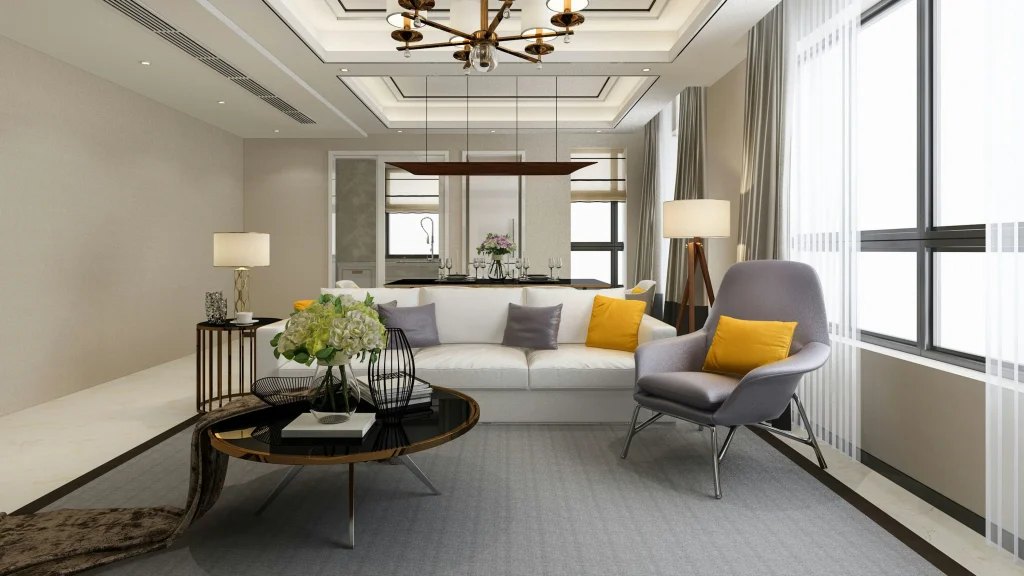
In feng shui, the living room is usually treated as a more active, social, outward-facing part of the home. It is where people gather, talk, receive guests, and share everyday emotional energy. That is why traditional advice often favors a living room that feels more open, brighter, and easier to move through. Feng shui itself is broadly described as arranging spaces and objects in harmony with the flow of qi, so the preference for openness is built into the idea.
From a modern point of view, that logic is easy to understand. A room that feels spacious usually feels easier to breathe in. A room that is brighter usually feels easier to stay in. A room with smoother movement and less visual interruption tends to lower subtle background tension. So when feng shui talks about “gathering energy,” a more overseas-friendly way to say it might be this: a good living room gives the mind a stable spatial order to rest inside.
Why leaving space is a form of stress relief
A lot of people focus on style: minimal, modern, warm wood, Japandi, soft neutral, and so on. But underneath style is a more important question: does this room leave any room for me to recover?
Once a living room gets too full, something subtle happens. It starts looking like it serves life, while quietly interrupting life. The coffee table is too busy to actually use comfortably. The sofa area feels tighter than it should. Shelves, corners, and surfaces keep feeding the eye more information than it needs. And that is often why people walk into a hotel, a quiet rental, or a friend’s home and say, “This feels so nice,” even when the furniture itself is not especially expensive. Often, the space simply is not pushing so much visual information at them. Visual clutter, again, makes attention work harder.
Feng shui’s idea of “leaving room” is not about deprivation. It is about allowing the space to support the person, rather than asking the person to keep processing the space. When the living room gives up a little visual pressure, your attention has somewhere to settle, your mood has somewhere to land, and your thoughts stop hovering quite so hard.
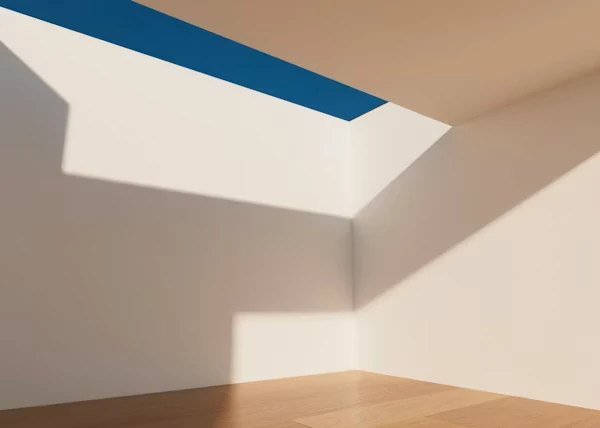
So what exactly should be left more empty?
This is not about throwing everything out. It is about loosening the areas that create the most pressure.
Start with the floor. The floor is one of the most overlooked sources of stress: bags by the lamp, packages by the sofa, workout gear in the corner, random items under the coffee table. You may not stare at them, but they still change how your brain reads the room. When the floor clears, the room usually feels lighter almost immediately.
Then clear the coffee table. Coffee tables become tiny battlefields very easily: remotes, tissues, mugs, snacks, chargers, glasses, books, receipts. It does not have to be empty-empty, but it should not permanently look like three unfinished tasks are living there. A tray, one book, and one object you genuinely like is usually enough.
Finally, soften the walls and corners. Not every wall needs art. Not every corner needs a plant stand, a side table, and a lamp. Some corners are allowed to be quiet. Feng shui is more interested in balance than in filling every gap, and good interiors often work the same way: the room feels better when not every inch is trying to perform.
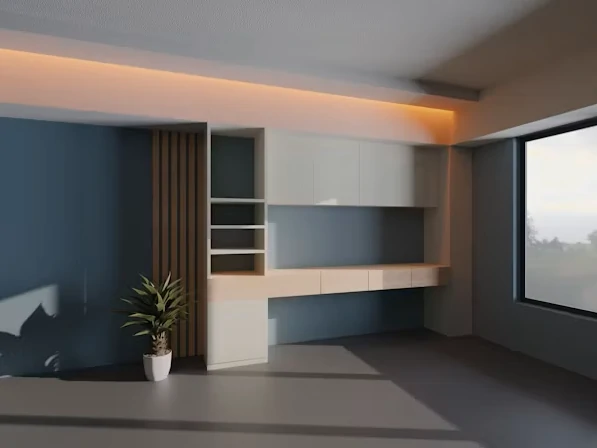
Not more minimal — more appropriate
One thing is worth saying clearly: feng shui is not the same thing as Western minimalism. “Empty” does not mean sterile. A room can still have books, blankets, art, plants, and personality. The real question is whether the things in the room still support your life, or whether they have quietly become background pressure.
Some homes have very little in them and still feel cold. Others have plenty of texture and personality yet still feel light because the placement is thoughtful and the room has enough breathing room. The goal is not less for the sake of less. The goal is better for the sake of ease.
A simple way to explain this to modern readers: the living room is a recovery zone
If I were putting it in the simplest modern language, I would say this:
Your living room is not just a social space. It is also your recovery zone.
After a day of work, commuting, notifications, decisions, and low-grade overstimulation, the living room should help you shift out of “handling the world” and back into yourself. But if that recovery zone is crowded, visually noisy, and full of unfinished signals, it cannot really catch you. From feng shui, that is blocked flow. From modern life, that is reduced restoration. Either way, it points to the same thing.
The most comfortable living rooms usually share a few traits: they are not cramped, not glaring, not overloaded, and not full of things that feel like pending tasks. They let you sit down without instantly reminding you of five other things to deal with. That is not luxury. That is recovery.
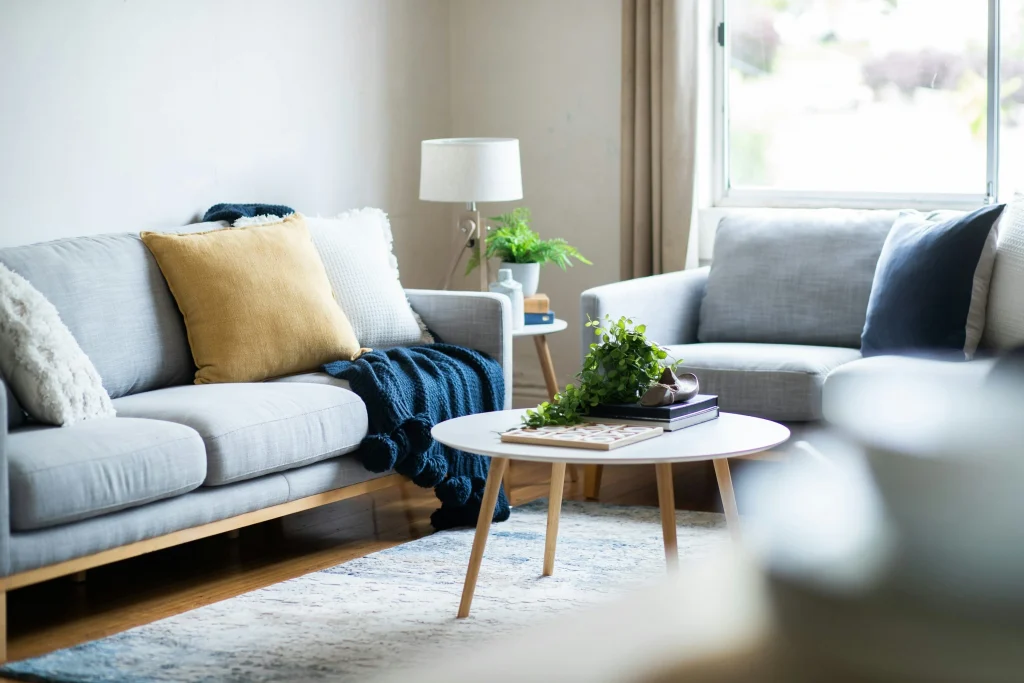
Final thought
A lot of people think stress relief has to be found somewhere outside the home. Sometimes the first step is much simpler: make a little more space inside it.
Especially in the living room.
Because the living room often holds the most visible, accumulated, everyday weight of a home. The fuller it gets, the more easily that weight lands on you. The more breathing room it has, the easier it becomes for your own mind to feel lighter too.
Feng shui is not really saying, “Empty the room and money will fall from the sky.” It is saying something more useful: a good space should first make the person inside it feel at ease. And when the living room finally stops carrying everything, you may notice that what feels lighter is not just the room.
It is you.