Architectural Feng Shui Explained
In this article
From Traditional Wisdom to Modern Living
Architectural feng shui is one of the most enduring and influential parts of traditional Chinese spatial thinking. It is not simply a collection of superstitions or symbolic rules. Rather, it emerged from centuries of close observation of land, climate, orientation, shelter, water, light, and human comfort.

At its core, feng shui asks a timeless question: how can people live in greater harmony with the spaces around them?
In many ways, it overlaps with ideas we now associate with environmental design, geography, microclimate, aesthetics, and even psychology. For this reason, architectural feng shui can be understood not only as a traditional cultural system, but also as an early form of spatial intelligence—one that aimed to create homes that feel safer, calmer, healthier, and more supportive of daily life.
This article explores architectural feng shui through five key dimensions: its core principles, site selection and layout, spatial design, modern relevance, and ongoing debate.
1. Core Principles: A Philosophy of Living in Harmony with Nature
The foundation of architectural feng shui is often summarized through three main ideas: shelter and the gathering of energy, the balance of yin and yang, and the coordination of the five elements. Though rooted in traditional Chinese thought, these principles still offer a useful way to think about why some spaces feel supportive while others feel stressful or draining.
1.1 Shelter and the Gathering of Energy
One of the most important concepts in feng shui is often described as “storing wind and gathering qi.” In more contemporary terms, this refers to creating a place that feels protected, stable, and able to retain comfort, rather than leaving people exposed to harsh environmental conditions.
Traditional feng shui often favors sites that are backed by higher ground and face open space or water. In ancient China, this was more than symbolic. Hills and mountains could block cold seasonal winds, while rivers and lakes often helped regulate temperature, support agriculture, and improve long-term livability.
This helps explain why many historically important cities and settlements were established in places with strong environmental advantages. Their success was often tied not only to cultural meaning, but also to terrain, climate protection, and access to water.
From a modern perspective, this principle can be understood as an early awareness of microclimate, environmental shelter, and residential suitability.
1.2 Yin and Yang: Finding Balance Between Opposites
Another core principle is the balance of yin and yang. Rather than thinking of these as abstract metaphysical ideas alone, they can also be understood as descriptions of complementary spatial qualities: quiet and active, dark and bright, enclosed and open, soft and strong.
In residential design, this suggests that different rooms should support different emotional and functional needs. A living room may benefit from openness, daylight, and a more active social atmosphere, while a bedroom should feel quieter, softer, and more restorative.
This balance can also be expressed through materials, colors, proportions, and degrees of openness. A home that is too exposed may feel unsettling, while a home that is too closed may feel heavy or oppressive. Feng shui seeks a middle ground—one where a space feels alive and dynamic, but never overwhelming.
1.3 The Five Elements: Understanding Space Through Relationships
The theory of the five elements—wood, fire, earth, metal, and water—is another important framework in feng shui. These are not merely physical substances, but symbolic categories used to describe qualities, cycles, and relationships within an environment.
In architecture and interior design, these elements may be expressed through material, color, form, texture, and atmosphere. Wood suggests growth and flexibility. Earth conveys stability and grounding. Metal implies clarity and structure. Water represents flow and adaptability. Fire brings warmth, energy, and expression.
Seen this way, the five elements are less about rigid symbolism and more about recognizing that a well-designed space often depends on balance between multiple qualities rather than the dominance of one.

2. Site Selection and Layout: Designing in Response to Nature and Human Life
2.1 Choosing the Right Site
Traditional feng shui places strong emphasis on site selection. An ideal place to live is often described as one that offers support, openness, protection from harsh conditions, and a healthy relationship with the surrounding landscape.
This preference for locations “backed by higher ground and facing open land or water” may sound symbolic, but it also reflects practical environmental logic. Elevated land can provide shelter from wind. Vegetation can help regulate humidity and temperature. Nearby water can influence local climate and make a place feel more livable.
Many traditional Chinese villages were built with careful attention to mountains, rivers, sunlight, and seasonal airflow. These decisions were not only cultural—they also reflected practical knowledge about landscape and settlement design.
2.2 Symmetry, Axis, and Enclosure
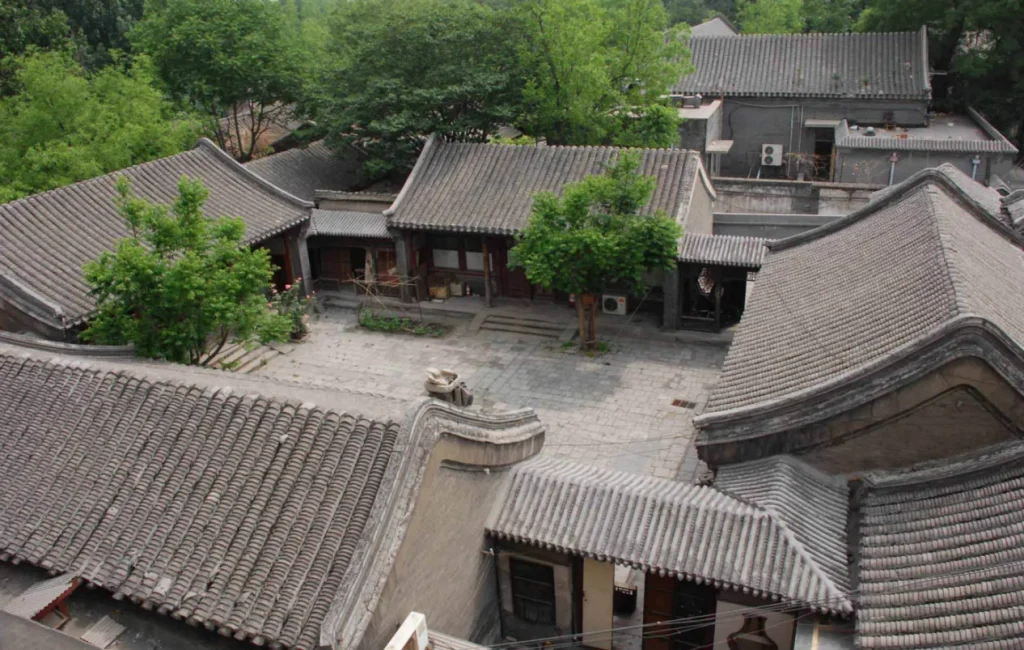
Traditional Chinese architecture often emphasizes central axes, layered thresholds, and enclosed courtyards. These spatial strategies help organize movement, reinforce order, and create a gradual transition between public and private life.
Courtyard houses, for example, form a protected inner world. They reduce outside disturbance, increase privacy, and create a stronger sense of containment and domestic calm. In feng shui, such layouts are often associated with stability and the ability to “hold” beneficial energy. In modern spatial terms, they offer a sense of boundary, shelter, and emotional security.
Orientation and symmetry also play an important ro
2.3 Avoiding Stressful Spatial Conditions
Feng shui also identifies certain conditions as unfavorable—for example, sharp corners aimed at an entrance, a long road running directly toward a house, or harsh external forms that create pressure or discomfort.
Traditional feng shui might describe these as forms of negative energy. In modern language, they can also be understood as sources of visual stress, safety concerns, or psychologically uncomfortable spatial conditions.
Interestingly, many traditional remedies remain relevant today. Screens, plants, layered entry sequences, softened edges, and adjusted pathways are all practical ways to reduce tension and improve the experience of a space.
3. Spatial Design: Where Function and Atmosphere Meet
3.1 The Front Door: The Threshold of the Home
In feng shui, the front door is one of the most important parts of a house because it is the primary threshold between the outside world and domestic life. It shapes first impressions, circulation, and the emotional tone of arrival.
Traditional feng shui often emphasizes the importance of what is seen immediately upon entering. A welcoming entry might include natural light, greenery, or meaningful artwork. By contrast, direct views into a bathroom, cluttered storage, or harsh reflective surfaces may create discomfort.
From a design perspective, this makes sense. Entry spaces influence how quickly a home feels calm, organized, and inviting. A well-designed entrance often feels clear, balanced, and intentional. It helps people transition smoothly from the outside world into the interior environment.

3.2 The Living Room: The Social Heart of the Home
The living room is usually the most active shared space in a home. In feng shui, it should feel open, balanced, and easy to use.
A coherent layout is often more supportive than one that feels fragmented or awkward. Good daylight, natural airflow, and comfortable circulation all contribute to a stronger sense of ease. Seating arrangements are ideally placed in ways that feel secure and natural rather than overly exposed or confrontational.
Traditional feng shui may express these ideas symbolically, but the underlying goal is simple: the living room should support connection, comfort, and stability.
3.3 The Bedroom: A Space for Rest and Recovery
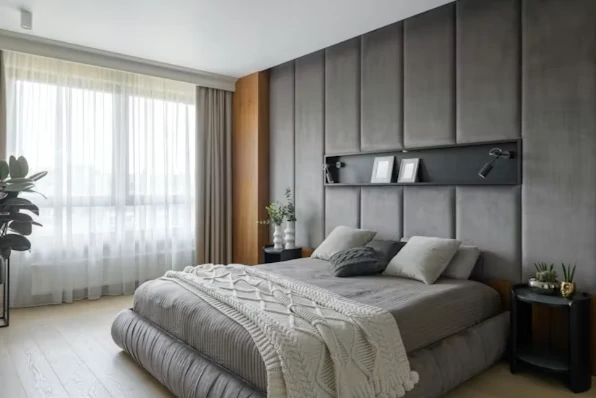
The bedroom is associated with quieter, more yin qualities. Its purpose is not display, but rest, privacy, and emotional recovery.
For this reason, feng shui generally discourages excessive noise, overly harsh light, disruptive layouts, or anything that makes the room feel tense and overstimulating. Bed placement is especially important, because it affects both physical use and the feeling of support and safety.
Even if some traditional rules are interpreted symbolically, the broader principle still holds true today: a good bedroom should help the body and nervous system settle, rather than keep a person alert.
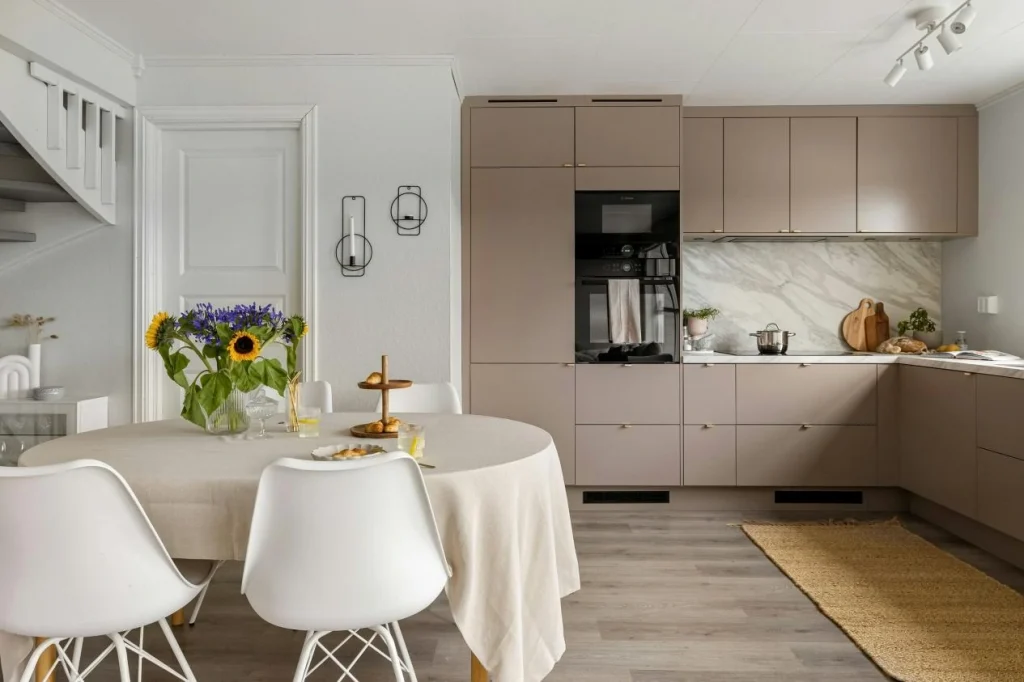
3.4 The Kitchen and Dining Area: Spaces of Nourishment and Rhythm
In feng shui, the kitchen is closely tied to nourishment, daily routine, and the sustaining energy of the household. Traditional guidance often focuses on cleanliness, ventilation, order, and the relationship between fire, water, and circulation.
The dining area, meanwhile, should feel calm, comfortable, and conducive to both eating and conversation. Soft lighting, stable furniture forms, and a sense of order all contribute to this atmosphere.
From a contemporary design perspective, these ideas align closely with what good residential design already values: hygiene, usability, comfort, and emotional ease.
4. Modern Applications: Where Traditional Feng Shui Meets Contemporary Design
4.1 From Feng Shui to Ecological Design
One of the most meaningful ways to understand feng shui today is through the lens of climate-responsive and ecological design.
Traditional building forms across China developed in close relation to local geography and weather. Brick and tile homes in colder northern regions helped retain heat. Cave dwellings on the Loess Plateau offered thermal stability. Stilted houses in humid southern areas improved ventilation and moisture control. Waterside settlements took advantage of cooling effects and transportation access.
These examples show that feng shui was often closely connected to environmental adaptation, not merely symbolic belief.
4.2 Feng Shui, Health, and Human Comfort
Modern readers often associate feng shui with wellbeing, and there is some value in that connection—so long as it is approached thoughtfully. Traditional feng shui uses language such as qi and energetic harmony, while contemporary research speaks more in terms of sleep quality, daylight exposure, air movement, acoustic comfort, and stress reduction.
The vocabulary is different, but the concern is often similar: the spaces we live in affect how we feel, behave, and recover.
A bright, well-ventilated, orderly, and emotionally grounding environment is more likely to support calm and resilience. A cramped, dark, chaotic, or overstimulating environment may contribute to fatigue, pressure, or unease.
4.3 Environmental Psychology and Spatial Experience
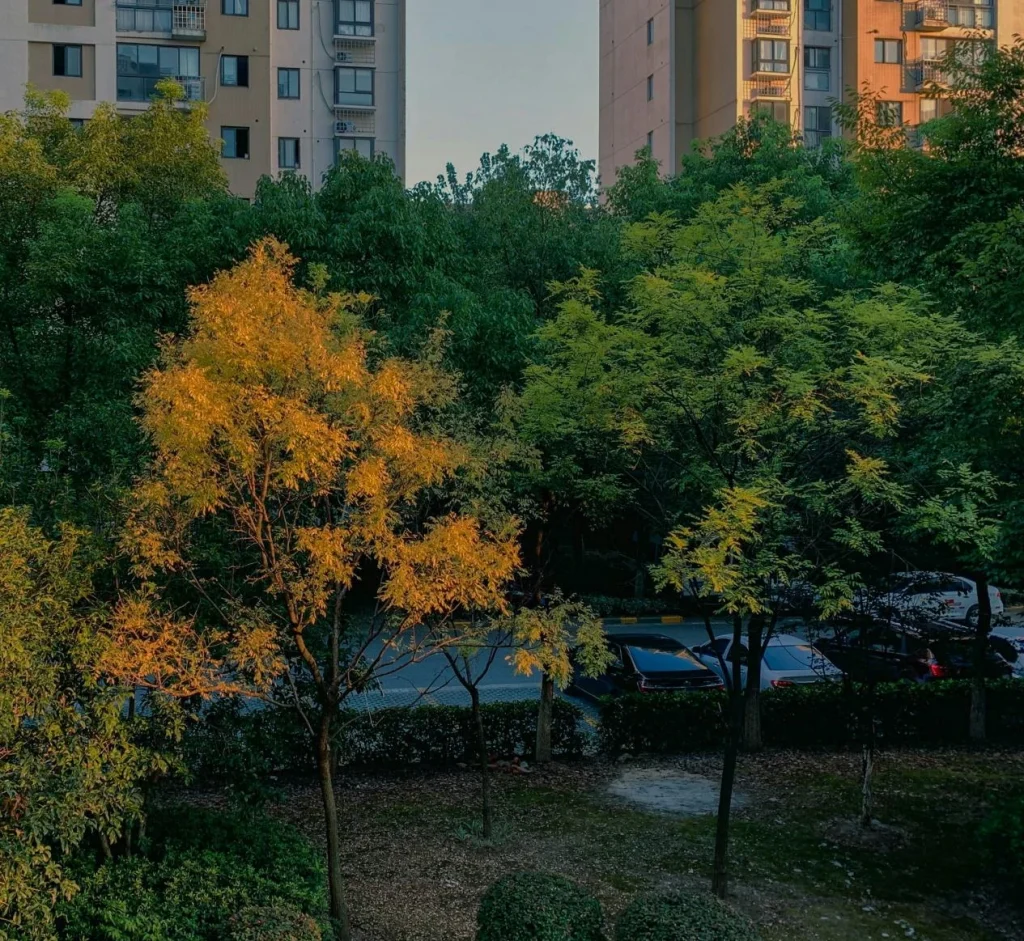
Environmental psychology offers one of the most useful contemporary frameworks for understanding feng shui. It explores how people respond to openness, enclosure, order, natural elements, sensory warmth, and visual cues such as proportion, light, and material.
A bright and balanced home often feels reassuring. A narrow, dark, or visually chaotic one may increase tension or mental fatigue. Traditional feng shui observed many of these effects in its own language and symbolic system long before modern disciplines gave them new terms.
For this reason, modern feng shui is often most meaningful when understood not as rigid superstition, but as a traditional way of thinking about how space influences human experience.
5. Debate and Reinterpretation: Between Science and Cultural Heritage
5.1 Can Feng Shui Be Scientifically Proven?
This remains one of the most common questions in modern discussions of feng shui. Some parts of feng shui—such as daylight, ventilation, orientation, privacy, comfort, and circulation—can clearly be explained through architecture, environmental science, or psychology.
Other concepts, such as qi fields or dragon veins, belong more to traditional cosmology and symbolic systems of meaning. These ideas carry cultural significance, but they are difficult to measure or verify using modern scientific methods.
So the relationship between feng shui and science is not simply one of opposition. Some aspects overlap with practical design logic, while others remain rooted in philosophy, symbolism, and cultural tradition.
5.2 Its Cultural Value Still Matters
Even when certain ideas in feng shui cannot be fully validated by modern science, its cultural value remains significant. Feng shui preserves centuries of accumulated knowledge about land, architecture, settlement, symbolism, and the relationship between people and place.
It also reflects a broader philosophical vision: that people should not simply occupy nature, but learn to live in conscious relationship with it.
That alone makes feng shui an important part of architectural history and cultural heritage.
5.3 A Rational Way to Use Feng Shui Today
In contemporary life, feng shui is often most useful when approached with openness and discernment rather than rigid literalism.
Many designers today draw from feng shui principles by improving orientation, circulation, spatial transitions, privacy, visual comfort, and overall balance. In architecture, curved forms may reduce wind pressure. In interiors, better furniture placement can reduce stress and improve flow.
Viewed in this way, feng shui becomes less about fear, taboo, or superstition, and more about creating spaces that feel balanced, supportive, and deeply human.
Conclusion
Architectural feng shui is not only about symbolism, luck, or fixed rules. At its best, it is a traditional language for exploring something timeless: the relationship between people, place, and wellbeing.
Its principles grew from long observation of climate, geography, settlement, spatial order, and lived experience. Some of its ideas can now be translated into modern concepts such as environmental comfort, ecological design, and psychological wellbeing. Others remain rooted in traditional cosmology and cultural meaning.
Either way, feng shui continues to offer a valuable reminder:
a home is never just a structure. It is an environment that shapes mood, behavior, rest, relationships, and everyday life.
Perhaps that is why feng shui still resonates today. Not because every rule must be taken literally, but because the deeper question behind it remains as relevant as ever:
How do we design spaces that truly support human life?