Mountains and Water: The Two Most Important Ideas in Feng Shui
If you want to understand feng shui at its core, there are really just two words to begin with:
mountains and water.
Not the compass.
Not directions.
Not all the complicated rules people often focus on.
Mountains and water.
For thousands of years in China, these two things helped determine where people settled, how they settled, and why some places felt deeply comfortable while others never quite felt right.
That is not superstition.
It is human experience, slowly distilled over generations of living closely with the land.
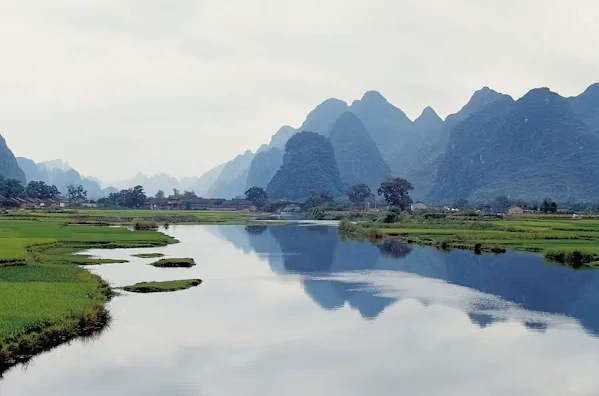
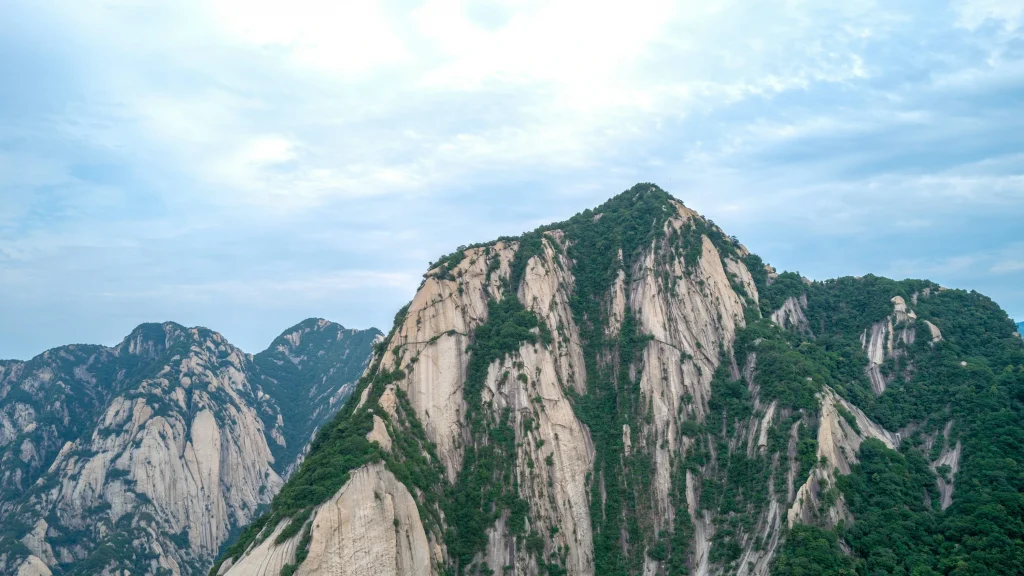
Mountain: Stability, Support, and Human Rootedness
In feng shui, mountains represent stability.
Think about a mountain. It stands there for centuries. Wind hits it, rain falls on it, seasons pass over it — and still it remains. That kind of steadiness gives people a sense of security.
When ancient people looked for a place to live, one of the first things they noticed was the mountain. Was there one behind the settlement? Was it steep or gentle? Bare or covered in trees? Protective or harsh?
Mountains mattered for practical reasons. They blocked wind. In winter, they could shield people from harsh northern air. They offered wood, water sources, animals, and a natural sense of refuge.
So in feng shui, mountains came to symbolize several things.
One is support.
When a house has a mountain behind it, it is often described as having a “backing.” That is not magic. It is a very human feeling. When something solid is behind you, you tend to relax more easily.
Another is family continuity.
There is an old saying in feng shui that “mountains govern people.” What this really points to is that a good mountain environment supports life. It offers protection, resources, and a sense of safety — all the things that allow a household or family line to grow steadily.
And mountain also represents staying power.
Its nature is not movement, but presence. People need that too. In places that are always unstable, always shifting, it is hard to settle deeply. Mountain energy says: here, you can stay.
Of course, not every mountain is considered ideal. Bigger is not always better.
A mountain that is too steep can feel oppressive. A mountain that is barren may feel lifeless. In traditional feng shui, the best mountain is often described as one that is graceful rather than aggressive — alive with vegetation, shaped with softness and contour, not harsh or overwhelming.
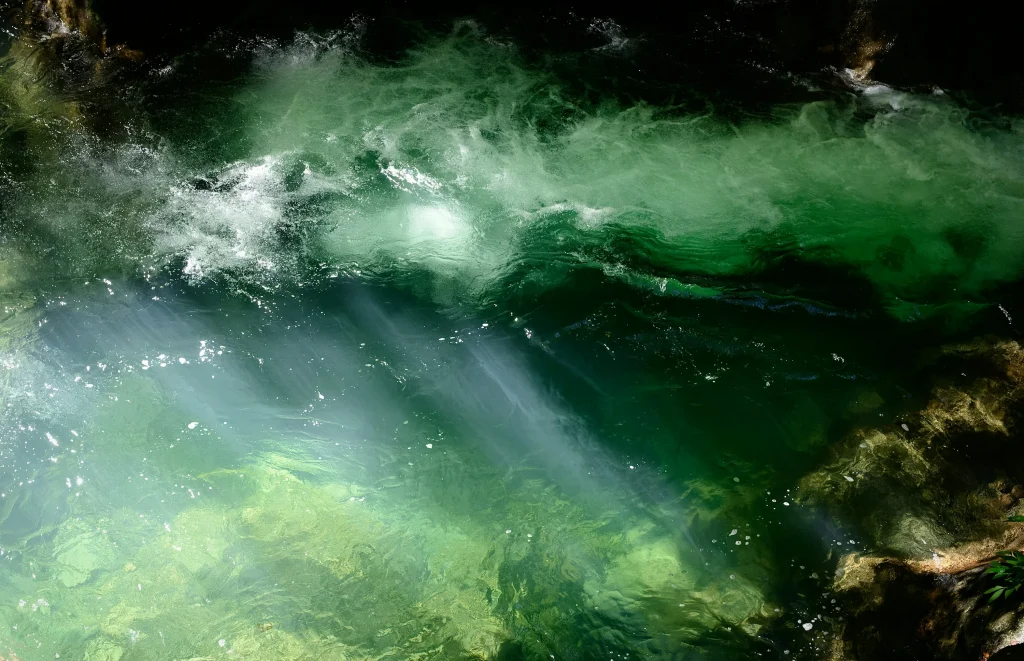
Water: Flow, Wealth, and Intelligence
If mountain is still, water is movement.
In feng shui, water represents flow. It is always going somewhere, always changing, carrying nourishment, sediment, and life from one place to another.
Ancient people lived near water because they had to. Water irrigated fields, supported transport, sustained life, and connected communities.
So in feng shui, water came to symbolize several things too.
One is wealth.
There is a traditional saying that “water governs wealth.” That does not mean water magically turns into money. It means that where water flows, opportunity often follows. Trade routes, fertile land, transport, movement — all of these are linked to water. Historically, cities near active waterways often became prosperous.
Water also represents intelligence.
Water is soft, but it does not stop. It bends around rock. It fills what is low. It does not force its way forward in a rigid line. That softness is often seen as a kind of wisdom.
And water also connects to emotion.
A calm surface can feel like an even heart. Fast, turbulent water can feel like agitation or restlessness. To observe water is, in some sense, also to observe the mind.
But not all water is equally good.
Water that moves too fast can wash things away. Dirty water brings illness. Stagnant water supports very little.
In feng shui, the ideal water is often described as living water: clear, gentle, curved, and embracing — like a ribbon moving around a place rather than cutting through it harshly.
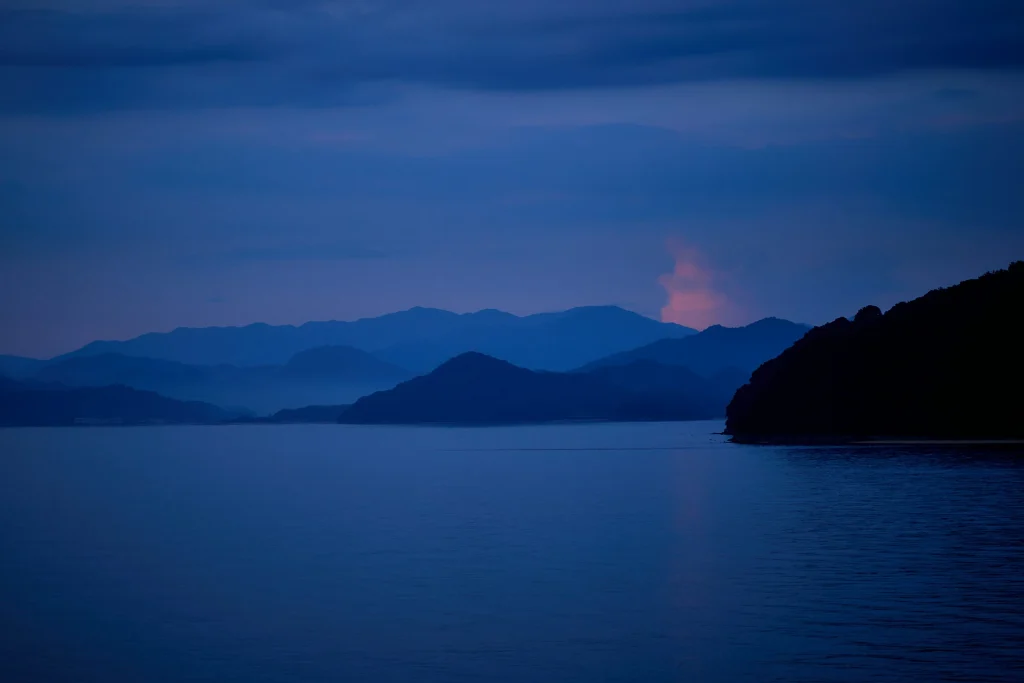
Why Mountains and Water Need Each Other
A mountain on its own can feel isolated. Water on its own can feel unstable.
What feng shui values most is the relationship between the two.
Why?
Because they complement each other.
Mountain offers stability.
Water offers change.
Mountain offers protection.
Water offers nourishment and connection.
Mountain is often linked with yang qualities.
Water is often linked with yin qualities.
Together, they create balance.
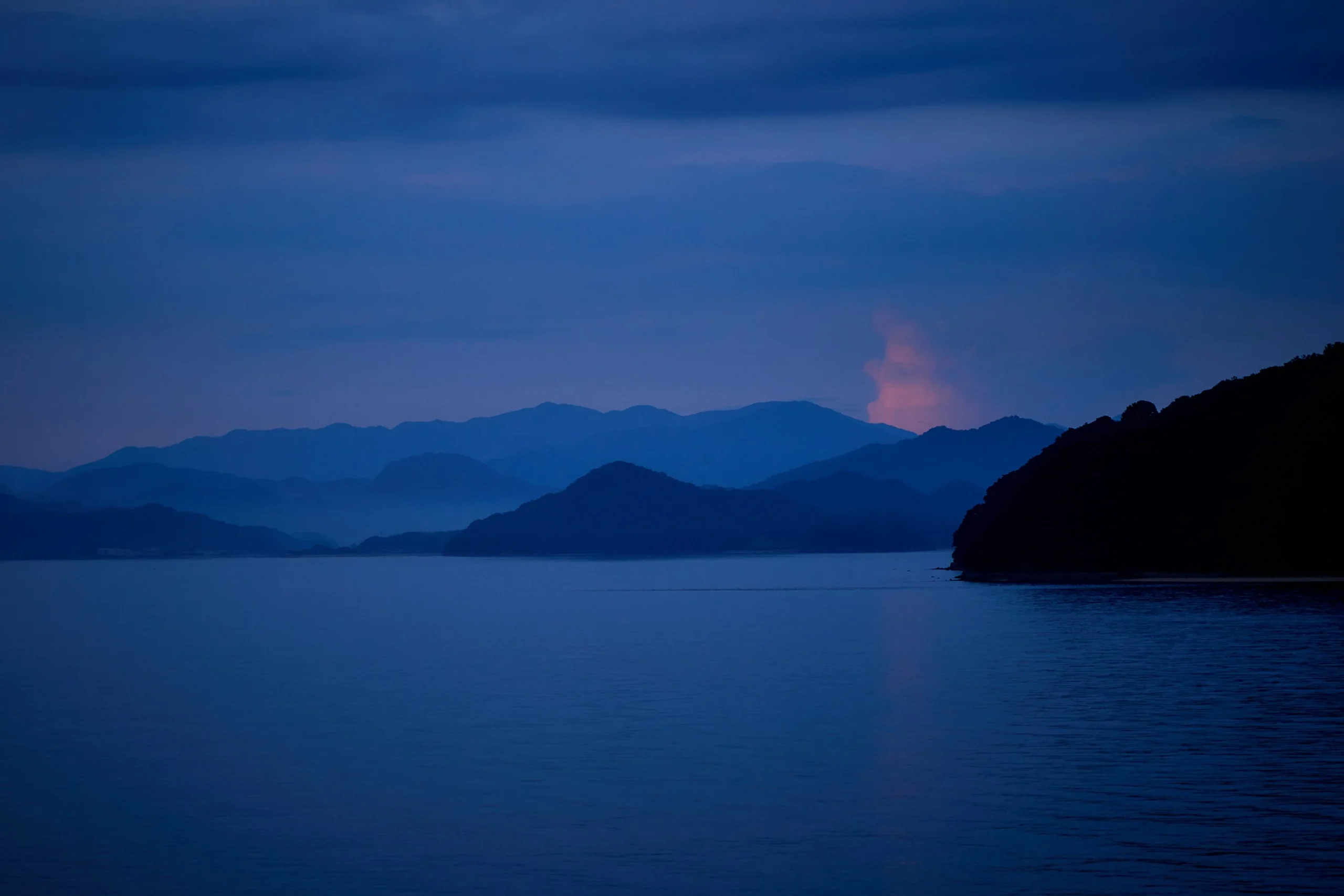
One of the most ideal traditional landscape patterns is often described as “mountains surrounding, water embracing.” A mountain behind, supportive forms on the sides, and water in front.
It is almost like sitting in a chair: supported from behind, gently enclosed, with open space before you.
This kind of place tends to block harsh wind, soften climate, provide resources, and create a natural sense of safety.
Ancient people did not value it because they were blindly superstitious. They valued it because places like this were genuinely good to live in.
Over time, that practical understanding became part of feng shui.
Mountains and Water in Modern Life
Today, most of us do not live directly among mountains and rivers. We live in apartments, towers, suburbs, and dense urban neighborhoods.
So do mountain and water still matter?
Yes — but often in different forms.
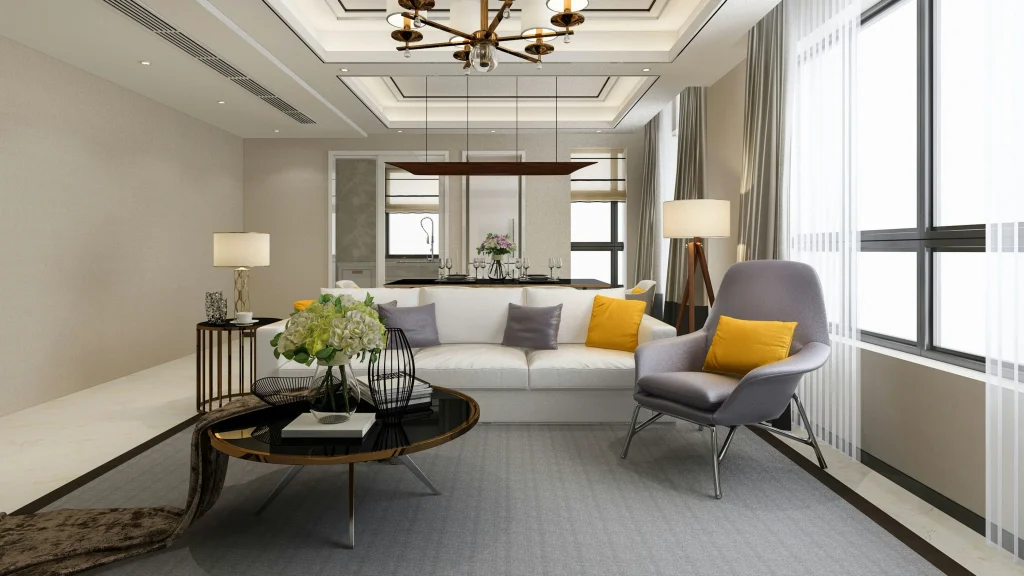
In modern interiors, mountain becomes support.
It may not be a literal mountain anymore. It may be the wall behind your sofa, your bed, or your desk. When you sit with something solid behind you, you usually feel more secure. That is mountain energy translated into modern space.
Mountain can also appear as height and structure. A bookshelf, a cabinet, a textured wall, or even a well-placed vertical feature can bring a sense of weight and support into a room. They keep the space from feeling flat and rootless.
Water, in modern space, often appears as flow.
It is the way air moves through a room. The way people move through a home. The way a path through the space feels open instead of blocked. A home with good flow is easier to live in. That is water energy in a contemporary form.
Water can also show up as curves.
If straight lines feel more mountain-like, then curved lines feel more like water. A round table, a soft-edged sofa, a curtain that falls in waves — these all soften the space and bring in a more fluid feeling.
Water can even appear as sound.
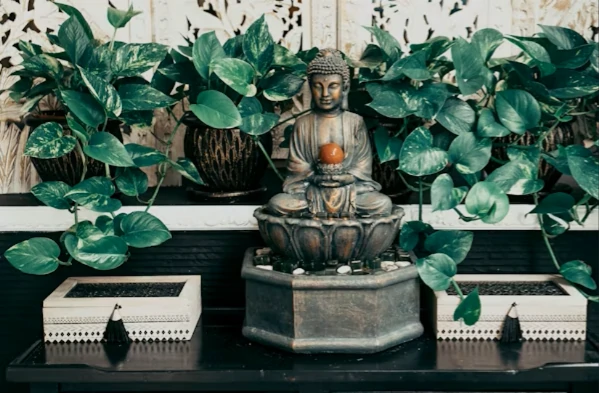
A small indoor fountain, for example, does not need to be dramatic. Even a gentle water sound can soften harsher background noise and change the mood of a room.
The Mountain and Water Inside You
There is one more layer to this.
Mountain and water are not only outside us. They are also inside us.
The mountain within is steadiness.
It is the part of you that can stay rooted even when life around you feels uncertain. It is your inner support.
The water within is softness and movement.
It is the part of you that knows how to bend instead of break, how to wait instead of force, how to let things flow when pushing harder will not help.
The outer landscape and the inner landscape are connected.
When your space feels more settled, your mind often feels steadier too.
When your inner state becomes calmer, the space around you often begins to feel more harmonious.
In the End
Mountain and water are two of the oldest and simplest ideas in feng shui.
Mountain tells you where you can settle.
Water tells you how life can keep moving.
Too much mountain without water can feel rigid and heavy.
Too much water without mountain can feel scattered and unstable.
Together, they create a place that feels alive — a place where people can actually live well.
Today, we may not live at the foot of a mountain or beside a river. But the spirit of mountain and water can still exist in our homes, on our desks, and somewhere inside us.
Find a place that lets you feel supported, and give yourself a mountain.
Leave a path that lets energy move, and give yourself some water.
Then live there for a while.
And let it slowly become home.