Debunking Feng Shui Myths: Common Misconceptions Explained
In this article
Did you know that most people decide how they feel about a space within the first few seconds of entering it?
Whether it’s a client’s dream home or an interior design project, first impressions matter. And often, that first impression has less to do with decoration — and more to do with something many designers overlook: the flow of energy within a space.
Feng Shui offers insights that go far beyond aesthetics. Yet it’s also one of the most misunderstood influences in interior design. Some dismiss it as superstition. Others reduce it to quirky rules.
In reality, Feng Shui is a practical framework for creating spaces that feel welcoming, balanced, and supportive.
In Simple Terms…
Feng Shui focuses on:
- Balancing the Five Elements– Wood, Fire, Earth, Metal, and Water
- Encouraging Energy Flow– Layouts should allow Qi (life energy) to circulate smoothly
- Maintaining Order– Clutter blocks movement and affects atmosphere
At its core, Feng Shui provides guidance for creating spaces that feel harmonious, grounded, and alive.

What Is Feng Shui, Really?
Feng Shui literally means “wind and water.” It’s an ancient Chinese practice centered around understanding how energy flows through environments.
The concept is simple:
The way a space is arranged influences how people feel, think, and interact within it.
Light, airflow, color, materials, and furniture placement all contribute to the overall energy of a room. When these elements are balanced, spaces can promote:
- Well-being
- Creativity
- Productivity
- A sense of abundance
Let’s clear up an important misunderstanding:
Feng Shui is not about rigid rules or filling your home with traditional Chinese décor. It’s about creating functional, comfortable spaces tailored to the people living there.
Myth 1: Feng Shui Is Just Superstition
Many people dismiss Feng Shui because it doesn’t fit neatly into a scientific formula.
But consider this:
- A cluttered room feels stressful.
- A bright, open, well-ventilated space feels calming.
Feng Shui simply explores why that happens — and how to design intentionally.
For example, in Feng Shui, the front door is called the “mouth of Qi” — the entry point of energy into the home. A cluttered entrance can make a home feel chaotic or uninviting.
Clearing the entryway isn’t mystical — it’s practical. It creates clarity, calm, and better first impressions.
Ideally, the entrance should feel like a transitional zone. Artwork near the entry can draw energy inward. Avoid placing a mirror directly facing the front door, as this is believed to symbolically reflect opportunities back out.
Myth 2: Feng Shui Means Chinese-Style Décor
Another common misconception is that Feng Shui requires red lanterns, lucky cats, or gold toads.
Feng Shui isn’t a style — it’s a system of balance.
It works through the Five Elements:
- Wood
- Fire
- Earth
- Metal
- Water
These elements can be incorporated subtly into any design aesthetic — minimalist, modern, traditional, or contemporary.
For example:
- A wooden dining table introduces the Wood element.
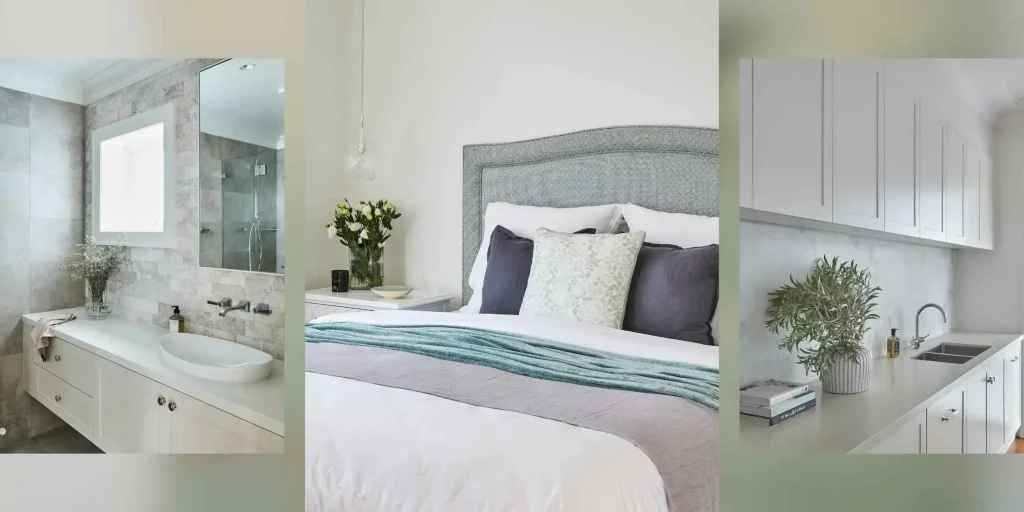
- Marble countertops bring in Earth energy.
- Mirrors represent Water through reflection.
It’s not about forcing symbolism — it’s about noticing what’s present and what’s missing.
If a room feels cold and metallic, adding warm wood tones or soft textiles may restore balance.
Myth 3: Feng Shui Is a One-Size-Fits-All Solution
You may have heard generic advice like:
“Put a plant in your wealth corner.”
While simple tips can help, authentic Feng Shui is far more nuanced. It considers:
- The home’s orientation
- Layout
- Construction period
- Surrounding landscape
- The residents’ personal needs
A house built in the 1970s has a different energetic pattern than a newly constructed one. Even the shape of the land influences how a space feels.
For those deeply interested, working with a qualified Feng Shui practitioner can help create a personalized energy map. But even without advanced calculations, practical principles can improve spatial harmony.
Myth 4: Feng Shui Is Only About Furniture Placement
Furniture placement is important — but it’s just one part of the picture.
Feng Shui also considers:
- Natural light
- Air circulation
- Color balance
- Architectural features
- The history of the home
Take the bedroom as an example.
Feng Shui recommends placing the bed in the “command position” — where you can see the door but aren’t directly aligned with it. This fosters a sense of security and better sleep.
Other considerations include:
- Avoiding heavy beams directly above the bed
- Maintaining balance in materials and textures
- Avoiding mirrors reflecting the bed
These guidelines are less about superstition and more about promoting psychological comfort.
Why Feng Shui Still Matters
As more homeowners embrace wellness-centered living, Feng Shui offers a holistic perspective.
It moves beyond surface-level decoration and focuses on how spaces support:
- Comfort
- Functionality
- Emotional well-being
Understanding Feng Shui can also help avoid design pitfalls.
For example, when a front door aligns directly with a back door or staircase, energy (and sometimes visual focus) rushes straight through. Even in real estate, such layouts can affect perceived value.
Practical Feng Shui Insights for Your Next Project
Here are a few simple principles to consider:
1. The Front Door – Gateway to Opportunity
Create a welcoming entrance.
- Use pathways or landscaping to gently guide movement.
- Add a focal point (artwork or a feature wall).
- Avoid aligning the front door directly with the back door or staircase.
The goal is to slow energy down, not let it rush through.
2. The Bedroom – A Restful Sanctuary
- Place the bed against a solid wall.
- Avoid direct alignment with the door.
- Use soft, calming colors.
- Avoid mirrors reflecting the bed.
A bedroom should feel peaceful and supportive.
3. Fire and Water – Handle with Care
Water features amplify energy — positive or negative. Placement should be thoughtful, and water should remain clean.
Large amounts of red (Fire element) can overstimulate spaces, especially kitchens. Kitchens benefit more from Earth elements for grounding and balance.
A Balanced Perspective
Feng Shui is often misunderstood because it’s either over-mystified or oversimplified.
At its best, Feng Shui is about thoughtful design.
It encourages:
- Flow
- Order
- Harmony
- Intentional living
It’s not about fear-based rules or rigid dogma. It’s about creating environments that feel supportive and balanced.
When applied with flexibility and awareness, Feng Shui becomes less about superstition — and more about spatial psychology rooted in tradition.