How Feng Shui Went Global: From East to West
You might think feng shui is only an Asian thing. But in reality, it has traveled much farther than many people realize.
From Italian missionaries in the 16th century to regular television programs in Russia today, feng shui has spent more than four hundred years quietly making its way into everyday life far beyond China.
Not mainly as superstition.
Not mainly as religion.
But as a way of thinking about one simple question:
How do we live more comfortably in a space?
Britain and Italy: Where the West First Encountered Feng Shui
Western contact with feng shui began surprisingly early.
As far back as the 16th century, missionaries were already bringing accounts of Chinese culture back to Europe. One of the most famous was the Italian Jesuit Matteo Ricci.
In his writings on China, he described ideas that helped introduce feng shui to Western readers for the first time. He explained that the Chinese saw the material world as shaped by five basic elements: metal, wood, water, fire, and earth.
That was already happening in the 1500s.
From that point on, Europe began to sense that there was an Eastern tradition concerned with space, environment, and the relationship between people and place.
Much later, one of the figures who gave feng shui serious attention in the West was the British historian of science Joseph Needham. In his landmark series Science and Civilisation in China, he devoted significant attention to Chinese geomancy and suggested that traditional Chinese building wisdom contained ideas worth studying seriously.

In the 19th century, another British scholar, Ernest Eitel, also helped shape Western understanding of feng shui. After years of studying Chinese culture, he published a book in London called Feng-Shui: The Science of Sacred Landscape in Old China.
What is striking is that he used the word science in the title.
That tells us something important: even in the 19th century, some Western thinkers were already willing to look at feng shui not simply as exotic folklore, but as a system of environmental understanding.
The United States: From Immigrant Communities to Mainstream Culture
Feng shui’s story in the United States largely began with migration.
In the late 19th and early 20th centuries, large numbers of Chinese immigrants came to America. Along with food, medicine, martial arts, and other traditions, they also brought feng shui.
At first, it mostly remained within Chinese communities.
Later, however, some businesspeople realized that understanding feng shui could help them connect with Chinese clients and neighborhoods. In that way, feng shui slowly began moving from cultural tradition into broader commercial life.

Its bigger cultural breakthrough came in the 1980s.
That was a period when many Americans became increasingly interested in energy, wellness, alternative healing, and the unseen atmosphere of spaces. Around this time, feng shui began appearing not just in Chinatowns or immigrant households, but in conversations about homes, offices, and even elite real estate.
Politicians, celebrities, and wealthy homeowners were said to consult feng shui practitioners before buying or arranging property. Feng shui was no longer only a cultural import. It was becoming part of the American language of lifestyle and space.

Academic circles also began noticing the phenomenon. Sociologists and psychologists started looking more closely at how people respond to location, color, layout, and environment. Some even linked feng shui’s emphasis on subtle spatial change to broader systems thinking — the idea that a small shift can have much larger effects.
In that sense, feng shui entered the American imagination not only as a Chinese tradition, but also as a possible way of thinking about how environments shape human behavior.
Germany: Feng Shui Became a Practical Profession
Germany’s embrace of feng shui took a particularly practical turn.
Over the last few decades, more than a hundred feng shui books have been published there, and feng shui consulting has developed into a recognizable professional field.
In 2002, the first World Congress of Classical Feng Shui was held in Cologne. One of the German consultants attending had already been studying feng shui for nearly two decades.
What is especially interesting is the kind of work these consultants were doing. It was not abstract or mystical in the way outsiders might imagine. It often involved very concrete decisions: where furniture should go, what color walls should be, how a room should feel, which objects to keep, and which to remove.
One German consultant put it in a very revealing way:
“The quality of the living environment is an important part of the quality of energy. Just as we need food, sunlight, and air, a home also needs qi.”
That statement captures something important about the German approach.
For many people there, feng shui was not really about superstition. It was about quality of life.
Russia: Feng Shui Made It to Television
Russia’s relationship with feng shui began earlier than many people think.
There were already traces of Chinese geomantic influence during periods of Mongol rule, when ideas moved across vast territories together with political power and trade. But those early influences were limited.
The real popular rise of feng shui in Russia is much more recent.
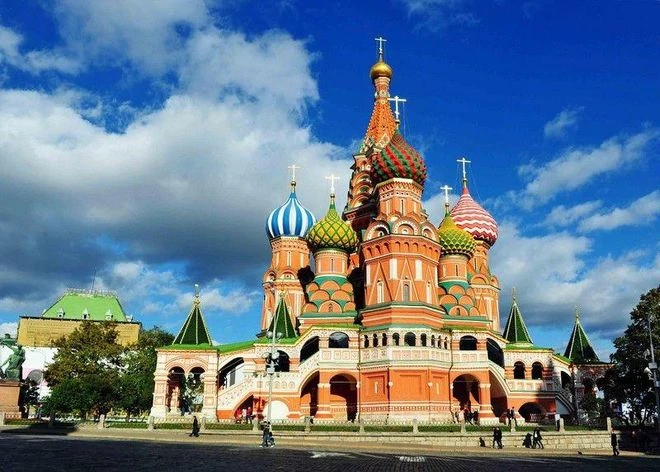
Today, if you walk into a bookstore in Moscow, you are likely to find plenty of feng shui titles translated from Asian sources. The word “feng shui” itself is widely recognized in Russian, often borrowed directly from its Chinese pronunciation.
What is even more striking is that Russian television has featured regular feng shui programming. Not just as a one-time curiosity, but as a recurring topic.
There is also an unusual institutional detail that often surprises outsiders: in Russia, categories of officially recognized professions have at times included roles related to esoteric or alternative practices, such as astrologers, fortune tellers, and feng shui consultants.
This does not necessarily mean Russians are more superstitious than anyone else. It may simp
In Russia, that kind of framing has often been accepted more openly.
Why Feng Shui Was Able to Travel
Looking back at this four-hundred-year journey, one thing becomes clear:
Feng shui did not spread because it was mysterious.
It spread because people found it useful.
In Britain, it was studied as part of landscape thought and cultural science.
In the United States, it became part of conversations about homes, property, and well-being.
In Germany, it was translated into everyday improvements in living quality.
In Russia, it was understood as a kind of knowledge about space and unseen influence.
Different countries approached it from different angles. But each found something in it that could speak to local needs.
That is probably not an accident.
Because at its core, feng shui is dealing with a universal human question:
How can a person feel better in the space they live in?
That question is not Eastern or Western.
It is simply human.
Everyone encounters it.
Everyone has the right to explore it.

In the End
Feng shui began in China, but it did not stay there.
It passed through the writings of Italian missionaries, the research of British scholars, the migration routes into America, the practical adaptations of Germany, and the media culture of Russia.
In each place, it was reinterpreted, translated, applied, misunderstood, simplified, and rediscovered.
Some parts were lost.
Some parts were added.
Some parts were exaggerated.
Some parts were finally understood more clearly.
But one thing remained unchanged:
A good space makes people feel better.
That is something people everywhere understand.